

Bag Hardware Manufacturer Reveals How to Choose Hardware That Lasts
2026-11-26
Most bag failures don't start with torn fabric or broken straps. They start quietly: a zipper that catches, a clasp that loosens, a finish that flakes after a few months. The difference between hardware that lasts and hardware that only looks good at first usually comes down to details most buyers never think to check. Drawing on manufacturing insights from Kingming, this guide cuts through the vague promises and shows you exactly what to look for in bag hardware before it becomes the weakest link in your design.
Why Cheap Hardware Looks Fine in Photos and Fails in Hand
A product photo is basically a controlled lie about materials. Soft light erases surface texture, a narrow depth of field hides rough edges, and a quick retouch pass can remove casting marks or uneven plating. Cheap hardware survives that process because it only needs to look right from one angle at one distance. There is no sense of heft, no flex in the frame, no tiny rattle when you shake it.
The trouble starts the moment you pick the thing up. Edges that looked crisp in the image turn out to be sharp enough to catch a fingernail. The finish that seemed like brushed metal is actually a thin film over plastic, already wearing at the corners. Knobs wobble, threads bite unevenly, and the whole piece feels lighter than your brain expected. Those are not flaws a camera usually captures, but your hands find them immediately.
Most of what we judge as quality is tactile, not visual. Weight distribution, detents, spring resistance, the dull sound a part makes when it seats correctly. Cheap hardware fails there because those properties cost money to engineer and cannot be faked in a product shot. A photo can promise the shape, but it cannot promise the way a latch clicks or a hinge holds its position after six months.
Metal Choices That Age Well on a Bag That Gets Used
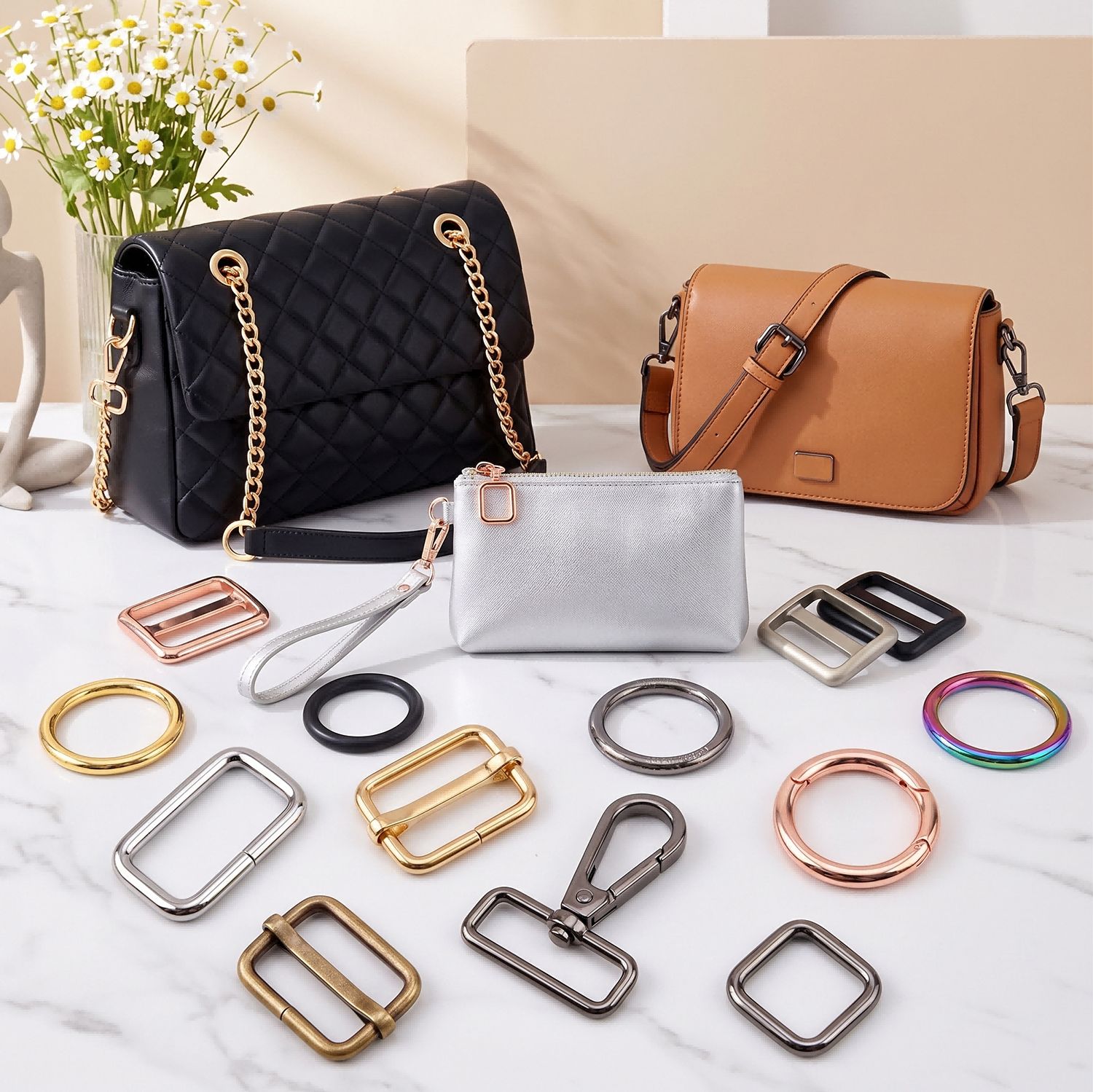
Solid brass tends to look better the more it gets knocked around. It doesn't flake or peel like plated zinc, and the surface slowly shifts from shiny to a softer, slightly hazy tone. That change hides small scratches instead of amplifying them, which is exactly what you want on a bag that sees daily use.
Stainless steel is another quiet workhorse. It won't develop the same kind of patina as brass, but it resists corrosion well and keeps moving parts like zipper pulls and buckles from stiffening up. The tradeoff is that it can show fine micro-scratches, though on a casual bag those read more like a record of use than actual damage.
The real mistakes are usually the shiny, gold-toned or black-coated metal accents that look sharp in product photos but wear through after a few months. Once the base metal shows, the piece feels cheaper than if it had started plain. Choosing hardware that accepts wear rather than fights it makes a bag easier to keep long-term.
What Plating and Coatings Do After Six Months of Daily Wear
By the six-month mark, most plating starts to show its age in predictable places. Rings lose their finish along the inner band and bottom edge, while bracelets and watch clasps develop faint scratches where metal rubs against desks or sleeves. The surface rarely fades evenly; instead, high-contact spots turn slightly dull or take on a warmer tone before the rest of the piece changes.
Coatings tend to hold up better, but they reveal their own weak points. Harder finishes like PVD may survive with only light hairlines, while softer electroplated layers can flake off in tiny patches near edges and hinges. Gold tones often pale to a washed-out yellow or hint at the base metal underneath, and black or gunmetal coatings shift toward gray in areas that see daily friction.
Most of this wear accumulates gradually between months two and four, then becomes hard to ignore around month six. The plating hasn't necessarily failed at that point, but it has stopped looking new. Daily contact with soap, sweat, and lotion speeds things up, leaving a lived-in finish that some people like and others choose to have replated or recoated.
Factory Tests Worth Requesting Before You Commit to an Order
Most suppliers will happily send a pre-production sample, but that tells you almost nothing about what happens when the line starts moving. Ask instead for a first-off article test, where the initial pieces from the actual production tooling are checked against your specs before the run continues. If a factory hesitates at this stage, treat that as a signal, not a scheduling issue.
It's also worth pushing for in-line testing on a randomized pull, not a hand-picked set from the manager's desk. For electronics or anything with moving parts, ask to see functional checks under real load, cycle counts for hinges or switches, and simple safety checks like ground continuity or leakage current. The goal is not to collect a certificate; it's to catch drift before it becomes a full batch of returns.
Finally, agree on a pre-shipment inspection that opens cartons from the middle of the pallet and powers units on with the same accessories a customer would receive. If the product is weather-exposed or weight-bearing, request a small random sample for water spray, UV, or static load testing. It costs less than a container of replacements, and it tells you whether the factory's confidence is based on evidence or habit.
Early Warnings of Corrosion, Peeling, and Loose Rivets in Samples
Some of the first signs don't announce themselves with obvious failure. On coated surfaces, a faint lifting at the edges, slight discoloration under the film, or tiny blisters can appear long before rust becomes visible. These are the kinds of details that get missed when inspection is rushed.
Peeling often starts where moisture has found a way between layers. It may look like a thin curl of finish near a seam or a shadow that changes under angled light. Rather than waiting for flakes to fall away, it's worth running a fingertip or a soft probe along the edge to feel for give.
Loose rivets can be trickier because the movement is rarely large. A faint dark line around the rivet head, a small crescent of fretting dust, or a change in sound when tapped lightly with a non-metallic tool can indicate the joint is no longer tight. Catching these hints early usually means replacing a single fastener instead of dealing with a wider structural repair.
Matching the Hardware to the Bag’s Weight, Climate, and Carry Style
Hardware choices feel best when they follow the bag's actual heft. A pack built from ultralight ripstop or Dyneema tends to carry awkwardly if you hang a heavy brass zipper pull or chunky steel D-ring off it; the hardware swings, catches on sleeves, and adds weight the fabric was never meant to support. Small molded zipper pulls, aluminum hooks, and slim ladderlocks keep the load balanced without making the bag feel flimsy.
Climate pushes hardware in a more practical direction. Around salt air, sweat, or constant rain, plated zinc and raw steel develop dull corrosion fast, so acetal or nylon buckles and stainless or coated metal parts age far better. In freezing conditions, larger glove-friendly zipper pulls and matte-finished sliders matter more than polished looks, since tiny metal tabs become useless once fingers go numb.
Carry style changes which hardware gets touched constantly. A crossbody bag that gets opened one-handed benefits from a smooth swivel snap and a slider that does not bite into the strap; a tote carried by hand wants riveted handle anchors and a low-profile top zipper that stays out of the way. Matching those contact points to your usual motion prevents the bag from feeling like it is fighting you.
FAQ
Most failures come down to the base material and plating working against each other. Cheap zinc alloy is brittle, and if it only gets a thin flash of nickel or a coat of paint, daily friction quickly exposes the raw metal. Sweat, salt air, or even tap water then causes pitting or snapping while the fabric still looks new.
Not necessarily. Solid brass resists corrosion well, but it is softer and heavier, and it drives up cost without always improving strength. Many well-made bags use zinc alloy with a thick copper base and proper topcoat, which gives sharper detail and enough durability. The plating structure matters more than a solid brass tag.
We run salt spray, abrasion, and thermal cycling tests, and we also simulate hand sweat. If you are buying, you can do a quick check: scratch an edge with a coin, carry the parts on a key ring for a week, or dab lemon water on the surface. A good finish should not show white spots or bare metal within days.
Stay away from pulls made from low-grade recycled zinc without a copper base; they crack if dropped. The pull attachment should be molded as one piece or use a proper spring ring rather than a thin bent wire. Also run the zipper empty a few times to check for skipped teeth or thread abrasion.
Thickness helps, but the layers under the topcoat decide a lot. A copper base seals the pores in zinc alloy before nickel or chrome goes on. If that copper layer is too thin, rust can still rise through microscopic gaps. Sealing matters too; otherwise moisture gets in and blisters the surface no matter how thick the finish looks.
Ask for the exact base material grade, the plating stack and thickness, and which aging tests they can run. Request samples from the same production line across three consecutive batches, not hand-polished showpieces. Also confirm tooling fees and mold modification lead times so the bulk order does not drift from the sample.
Coastal or humid areas call for salt-resistant finishes like matte nickel, titanium, or PVD instead of silver plating that blackens quickly. Dry cold regions require care with brittle zinc clips. Heavy outdoor use usually justifies stainless steel load-bearing parts and UV-stable plastic components.
Yes. Keep pulls, hooks, and D-rings in a pocket with keys for a week and watch the edges for wear. Press a cotton pad soaked in salt water on the plated surface for 24 hours to see if it blisters. Open and close buckles under weight using a sandbag. These are not precise, but they expose serious problems fast.
Conclusion
Most buyers learn the hard way that hardware can look identical in a product photo yet feel completely different once the bag is handled daily. Lightweight pot metal and thin electroplating often pass visual checks, but under real use they reveal rough edges, hollow weight, and fast tarnishing. A more useful starting point is to match the metal to the bag's actual life: solid brass and marine-grade stainless steel tend to develop character instead of failing, while coated zinc can work only when the plating is thick enough to survive friction. After six months of daily wear, cheap finishes show wear at corners, under strap loops, and around zipper pulls long before the bag itself does. Climate matters just as much as carry style, so hardware that works in a dry office bag may corrode quickly in coastal humidity or against sweaty clothing.
Before committing to an order, ask the factory how they test for salt spray, abrasion, and pull strength on rivets and clasps. These are not complicated requests, but they expose problems that sample photos hide. When inspecting samples, look closely at edges and hidden contact points; early corrosion often starts as faint darkening, peeling shows up as hairlines around corners, and loose rivets can be felt before they are visible. If the finish smells metallic or the moving parts feel gritty, the production run will only get worse. The most reliable choices come from suppliers who talk openly about material grades, plating thickness, and failure points rather than promising a universal finish for every bag.
Contact Us
Contact Person: Jamie Zeng
Email: [email protected]
Tel/WhatsApp: +86 13728219269
Website: https://www.kmhardware.com