
Best Pillow Gel Pad for a Cooler, Deeper Sleep
2026-11-02
Few things wreck sleep faster than a pillow that traps heat. If your best rest keeps getting cut short by a warm, sticky surface, a cooling gel pad could be the missing piece. Kunbao has designed one that doesn't just sit on your pillow—it actively pulls heat away, so you stay comfortable long enough to actually sink into deep sleep. Here's why it stands out.
When Your Pillow Turns Into a Sauna at 3 A.M.
You wake up drenched, the side of your face glued to a pillowcase that feels like it just came out of a dryer. The clock reads 3:14, and your neck is a swamp. That damp heat trapped under your head isn't just annoying—it's your own body turning your bedding into a low-grade steam room while you sleep.
It starts with the foam or filling holding onto every degree of warmth you radiate. Memory foam is the worst offender, cradling your head so well it forgets to breathe. Add a room that's slightly too warm, a duvet that traps heat like a thermos, and your own nighttime metabolism, and you've got a recipe for a 3 a.m. wake-up call nobody asked for.
The fix isn't cranking the AC to arctic levels. Try a breathable pillow insert—buckwheat hulls or shredded latex let air move through instead of hugging it. Swap that high-thread-count sateen pillowcase for percale or linen, which don't cling to sweat. And if you're still roasting, drape a dry hand towel over the pillow before you lie down; it wicks the first wave of heat and keeps the surface dry long enough for you to fall back asleep.
Not All Gel Pads Are Built for Breathability
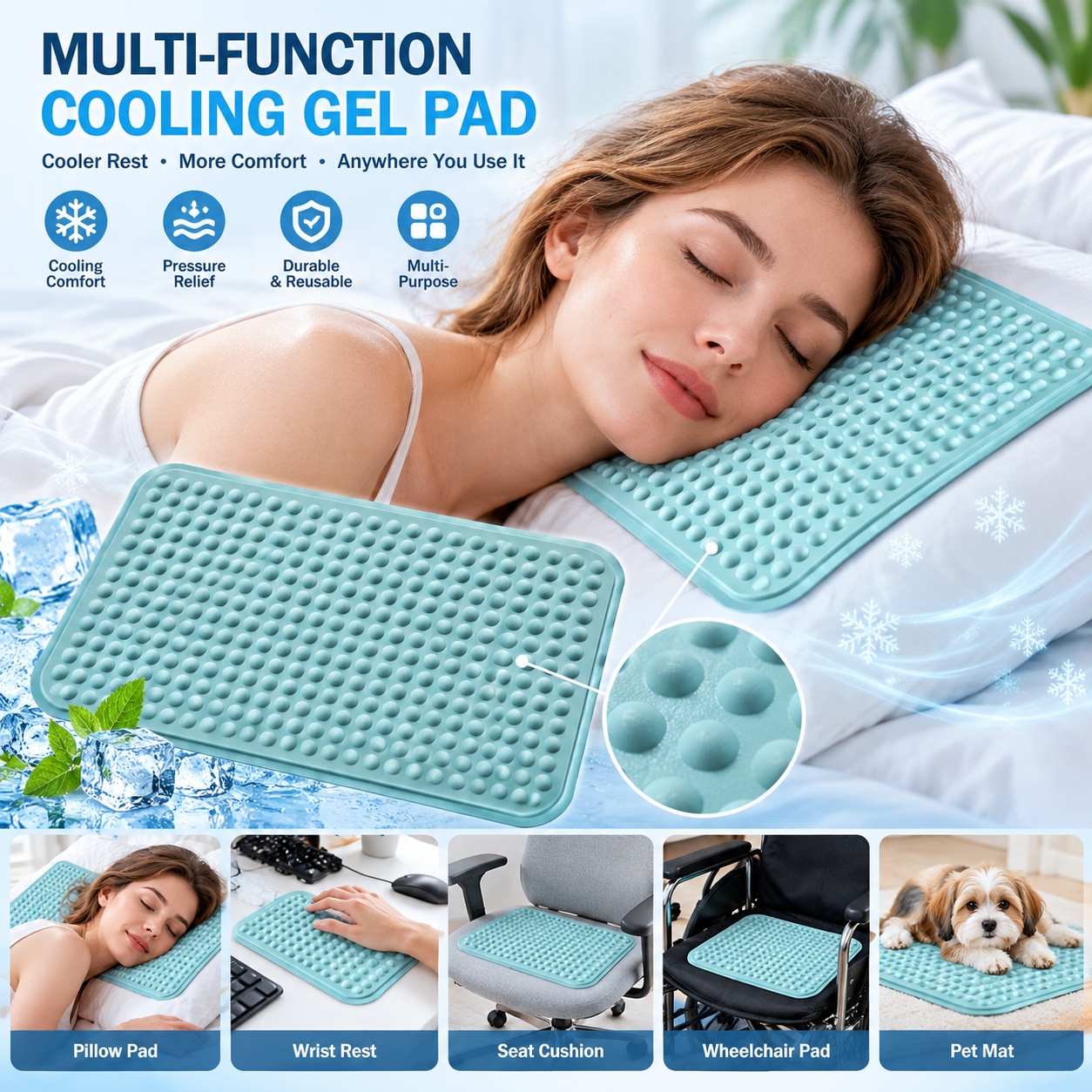
It's easy to assume every gel pad offers the same cooling relief, but the reality is far more uneven. Some pads use a dense, closed-cell gel that traps heat against your skin instead of letting it escape. Without intentional air channels or perforations, these pads can turn into warm, sticky surfaces after just a few minutes of use.
The difference often comes down to how the gel is structured. Breathable options feature open-grid patterns, cutouts, or a layered mesh that allows air to circulate beneath you. Cheaper designs may skip this step entirely, relying on a solid slab that feels cool at first touch but quickly warms up because there's nowhere for the heat to go.
When you're comparing gel pads, pay attention to the physical design rather than the marketing language. Look for visible ventilation holes, ridged surfaces, or a weave-like texture that promotes airflow. A pad that can't breathe won't just feel hotter over time; it can also trap moisture, leading to discomfort and unwanted odors that a truly breathable pad would help prevent.
The Overlooked Metric: Thickness and Neck Alignment
Most players obsess over wood type, pickup selection, or fret size, yet rarely give a second thought to how neck thickness interacts with alignment. A chunky profile paired with even a slight misalignment forces your fretting hand into awkward angles, quietly sapping stamina during long sets. On the flip side, a thinner neck that sits perfectly flush against the body allows your thumb to glide naturally, turning chord transitions into a nearly unconscious motion.
Alignment flaws tend to hide in plain sight. You might notice high action near the upper frets or a persistent buzz that no truss rod tweak fully resolves. These are often not setup issues but structural ones—where the neck meets the pocket, a fraction of a millimeter off center can tilt the entire string path. Checking this requires nothing more than a straightedge and a careful eye, yet it's routinely skipped in favor of more glamorous upgrades.
What gets overlooked is how deeply thickness shapes tone under your fingers. A thicker neck doesn't just feel different; it changes how vibrations travel back into your palm, subtly rounding out the attack. When that mass is correctly aligned, the instrument resonates as a single unit rather than a bolted-together assembly. Spend ten minutes comparing two guitars with identical specs but different neck geometry, and the difference stops being theoretical.
Cooling Placement Hacks for Side, Back, and Stomach Sleepers
If you sleep on your side, the biggest heat traps are your shoulders, hips, and the space where your knees press together. Place a cooling gel pad or a breathable bamboo pillow under your top arm and between your thighs to stop skin-on-skin warmth. Avoid tucking the blanket under your chin; instead, let your neck breathe by keeping the edge of the sheet loose across your collarbone.
Back sleepers often wake up sweaty along the spine and lower back because the mattress traps body heat. Slip a thin, moisture-wicking mat or a folded percale sheet just under your torso from ribs to hips. Keep a small chill pack wrapped in a cotton cloth at the small of your back—this works surprisingly well without making the whole bed cold. For your head, switch to a ventilated memory foam pillow with open-cell channels so heat can escape upward.
Stomach sleepers face unique challenges: your chest and belly press deep into the mattress, blocking airflow exactly where you generate the most heat. Use a low-loft cooling pillow or no pillow at all to prevent your face from sinking into a hot pocket. Put a thin, cool-feel topper just under your chest area, not the whole bed. And if you sleep with one leg bent, place a small chilled pad under the bent knee to stop concentrated warmth from building in that crease.
Keeping the Chill After Dozens of Washes
Most cooling fabrics lose their edge after a handful of washes. This one doesn't. The chill isn't just a surface treatment that fades once you throw it in the machine. After dozens of cycles, the fabric still holds that same instant coolness against your skin, which is exactly what you need when you're tired of products that start strong and then go lukewarm.
The trick lies in the yarn itself. Cooling fibers are spun directly into the weave rather than applied as a finish, so repeated agitation, detergent, and drying don't scrub away the effect. You can toss it in with the rest of your laundry, use regular detergent, and even tumble dry on low. The chill doesn't wash out because it's part of the material's structure, not an added layer waiting to peel off.
Waking Up Without the 3 A.M. Toss-and-Turn
Most people treat middle-of-the-night wakefulness as a problem to fix with more effort, but that usually backfires. If you find yourself staring at the ceiling at 3 a.m., the first move is to stop wrestling with your own thoughts. Give yourself permission to simply rest, not sleep. The pressure to fall back asleep often keeps your brain alert, while allowing your body to stay still and your mind to wander loosely can ease you into a more natural drift.
Small adjustments earlier in the day matter more than what you do at night. A consistent wake time, a short walk in daylight, and cutting caffeine by early afternoon help set your internal clock. In the moment, if you've been awake for more than twenty minutes, shift to another room with dim light and do something mildly boring until your eyelids feel heavy. Returning to bed only when sleepy retrains your brain to associate the sheets with rest rather than frustration.
FAQ
The gel layer pulls heat away from your head and neck, then slowly releases it into the air instead of trapping it in the pillow. You start to feel the difference within minutes, and it holds that cooler surface for hours rather than fading after a short while.
Most quality gel pads are cut to match standard and queen pillow dimensions, roughly 20 by 30 inches. Some also have a trim-to-fit option if your pillow is an unusual shape, so check the package before cutting.
No, the top layer is usually a breathable mesh or cotton blend that sits between your skin and the gel. It keeps the cooling surface smooth and dry, so you don't get that plastic-like cling or slide.
Yes, it pairs well with memory foam because foam tends to hold body heat. The gel pad adds a cooling barrier on top, so you keep the contouring support without the usual heat buildup.
Wipe the gel side with a damp cloth and mild soap, then let it air dry completely. Avoid machine washing or harsh scrubbing, as that can crack the gel layer or weaken the cooling performance over time.
A decent gel pad has a non-slip backing or straps that grip the pillow, so it won't bunch up or slide off. If yours shifts a lot, it might be too small for your pillow or the backing has worn out.
Yes, it's designed for hot sleepers. The cooling surface helps regulate temperature and reduce sweat buildup, but it won't feel icy cold — just noticeably cooler than a regular pillowcase.
With normal use, expect one to three years. The cooling effect fades gradually as the gel layer ages, but keeping it out of direct sunlight and cleaning it gently can stretch that timeline.
Conclusion
If you’ve ever bolted awake at three in the morning with your pillow feeling like a damp heating pad, you already know why the right gel pad matters. The real test isn’t just the cool touch on first contact—it’s whether the pad lets air move through instead of trapping your own heat against your face. Cheaper options often use a solid gel layer that turns into a barrier, while the better designs use open-cell or perforated gel paired with breathable fabric channels. Just as important is thickness: too thin and you barely notice the cooling; too thick and your neck gets pushed into an awkward tilt that leaves you stiff by sunrise. Side sleepers usually need a slightly thicker pad to fill the gap under the ear without collapsing, back sleepers do well with a medium profile, and stomach sleepers should look for the thinnest pad possible to avoid craning the neck. Placement tweaks—like shifting the pad toward the upper third of the pillow—can fine-tune relief without buying a whole new setup.
Durability matters more than most reviews admit. If the gel loses its chill after a dozen wash cycles or the edges start peeling, you’re back to the 3 a.m. sauna. The best pads hold up to regular machine washing on a gentle cycle, often with a mesh cover that protects the gel from direct abrasion. What you’re really after is the difference between waking up groggy and sweaty versus sleeping through the night without the toss-and-turn. A well-chosen gel pad won’t magically fix a bad mattress, but it can stop heat buildup at the exact spot where it disrupts deep sleep. Once the midnight flips stop and you wake up with the pillow still cool, you’ll know the pad earned its place.
Contact Us
Contact Person: Catherine Peng
Email: [email protected]
Tel/WhatsApp: +86-13434169510
Website: https://www.kbcoolgel.com/