

Bulk FIP Injectable GS-441524: What You Should Know Before Buying
2026-09-09
Buying bulk FIP injectable GS-441524 can feel like a high-stakes gamble. You're not just spending money—you're trusting a vial with your cat's life. Over the years, we've seen too many heartbreaking failures from buyers who skipped the homework. At Lucpets, we believe transparency matters more than flashy claims. That's why this guide cuts through the noise and lays out exactly what you need to know before placing that bulk order: from purity testing and supplier vetting to storage and dosing pitfalls. Don't let a rushed decision put your cat at risk. Read on before you buy.
The Real Reason Injectable GS-441524 Dominates FIP Treatment
Injectable GS-441524 took the lead in FIP treatment because it offers a degree of pharmacokinetic predictability that oral forms often lack in sick cats. A cat with wet FIP may have gut edema, vomiting, or poor appetite, all of which make intestinal absorption erratic. Subcutaneous injection bypasses those variables and pushes the drug into extracellular fluid at a rate the body can handle. That means a clinician can hit a target plasma level more consistently from day one, which is crucial when the virus is already active in the abdomen, chest, or nervous system.
Early field use also built the injectable route into the standard protocol before oral suspensions were widely trusted. Rescuers and veterinarians who treated the first large wave of FIP cases had little choice: the injectable form was what had been tested in controlled settings, and it was available through compounding channels. Once thousands of cats responded, that route became the default reference point. Oral GS-441524 later proved useful for maintenance, but switching too early or relying on it for initial therapy felt risky to people who had seen injections work.
There is also a practical side. Injectable GS-441524 can be produced with fewer stability and taste-masking problems than oral liquids, which made it easier to distribute in the early days of black-market and compounded supply. That head start created a feedback loop: more data, more clinician comfort, more protocol reinforcement. Even now, many treatment guides recommend starting with injections for the first several weeks before considering oral transition, not because oral is ineffective, but because the injectable route has a longer paper trail and a more direct line to systemic exposure.
Bulk Buying Basics: What a Legitimate Supplier Looks Like
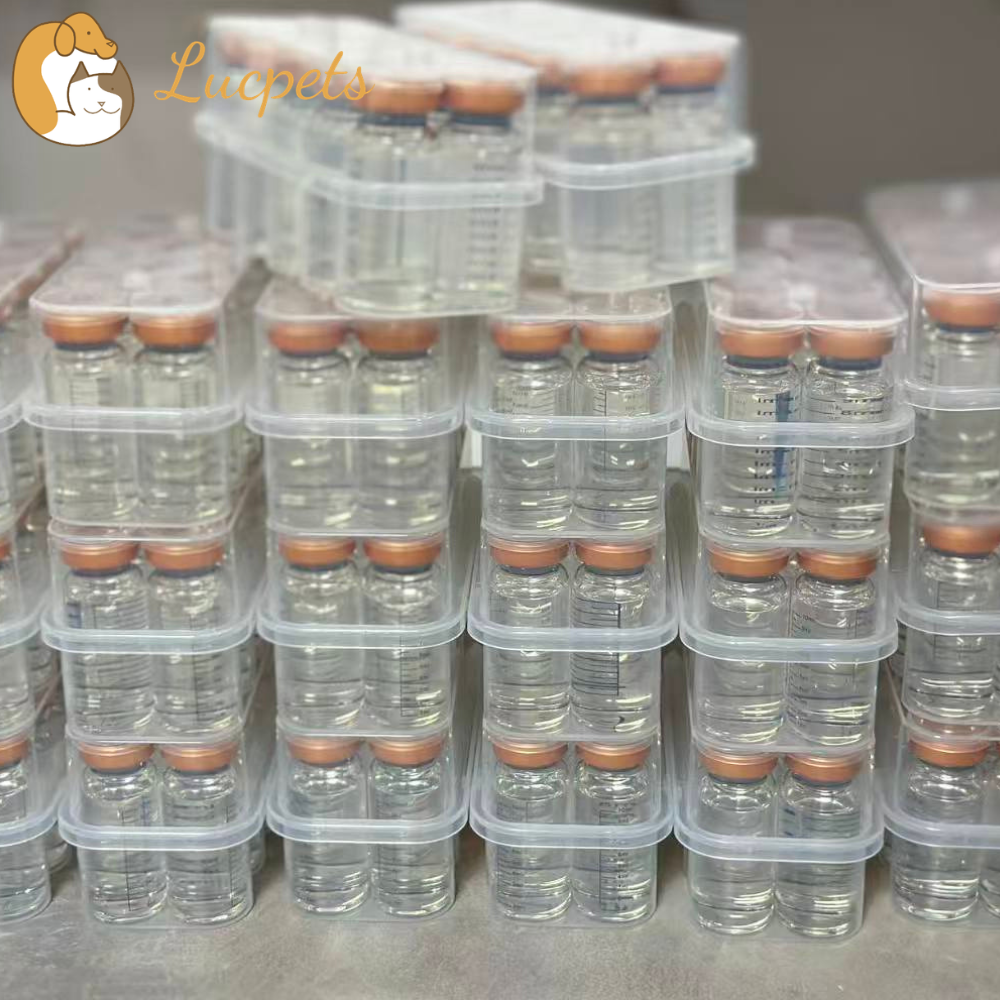
A supplier worth your money rarely hides behind vague promises. They hand over a verifiable business address, a working phone line answered by a real person, and tax documents that match the name on their invoices. If you ask for a sample, they ship it without demanding a minimum order first—or at least apply the sample cost to your first bulk purchase. Watch for small but telling signs: a professional email domain instead of a free Gmail account, detailed product specs that don’t copy-paste from a competitor’s site, and a clear return policy that doesn’t shift all risk onto you after delivery.
Legitimate suppliers also understand that bulk buyers need proof of consistency. They can provide batch numbers, recent third-party lab reports for safety or quality claims, and references from other buyers who ordered similar volumes. Don’t settle for a single glossy photo—ask for a live video call walking through the warehouse or production floor. If they dodge that request or push for payment through an untraceable wire transfer, treat it as a red flag. The strongest vendors don’t just sell you a product; they walk you through storage conditions, packaging options, and lead times without making you feel like an inconvenience.
Finally, compare their pricing against the market without assuming cheap means fake or expensive means safe. A legitimate supplier might charge slightly more because they include proper licensing, insurance, and after-sale support in the quote. Ask for a breakdown: unit cost, shipping method, customs documentation, and who handles damaged goods. If they can’t explain how they’ll resolve a short shipment or a quality dispute before you sign a contract, keep looking. Trust builds faster when the supplier treats your first inquiry like the start of a long-term relationship rather than a one-off transaction.
Purity, pH, and Particulates: Quality Checks You Can't Skip
Overlooking a simple purity check can quietly derail an entire batch. Instead of trusting the spec sheet, run a handheld conductivity meter through every incoming container. It takes less than a minute, but that single reading will catch ionic contamination that visual inspection misses. Pair it with a quick refractive index spot check, and you have a practical early warning system that doesn't slow down production.
pH drift is often treated as a minor annoyance until it isn't. Rather than relying on a single calibration at the start of the shift, keep a small log of readings every two hours and note the temperature alongside them. Those paired data points reveal sluggish electrode behavior and buffer fatigue long before the final product is out of spec. For stubborn solutions, a quick titration against a fresh standard beats any amount of guesswork.
Particulates rarely announce themselves until a customer complains. That is why a simple laser pen test through a clear vial is worth more than a twelve-page certificate. Hold the beam at a low angle against a dark background; if you see a faint Tyndall cone, the lot needs filtering no matter what the particle counter claims. Combine that with a 25-millimeter filter patch inspection every few hours, and you turn a subjective glance into a repeatable habit that protects downstream equipment.
Storage Blunders That Turn a Good Batch Bad
Nothing guts a promising batch faster than a lid that doesn't seal, a jar left near the stove, or a "cool dark place" that's actually just a cluttered pantry shelf. The first big mistake is moisture: even a few drops of water hiding in a container or a spoon can invite mold before you've finished the first week. A second batch killer is temperature swings. Storing jars on top of the fridge or next to a window means the contents warm and cool daily, which breaks down texture and dulls flavor fast.
Another overlooked blunder is overcrowding. When you pack too many jars into a tight space, air can't circulate, and any stray condensation gets trapped. That humid microclimate is exactly where off-flavors start. Label confusion matters too: a batch without a date or a clear name often gets pushed to the back, only to resurface months later with a funky smell and a color that's no longer right.
Finally, don't trust a container just because it looks fine. Hairline cracks in glass, worn gaskets, or lids with tiny rust spots let air in slowly. One compromised seal can undo weeks of careful work. Give each jar a quick check before it goes on the shelf, and rotate older batches to the front so they get used first. Small habits like these keep a good batch good.
Legal Landmines in the Bulk GS-441524 Market
Buying bulk GS-441524 often looks like a straightforward way to cut costs, but the legal exposure starts at the border. The compound is not approved by the FDA for veterinary use in the United States, and most bulk powder shipments originate from unregistered overseas manufacturers. Customs officials can seize large orders as unapproved new animal drugs, leaving the buyer with no product and no reliable refund. Even when a shipment clears, the person reselling it may be treated as introducing an adulterated or misbranded drug into interstate commerce, which carries civil and criminal penalties under the Federal Food, Drug, and Cosmetic Act.
Patent and compounding rules add another layer of risk. GS-441524 falls within broader intellectual property held by Gilead Sciences, and bulk resale without a license can invite infringement claims if the rights holder chooses to act. The compounding defense that protects some pharmacy-made medications only works for patient-specific prescriptions with a valid veterinary-client-patient relationship. Bulk distribution to clinics, breeders, or online buyers does not fit that narrow exception, and state pharmacy boards have disciplined licensees for treating bulk GS-441524 like an over-the-counter product.
Contract language rarely saves a bulk seller from regulatory or tort liability. Many transactions rely on informal purchase orders or label the powder as a research chemical, but that label does not override evidence that the buyer intends to use it in cats with FIP. If a batch is contaminated or misdosed and animals are harmed, sellers can face product liability suits and fraud allegations even if they included a disclaimer. Criminal referrals are less common but possible when large quantities, false declarations, or relabeling schemes suggest intentional evasion of drug approval requirements.
From Vial to Vein: Getting the Dose Right Every Time
Getting the dose right from vial to vein isn't just about math on a whiteboard—it's a chain of small, exacting steps where a single slip can ripple into real harm. Think of every transfer, every dilution, every line flush as a handoff in a relay race: the final concentration depends on the slowest, most careful pass. Nurses and pharmacists often develop their own quiet rituals, like double-checking the meniscus at eye level or drawing up a touch more than needed and pushing back the excess, not because protocol demands it, but because they've seen how easily a cloudy vial or a misread label can turn a routine dose into a near miss.
What rarely makes it into textbooks is how much the physical properties of the drug shape the process. A viscous solution clings to the syringe wall; a foamy biologic traps air that looks like volume; a light-sensitive medication degrades in the time it takes to walk from the med room to the bedside. Experienced clinicians learn to compensate—warming certain vials in their palms, pausing after reconstitution to let bubbles settle, using low-protein-binding filters for molecules that stick to plastic. These aren't shortcuts; they're the difference between the nominal dose on the chart and the actual dose that reaches the bloodstream.
Perhaps the most underappreciated variable is the line itself. IV tubing holds dead volume that can hide a significant fraction of a small pediatric dose, and the order in which medications are pushed through a shared lumen matters more than most realize. A slow saline flush after a potent drug can deliver a bolus the prescriber never intended, while a too-rapid push can cause transient toxicity even when the total dose is correct. The best teams treat the entire path—vial, syringe, tubing, catheter—as one continuous system, and they verify not just the number on the label, but the reality at the tip of the cannula.
FAQ
Bulk usually means a larger quantity, like 10, 20, or 50 vials purchased at once, often directly from a manufacturer or a group buy. The molecule is the same, but you are taking on more responsibility for storage, handling, and verifying the batch’s quality since you won’t get individual retail packaging with the same level of documentation.
The main draw is lower cost per vial. FIP treatment runs 84 days, and a cat may need multiple vials per week depending on weight. Bulk purchasing can cut total costs significantly, but it also locks you into one batch and one supplier, so if something goes wrong you could be stuck with unusable product.
Ask for a recent third-party HPLC report showing purity above 98.5% and an exact concentration, usually 15 mg/mL or 20 mg/mL. Also look for a sterility test and endotoxin results. If a supplier hesitates to share these or only offers an in-house certificate, treat that as a warning sign.
Keep vials in a cool, dark place, ideally refrigerated between 2°C and 8°C, and never freeze them. Protect from direct light because GS-441524 can degrade with prolonged UV exposure. If you see particles, cloudiness, or color changes in a vial, don’t use it.
Watch for prices far below market average, vague answers about manufacturing origin, lack of independent lab reports, pressure to pay via irreversible methods only, and no clear refund or replacement policy for damaged shipments. Legitimate bulk suppliers should be transparent about the production batch, storage conditions during shipping, and how they handle customs seizures.
Yes, in many places GS-441524 is not approved for veterinary use and may be treated as an unlicensed pharmaceutical. Bulk orders can attract more scrutiny than single vials, and there’s a real chance of seizure or delays at customs. You should check your country’s import rules and have a plan with the supplier for reshipment or refund if the package doesn’t clear.
Many cats can switch if they are stable and eating well, but the dosing is not perfectly equivalent because oral absorption varies. Work with a veterinarian experienced in FIP treatment to adjust the dose and monitor bloodwork. Having extra injectable vials left over is not a failure; you can keep them as backup in case oral medication causes vomiting or poor response.
With proper refrigeration, unopened vials often remain stable for 12 to 24 months depending on the formulation. Check for a printed manufacture date and expiry date on each vial. Any change in color from clear to yellow or brown, visible crystals that don’t dissolve at room temperature, or a leaking seal means the vial should not be injected.
Conclusion
Injectable GS-441524 remains the backbone of FIP treatment because it delivers predictable blood levels quickly, which matters when a cat is too sick to absorb oral medication reliably. If you are buying in bulk, stop thinking only about price per vial. A legitimate supplier should openly share batch-specific certificates of analysis, list the exact concentration and formulation, and be willing to discuss how the product is compounded. If they dodge questions about sterility, particle counts, or pH, walk away.
Quality testing is not optional. You need third-party results for purity, bacterial endotoxins, and particulate matter. A clear, particle-free solution with the correct pH reduces the risk of vein irritation and injection-site reactions. Storage mistakes also destroy good product: freeze-thaw cycles, direct light, and repeated punctures of the same stopper can degrade GS-441524 and invite contamination. Keep vials refrigerated if the supplier requires it, and draw doses with strict aseptic technique. Finally, dosing must be based on the cat's current weight, not a guess from last week. Many relapses trace back to underdosing or inconsistent injection technique. Legal risk is real too—importing unapproved veterinary drugs may violate local regulations. Ask yourself whether saving money on bulk pricing is worth confiscation, fines, or a delayed treatment start. When you choose a supplier, you are choosing your cat's best chance at recovery.
Contact Us
Contact Person: Aaron
Email: [email protected]
Tel/WhatsApp: +86 18177165140
Website: https://www.lucpetsglobal.com