

Character LCD Display Company Tips for Reliable Custom Alphanumeric Panels
2026-11-02
When your product needs a custom alphanumeric panel that just works—without flicker, ghosting, or field failures—the choices you make early in the design process matter more than the display itself. Over years of building character LCD modules for medical, industrial, and automotive customers, Jingda-Display has learned that reliability isn't a spec sheet line item; it's a result of material selection, driving voltage, contrast tuning, and honest communication between buyer and manufacturer. Before you lock in a datasheet, take a moment to understand the practical tips that separate displays that survive from ones that silently age.
Reading Between the Lines: Contrast Specs Worth Asking For
Most spec sheets toss out a contrast ratio number without telling you how it was measured. A 3000:1 figure from one brand may rely on a dynamic backlight that dims aggressively in dark scenes, while another brand's 1000:1 is a true native panel measurement. Before comparing two monitors side by side, ask whether the contrast number refers to static native contrast or dynamic contrast, and under what brightness setting it was captured. A high dynamic number often just means the backlight can turn off completely, which isn't helpful for real mixed-content viewing.
Black uniformity is another hidden variable that raw contrast specs ignore. A panel might boast 2000:1 at the center of the screen, yet show visible clouding or flashlight bleed in corners when displaying a dark image. This kind of defect rarely appears in the headline specs, but it has a bigger impact on movie watching and dark-room gaming than a theoretical contrast figure. If you can't see the unit in person, look for review measurements that include corner luminance at low brightness levels, not just center-screen contrast.
Finally, contrast interacts with local dimming zones in ways that are easy to misread. Two TVs might both claim full-array local dimming, but one has 32 zones and the other has 500. The spec sheet won't tell you how well the algorithm prevents haloing around bright objects or how quickly the zones respond to motion. Ask about zone count transition speed, or better yet find a test pattern showing a moving white dot on a black background. That single scenario reveals more about real contrast performance than any printed ratio ever will.
Burn-In Bench Checks We Run Before Sign-Off
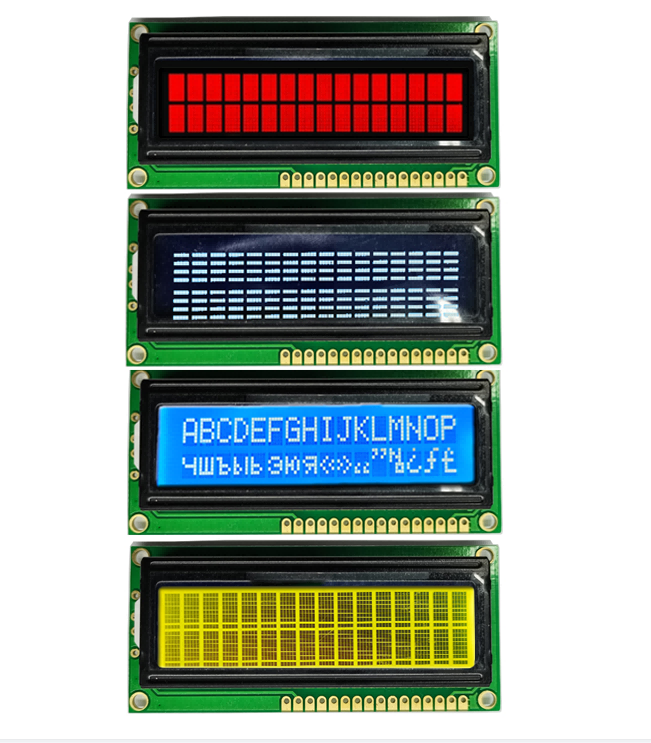
Every prototype that leaves our bench goes through a series of burn-in checks designed to catch failures that only surface after hours of continuous operation. We start by loading the board with a worst-case synthetic workload, then monitor rail voltages, clock jitter, and thermal drift at five-minute intervals for at least six hours. This isn't a pass/fail box-ticking exercise; we log every fluctuation and compare it against tolerances we've derived from field data, not just datasheet limits.
Next we cycle the unit through rapid power interruptions, brownouts, and brown-in sequences while the firmware is actively writing to non-volatile memory. Any corruption, watchdog reset, or unexpected state change immediately flags the unit for teardown. We also monitor for tin whisker growth and solder joint stress by subjecting the board to repeated thermal shock between -20°C and 70°C, while a vibration table runs at a low amplitude to simulate transport and installation knocks.
Only after these checks produce a clean log for two consecutive runs do we sign off. The goal isn't to prove the design works on a good day—it's to make sure the unit doesn't quietly degrade in the field. If a marginal capacitor or a drifting oscillator is going to fail, we'd rather see it on our bench than hear about it from a customer six months later.
Viewing Angle Tradeoffs for Sunlit Panels
Under full sun, a panel that looks crisp head-on can lose much of its contrast when you step a few degrees to the side. This is not just a dimming effect; colors shift, blacks turn gray, and text may appear to float behind a veil of reflected sky. Panel designers often have to decide whether to prioritize a narrow sweet spot with excellent frontal clarity or a wider viewing cone that softens the image slightly across the board.
Outdoor use adds another wrinkle. Anti-glare coatings and high-brightness backlights help, but they can also narrow the acceptable viewing range if not tuned carefully. A matte surface scatters incoming sunlight, which reduces hotspot glare but can wash out the image when viewed off-axis. In practice, the best solution depends on the installation angle and typical operator position, so a panel that reads beautifully on a bench may need slight adjustment once mounted in real daylight.
Vibration-Proofing Connectors on Custom Alphanumeric Modules
In many industrial and automotive installations, alphanumeric modules face constant mechanical stress. The connection points between the module and its driving board often become a hidden failure source if ignored during design. Vibration-proofing connectors address this by integrating locking features such as screw flanges, snap-in latches, or bayonet couplings directly into the custom module housing.
A well-designed custom layout also shifts the connector away from high-flex areas and routes the mating cable through a strain-relief channel. Some builds include a secondary retention clip that only engages after the primary latch closes, which prevents micro-fretting on contact surfaces during prolonged low-amplitude, high-frequency vibration.
Material choices matter just as much as mechanics. Gold-over-nickel plated contacts inside high-temperature thermoplastic bodies resist oxidation and keep impedance stable even when the module is bolted to an engine block or a vibrating conveyor. This cuts down intermittent data errors and extends the functional life of alphanumeric displays in harsh environments.
Extended Temperature Drivers: What the Datasheet Leaves Out
Every LED driver datasheet lists an operating temperature range, but the real story of extended temperature performance goes far beyond a couple of numbers printed on page one. Those figures often assume ideal mounting, steady-state operation, and a test bench that ignores the messy reality of enclosed fixtures, thermal interface materials, and voltage ripple. What the sheet won't tell you is that the driver's internal electrolytic capacitors may lose half their rated lifetime for every ten degrees above the tested ambient, or that the inrush current limiting thermistor behaves differently after repeated cold starts at -40°C. The gap between specified and actual behavior is where your lighting design either quietly fails or survives a decade.
Another omission is the dependency between temperature and dimming performance. At the extremes, the control loop's gain shifts, leading to flicker at low dimming levels or a sluggish response when the load changes. Some drivers compensate with firmware that detects temperature and adjusts the PWM frequency, but many do not, and that detail rarely appears in the public datasheet. Even the thermal shutdown threshold, usually stated as a single value, has a tolerance band that can trigger early shutdown in a hot ceiling cavity, cycling the light on and off in a pattern that looks like a faulty sensor but is actually a driver protecting itself from an undersized heatsink design.
For engineers pushing the envelope of outdoor signage, horticultural lighting, or industrial high-bay fixtures, the missing data points are often the most valuable: derating curves for different input voltages, the coefficient of thermal expansion between PCB and housing, and the shift in efficiency as the magnetic core saturates slightly at high temperature. These are the details that separate a driver that lists "-40 to +70°C" from one that actually delivers stable lumen output across that range after thousands of thermal cycles. Rather than trusting the headline number, request the full thermal characterization report and test the driver in your specific enclosure with your exact thermal pad and airflow conditions. That small extra step reveals what the datasheet leaves out.
Designing Custom Fonts That Stay Legible After Aging
Creating a custom typeface that remains legible after years of use requires anticipating how the font will degrade across different media and viewing conditions. Unlike standard fonts designed for immediate crispness, a durable custom font must account for ink bleed on paper, pixelation on low-resolution screens, and the subtle softening that occurs when type is printed on textured surfaces. Designers often start by exaggerating the features that promote recognition: open apertures, generous counters, and a taller x-height relative to cap height. These adjustments help individual letterforms hold their shape even when edges become blurred or filled in over time.
One practical approach is to simulate aging during the design process by applying blur filters, reducing contrast, or printing test sheets on newsprint to observe how strokes merge. Thin hairlines and delicate serifs are usually the first to disappear, so robust fonts for aging environments tend to favor uniform stroke widths and simplified details. Additionally, spacing plays a critical role—slightly wider letter spacing prevents characters from visually fusing when ink spreads. For digital applications, hinting and anti-aliasing settings should be tuned to preserve legibility at small sizes, as subpixel rendering can erode thin strokes on older displays.
Finally, iterative testing with real-world samples is essential. A font that looks sharp on a high-resolution monitor may fail completely when photocopied, faxed, or viewed on a worn-out screen. Designers should gather feedback from environments where the font will actually be used—signage exposed to sunlight, printed materials for archival records, or interfaces running on legacy hardware. By prioritizing clarity over stylistic flourishes and continually refining based on degraded outputs, a custom font can maintain its communicative power long after its initial release.
FAQ
Focus on wide temperature tolerance, rugged construction, and a proven controller like HD44780. Also ask about conformal coating if humidity or dust is a concern.
Most manufacturers can adjust the polarizer and twist angle for different viewing directions. Just specify whether you need 6 o'clock or 12 o'clock orientation.
Reflective displays work well in bright ambient light without a backlight, while transmissive ones need a backlight but perform better in dim or dark conditions. Some companies offer transflective as a middle ground.
Rushing the pinout or forgetting to confirm the display's initialization timing can lead to integration headaches. Always get a full datasheet and a sample before committing to a large batch.
Many suppliers can create custom segment or icon areas alongside the standard 5x8 dot matrix characters. It usually requires a one-time tooling fee.
It matters a lot. LED backlights tend to outlast EL or CCFL options and generate less heat. For 24/7 operation, opt for a high-quality LED array with proper current limiting.
Most character LCDs let you define up to 8 custom characters in RAM, but for full multilingual support you may need a display with a built-in character generator ROM for that language or a graphic LCD instead.
Request details on their testing process, like burn-in tests, vibration testing, and pixel inspection. A good supplier will share failure rates or offer extended warranty on custom builds.
Conclusion
When sourcing custom alphanumeric LCD panels, most buyers fixate on contrast ratio numbers, but those specs rarely reflect how the glass behaves after a few hundred hours of backlight heat. We ask suppliers for off-axis contrast measurements at the exact viewing angles your enclosure will force—especially for sunlit panels where a 6 o'clock bias can wash out characters by mid-morning. Before sign-off, we run our own burn-in bench checks: displaying a full character map for 72 hours at elevated temperature, then swapping to a blank screen to catch ghosting or stuck segments that spec sheets never mention. Viewing angle tradeoffs are not a single specification; they shift with polarizer choice, fluid type, and even the zebra strip alignment. For outdoor or high-glare installations, a panel that looks crisp straight-on may become unreadable when tilted 20 degrees upward, so we test under real sunlight and shadow patterns rather than trusting a generic "wide viewing angle" claim.
Mechanical and environmental failure points are where custom alphanumeric modules actually die, not from pixel defects. We vibration-proof every connector by adding a bead of neutral-cure silicone at the FPC-to-PCB junction and using locking pin headers instead of friction-fit sockets, because shipping and machine vibration loosen standard contacts within weeks. Extended temperature drivers are another hidden trap: datasheets often list -20°C to +70°C for the controller, but the LCD fluid itself slows down below -10°C, causing characters to lag or refresh ghost. We specify film-compensated STN fluid and measure drive voltage at cold soak, not just ambient. Finally, custom fonts need to survive aging: thin strokes and tight apertures close up as the panel's contrast decays over 5,000 hours, so we design with minimum stroke width 0.3 mm and test a prototype after accelerated aging. A panel that looks sharp on day one should still be legible after two years of 24/7 use.
Contact Us
Contact Person: Vincent
Email: [email protected]
Tel/WhatsApp: 86 135 5485 1379
Website: https://www.jda-display.com/