

China Food Bikes Turn Every Ride Into a Street Food Adventure
2026-11-25
In Chengdu, a bike with a bamboo steamer strapped to the back is not a gimmick—it’s breakfast. China’s food bikes turn every ride into a street food adventure, carrying sizzling pans, folded dumpling tables, and late-night noodle stops through alleyways that no food app can map. This is eating at street level, where the route matters as much as the destination. TUNE taps into that same unstoppable, move-and-serve energy, making every journey feel less like a commute and more like a rolling discovery.
Steam, Smoke, and Spokes Before Sunrise
The air at 4:50 a.m. has teeth. It carries the mineral bite of wet asphalt and the faint sweetness of coal smoke drifting from the old depot three blocks over. There is no color yet, only gradients of blue and sulfur where the streetlamps try to hold the dark back. A freight train exhales somewhere behind the warehouses, and the whole alley smells briefly of hot grease and cold iron.
I push off from the curb and the bike settles under me with a tick of spokes. Each revolution sends a thin line of silver past the headlight beam, while my breath curls into the same fog that leaks from diner vents and basement boilers. Nothing moves except steam, smoke, and the slow constellation of my wheels.
By the time the first pink cut appears over the river, the train has gone quiet and the chimneys have thinned to pale ribbons. The city feels unclaimed, as if the night forgot to lock the gates. I ride until the spokes stop sounding like a machine and start sounding like a pulse.
The Wok Rack on the Back of a Flying Pigeon
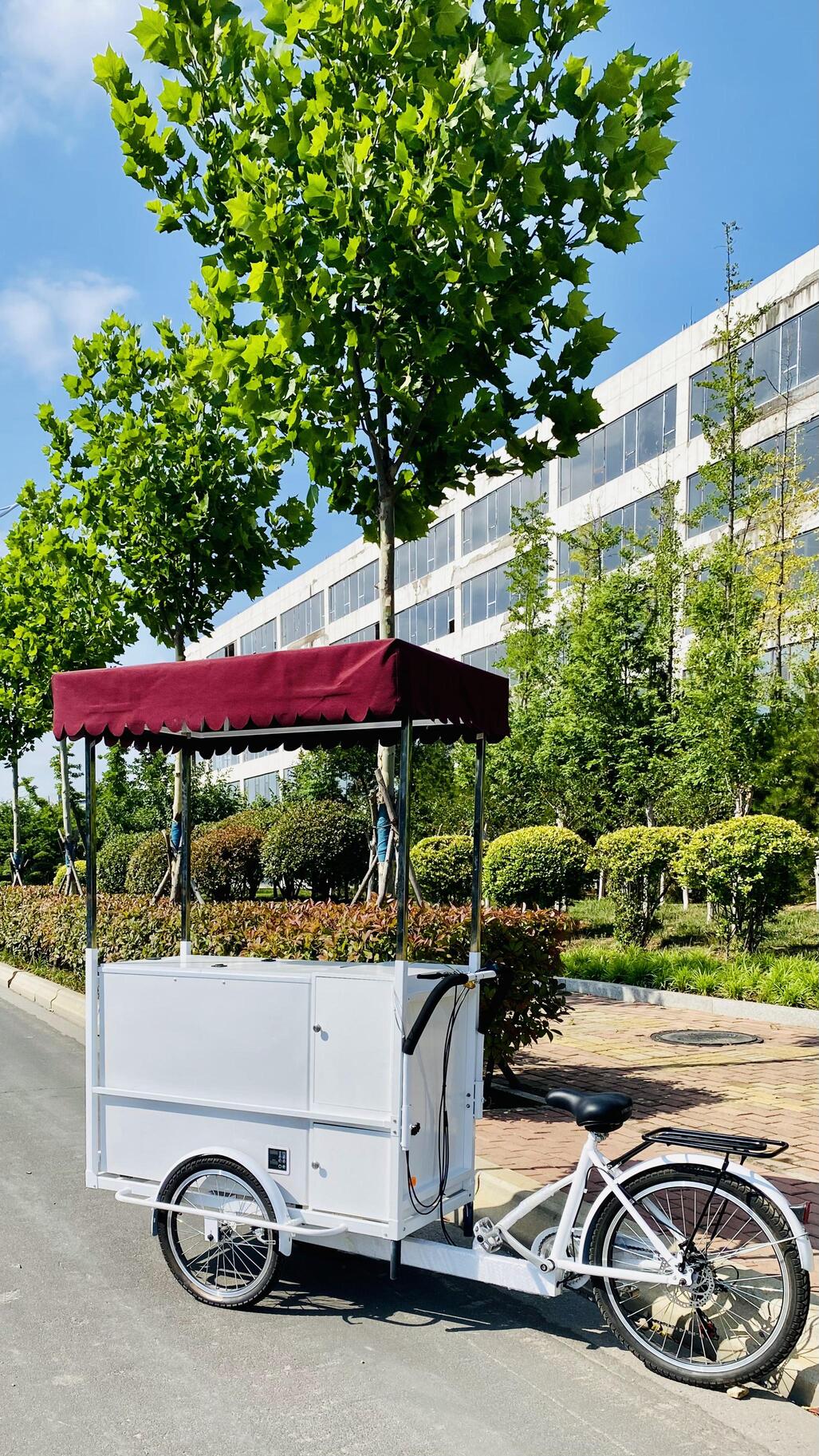
A Flying Pigeon with a wok rack bolted over the rear wheel rarely draws a second glance in the older neighborhoods, but it carries more than cookware. The steel frame flexes under a stack of blackened pans, bottles of oil, and a cloth bundle of greens, while the rider threads through narrow lanes without spilling a drop.
Most of the weight sits low and slightly behind the axle, which makes the front wheel feel light until the basket up front is loaded with folded tables and plastic stools. People who set up these mobile kitchens learn to steer with their hips and brake early; the load pushes them forward just as the wok starts to sing.
At dusk the setup comes apart in reverse: burners off, wok scraped clean, lid tied down with a strip of inner tube. The Flying Pigeon creaks once under the rack, then rolls away into the streetlight, leaving only the smell of hot oil and chili drifting over the curb.
Old Hutong Corners Where Food Bikes Gather
The corner announces itself before you see it: a waft of scallion oil, the dull clatter of a wok, and a cluster of bicycle frames leaning into the shade. By five, the first carts have already claimed the cracked paving stones, their burners hissing under worn iron plates. Commuters peel off the main lane, ducking past laundry poles and parked scooters, until the narrow alley opens into something closer to an open-air kitchen than a thoroughfare.
Nothing here is arranged for show. A woman folds jianbing on a black griddle while two men argue over the last stool near a steaming pot of tanghulu syrup. Skewers of lamb spit and char over a low trench of coals, and a bike with a blue cooler sells bottles of yogurt that sweat in the evening heat. Regulars nod at the vendors, order without naming a dish, and find space on upturned crates beside a wall of half-scraped flyers.
The gathering rarely survives the night. By ten, wheels are wiped down, propane valves are closed, and the corner returns to cats and parked bicycles. Rain moves the whole operation under a nearby overhang; winter thins the crowd but never quite empties it. These are not fixed stalls but habits of the street, returning to the same old hutong corners until the city decides otherwise.
Balancing Lanzhou Noodles on a Bumpy Lane
The alley behind the noodle shop barely qualifies as a road. Rain has chewed it into a series of small craters, and the delivery rider treats the handlebars like a set of reins. The bowl in his left hand tilts just enough to let the broth climb the inner wall, then settle back without breaking its oily surface.
A wheel drops into a rut and his elbow rises, absorbing the jolt before it reaches his wrist. The noodles swerve under a scattering of cilantro, the beef shifts half an inch, and nothing slurps over the rim. By the time he reaches the courtyard, the only sign of the lane is a faint ring of dried broth on the bowl's edge.
Morning Congee Routes and Midnight Skewer Runs
The morning route isn't marked on any map. It runs through the back of the market where the rice porridge pots are older than most of the customers and the cooks still judge thickness by how long the steam takes to clear. Some bowls show up pale and plain, needing only a spoon of salted duck egg and a scatter of ginger. Others arrive murky with preserved egg and lean pork, the kind of bowl that makes conversation stop for a solid three minutes.
When the last bus leaves, the same alleys shift into a different rhythm. Skewer vendors set up under bare bulbs, and the air turns sharp with cumin and char. The midnight run works best with no plan: grab lamb tendon at the first cart, wait for a fresh round of chicken hearts at the second, and let somebody else argue about which place does the best grilled bread. It's less about being full and more about staying outside long enough to see the street change its mind again.
Chasing the Bell You Heard Three Blocks Away
The first time I heard it, I was standing in a laundromat folding a shirt that still smelled like someone else's detergent. A low, heavy chime rolled through the open door, not like a church bell but slower, as if the city were clearing its throat from three blocks away. I put the shirt down and stepped outside. Nobody on the sidewalk lifted their head. The sound came again, slightly deeper, and I started walking toward it without checking the crosswalk light.
You learn quickly that a bell you can hear from three blocks is never where you expect. It slips behind a delivery truck, bounces off a brick face, then seems to rise from a subway grate. I followed it past a bodega with all the fruit stacked too high, past a fire escape where a man in a tank top was arguing with a pigeon. By the fourth block, the chime had changed again — more metallic, almost impatient. I didn't know if I was getting closer or if the bell was moving too. That uncertainty made me walk faster, not because I needed to catch it, but because stopping felt like admitting the city had already given me the only hint it would.
Eventually the sound faded behind a row of boarded-up storefronts and never returned. I stood at the corner with a cramp in my side and no bell to show for it. An old woman selling roasted chestnuts watched me catch my breath and said, "You won't find it that way." I wanted to ask what way, but she turned back to her pan. I bought a small paper cone of chestnuts and ate them standing under a dead awning. They were hot enough to burn my fingers. That night I dreamed the bell was ringing inside my own chest, but when I woke, the only sound was the radiator knocking, and somehow that felt close enough.
FAQ
It's a bicycle or tricycle converted into a compact kitchen, often carrying a wok, gas burner, folding prep table, and containers of chopped aromatics and sauces. The rider can set up anywhere flat, fire up the flame, and be cooking within a couple minutes.
Because the route starts to matter less than the smells. You follow a trail of scorched chili, sizzling oil, or roasting cumin, and suddenly a routine ride becomes a guessing game over which narrow lane hides the next hot meal.
Plenty. Jianbing with egg and scallion, noodle soups with pickled mustard greens, cumin-dusted lamb or potato skewers, cold noodles in summer, and steamed rice cakes or roasted sweet potatoes when the weather turns cold.
Not everywhere. They cluster around night markets, metro exits, old residential blocks, and school gates. Some cities allow them more openly, while in others they appear at fixed hours or slip into side alleys once evening traffic builds.
A bike is cheap to start, requires no lease, and lets the cook chase foot traffic. If a location goes quiet, they can ride a few blocks, choose a better corner, and be back in business before their regulars even notice.
Constantly. The clearest signal is a line of taxi drivers, students, and office workers standing with folded yuan notes. If locals trust a vendor, the food is usually quick, cheap, and far better than the bare setup suggests.
There's no distance. You watch your meal being built from raw scraps to finished bowl, hear the wok scrape, and eat standing at a curb while scooters pass. It feels less like dining out and more like being let into the cook's own routine.
Follow the queue, bring small bills or a phone with a payment app, and don't expect a menu with prices. Pointing at what the previous customer ordered is often the fastest way to get something excellent without speaking much Mandarin.
Conclusion
Before the first buses groan awake, the hiss of a propane burner and the clatter of a steel wok strapped to a Flying Pigeon frame already cut through the half-dark. These aren’t food trucks with fixed addresses; they are kitchens on two wheels, drifting through narrow hutong alleys where steam from bamboo baskets mixes with bicycle grease and morning mist. A vendor might pause at an old courtyard corner, flip a folded table down from the rear rack, and serve congee thick enough to hold a spoon upright while a neighbor balances a bowl of hand-pulled Lanzhou noodles on her lap, riding slowly over brick-and-dirt lanes that would test any delivery rider.
As the day shifts, so do the routes. The same bent handlebars that carried breakfast cauldrons toward office crowds become skewer grills after dark, trailing cumin smoke past apartment gates and bus stops. There is no fixed menu, only the ring of a bell three blocks away and the small crowd already gathering before the bike comes to a full stop. Chasing that sound is part of the meal: you follow the echo down a lane, guess which turn it took, and arrive just as the vendor lifts a wok lid to release a cloud of chili and garlic. Every ride is improvised, every stop temporary, and that is exactly why these mobile kitchens turn an ordinary street into a rolling, edible adventure.
Contact Us
Contact Person: Yucui Yan
Email: [email protected]
Tel/WhatsApp: +86-15265226900
Website: https://www.tunevan.com/