

China Glass Bottle Filling Machine: What Buyers Need to Know Before Purchasing
2026-11-16
Most buyers spend weeks comparing speeds, nozzle counts, and tank capacities—then realize the real problems start after installation. A filling machine that works flawlessly in a demo can drip, foam, or lose accuracy with certain glass bottle shapes. That’s why Wanying Machinery approaches every quote with a different question: What exactly are you filling, and how does your production line actually run? This guide cuts through the spec-sheet noise and gives you the practical checks that matter before you commit. No hype, just the details that separate a machine you fight from one you forget is even there.
Why Glass Bottle Filling Speeds Rarely Match the Brochure
Equipment datasheets often list maximum throughput under ideal lab conditions: a specific bottle shape, a forgiving product viscosity, and a perfectly calibrated line. Real production floors rarely mirror that setup. Glass bottles vary in neck finish, shoulder slope, and even static charge, each of which nudges the actual fill rate downward. A line that promises 120 bottles per minute might consistently deliver 90, not because the machine is faulty, but because the brochure number was never meant to reflect your exact container.
Product behavior plays an equally stubborn role. Foaming liquids, temperature-sensitive fluids, and products with suspended particulates force slower valve cycles and longer settling times. Operators often dial back speed to prevent overflow, maintain fill accuracy, or avoid excessive air entrapment. Even a seemingly simple water-thin liquid can surprise you if the bottle has a narrow opening or a slight internal ridge that disrupts laminar flow.
Maintenance drift quietly compounds the gap. Worn seals, slight misalignments in the starwheel, or variations in air pressure across shifts all shave seconds off each cycle. Rather than chasing the brochure's headline figure, smart teams measure their own baseline, track drift over time, and adjust expectations based on the actual container-product-machine trio in front of them.
What Chinese Builders Do Differently With Sanitary Welding
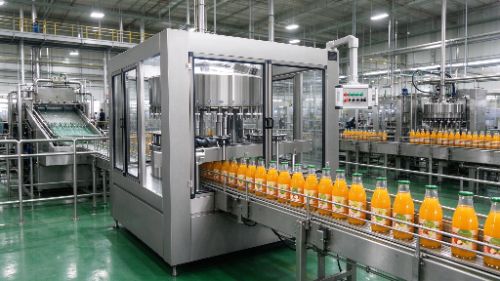
Chinese fabricators often approach sanitary welding with an unusual blend of hand skill and process control. Rather than relying solely on automated orbital welders, many shops still train welders to read the puddle by eye and adjust heat input in real time, especially on thin-wall stainless tube. This tight loop between visual feedback and torch movement produces welds that are not only fully penetrated but also remarkably consistent in color and bead width, even on complex spool pieces.
Another difference shows up in how weld prep and cleaning are treated as inseparable from the weld itself. Chinese builders tend to use dedicated stainless-only tooling, acid pickling pastes, and immediate passivation checks far more aggressively than typical Western shops. The idea is that a sanitary weld is never just the fusion zone; it includes the heat-affected zone, the back purge, and the final surface roughness. By controlling all of these in one continuous workflow, they reduce the chance of hidden contamination later.
Finally, many Chinese manufacturers have moved toward a “right first time” mindset for sanitary work, using high-purity argon, pre-weld fit-up gauges, and frequent welder qualification tests. This doesn't mean they skip inspection; rather, they build quality into the process so that final borescope or X-ray checks become confirmation rather than discovery. The result is a lower rejection rate on hygienic piping systems destined for food, dairy, or pharma use, which matters when every weld could become a contamination point.
The Overlooked Link Between Bottle Necks and Drip-Free Nozzles
It’s easy to blame the nozzle when a bottle drips, but the neck often deserves just as much scrutiny. The way a neck narrows from the shoulder, the smoothness of its inner wall, and even the sharpness of the mold parting line all influence how liquid breaks away at the exit. A neck with a poorly chosen taper can send fluid into a swirling motion that leaves a thin film behind, which then gathers into droplets.
For thicker liquids—oils, sauces, lotions—surface tension turns the neck into a hidden reservoir. Tiny irregularities or a sudden reduction in bore size trap product near the opening. Once the bottle is upright again, that trapped liquid slowly travels down the outer neck or lingers at the nozzle base. Drip-free behavior isn't just about the valve or cap; it's also about giving the liquid a clean, uninterrupted path back into the bottle.
What separates a reliable design from a messy one is rarely a single dramatic change. It's the willingness to test neck draft angles, bore tolerances, and surface finishes together with the nozzle instead of treating them as separate parts. Manufacturers who ignore that connection end up compensating with more complex closures, while the simpler fix was in the bottle itself all along.
The Third Shift Test Most Filling Lines Fail
Most filling lines are validated during the day, when the best operators are on shift, maintenance is a radio call away, and every sensor gets a clean bill of health. That’s exactly why daytime sign-off means so little. The third shift strips away those cushions. One mechanic covers six lines. Operators are tired, turnover is higher, and small annoyances—like a capper that drifts out of spec every forty minutes—stop getting fixed and start getting worked around. The test most lines fail is simple: run the line from 2 a.m. to 5 a.m. with the crew and support you actually have, not the one you wish you had.
Failures rarely look dramatic. A photoelectric eye accumulates dust because the night sanitation crew doesn’t open that panel. A filler nozzle drips because the last shift change skipped the torque check. Temperatures drift in unheated staging areas. Individually, these are minor. Collectively, they push reject rates past the point where the line is still profitable. The third shift test exposes the gap between documented capability and real-world endurance. Most lines don’t fail because of a design flaw; they fail because nobody built them to survive neglect.
Passing calls for a different kind of engineering. Instead of adding more alarms that night operators silence, you build in passive stability: spring-loaded guides that self-correct, sensors that flag drift before it becomes scrap, and maintenance tasks that can be done in fifteen minutes without a specialist. You also stop treating the overnight shift as a temporary problem. If a filling line only performs when a supervisor is watching, it hasn’t passed anything. The third shift is not an edge case—it’s the honest test of whether your line works when nobody is around to rescue it.
When a Low Price Hides a Weak Frame and Thin Stainless
A low sticker price rarely tells the whole story, especially when it comes to items built around a stainless work surface. What often gets sacrificed first is the hidden framework underneath. If the frame is made from thinner gauge steel or has fewer than expected cross braces, the whole unit can flex under pressure. That flexing isn't just annoying—it slowly stresses weld points and can lead to premature failure long before the visible stainless shows any wear.
Then there's the stainless itself. The difference between a durable top and one that dents from a dropped pot comes down to thickness. Many budget models use stainless that's only a fraction of a millimeter thinner, but that small difference matters once daily use begins. Thin stainless is also more likely to develop a tinny rattle, show scratches in high-traffic areas, and amplify noise from anything placed on it.
Before accepting a bargain price, check the actual frame layout and ask for the stainless gauge in writing. Compare those numbers against mid-range models in the same category. If the seller won't provide details or the frame seems minimal for the claimed weight capacity, the savings probably came from somewhere you'll feel later.
What a Video Walkthrough Reveals Without a Plane Ticket
A quick walkthrough uncovers the kind of spatial honesty that brochures never manage. You see how narrow the hallway actually is when the camera turns sideways, whether a suitcase can lie flat near the bed without blocking the bathroom door, and if the balcony rail sits low enough to make you rethink that morning coffee. The pacing of the person holding the phone says a lot too — they pause where it matters, zoom in on scuffed baseboards, and linger on a bathroom mirror that is either generously sized or only good for one shoulder at a time.
Sound leaks in from open windows and neighbouring units in ways a curated highlight reel would trim out. You might catch the shudder of a tram every seven minutes, the faint bass of a downstairs television at ten at night, or a rooster that has no respect for time zones. Those accidental noises are the real amenity list. If the video runs long enough, you can also observe how light travels across the room — whether the afternoon sun turns the sofa into a tanning bed or leaves it in permanent shadow, which no floor plan will tell you.
More quietly, a walkthrough reveals the rhythm of the street outside. People walk past at a certain speed, shopkeepers nod or don't, and a delivery scooter idles just long enough to tell you how patient the neighbourhood is with daily friction. None of it requires a plane ticket, yet a careful viewer can decide within minutes whether they'd feel at home or merely housed.
FAQ
Most suppliers offer three main categories: gravity fillers for thin, free-flowing liquids like water or wine; piston fillers for thicker products such as sauces, honey, or shampoo; and vacuum fillers for foamy or volatile liquids. Within these, you’ll find linear and rotary designs. Linear machines are cheaper and easier to change over, while rotary systems suit high-speed lines above roughly 3,000 bottles per hour. Many factories around Zhangjiagang and Guangzhou build modular units that can be paired with rinsers, cappers, and labelers.
Bring your actual bottle samples, not just drawings, when you visit or request a video demonstration. Ask the supplier to run a test with your bottle diameter, neck finish, and height range. Pay attention to the starwheel or guide rail adjustments—cheap machines often need manual changes that take 30 minutes or more per size, while better ones use quick-release clamps or digital settings. Also confirm the minimum and maximum fill volume per head; some piston fillers handle a narrow range unless you swap pistons.
For gravity filling of water-thin liquids, ±1% is typical. Piston fillers can reach ±0.5% if the pistons are properly machined and the liquid temperature stays stable. Don't rely on the brochure. Ask for a timed trial with your product and have the supplier weigh filled bottles on a calibrated scale. A good factory will provide a repeatability test report showing at least 10 consecutive fills. If the liquid is carbonated or foams heavily, expect wider variation unless the machine has a bottom-up filling nozzle or vacuum level control.
Standard machines use 304 stainless steel for the frame and contact parts; for acidic or high-salt products, request 316L. Ask for mill certificates (MTC) from the steel supplier, not just a verbal guarantee. You can also request a PMI (positive material identification) test before shipment. Check the gaskets and seals—silicone or EPDM are common, but PTFE is better for aggressive chemicals. Don't forget the CIP (clean-in-place) connections; if the machine has dead legs or threaded joints, cleaning becomes a headache.
Yes, most manufacturers will adjust nozzle type, hopper agitation, and filling speed for viscous products. For syrup or honey, you might need a heated hopper and larger pneumatic valves. For foamy detergents, ask about a diving nozzle that fills from the bottom up and reduces air entrapment. Provide a sample of your product plus its viscosity (in centipoise) and temperature. Customization typically adds 10–20% to the base price and about 7–15 days to lead time, depending on the complexity.
At minimum, get a written list of recommended spare parts for one year of operation, including seals, pistons, PLC, touch screen, pneumatic cylinders, and sensors. Ask whether the supplier stocks these in a local warehouse or ships from China. Remote support via video call is common, but check the response time in the contract—48 hours is reasonable. For critical markets, some Chinese vendors offer installation and training by an engineer for an extra fee. Avoid suppliers who cannot provide wiring diagrams and a PDF manual in English before payment.
A basic 4-head linear gravity filler might start around $6,000–$9,000 FOB, while a 12-head rotary filler with capping can exceed $40,000. Standard payment is 30% deposit via T/T, with the balance before shipment after a video inspection. Watch for extra charges: crating, inland freight to the port, customs documentation, and voltage-specific motors or UL-listed components. Always ask for an FOB or CIF quote with a detailed line-item breakdown. Some factories quote a low base price but then charge separately for the conveyor, cap elevator, or air compressor.
If you cannot visit, hire an inspection company like SGS, Bureau Veritas, or TÜV to run the machine with your product and bottle type before it's crated. Ask them to verify the PLC brand, stainless steel grade, and safety interlocks against your purchase order. A full day of inspection costs a few hundred dollars and can catch wiring mistakes or missing parts. Also request a pre-shipment video showing a continuous 30-minute run, not just a 2-minute highlight. For larger orders, consider paying for a factory audit before signing the contract.
Conclusion
Most buyers start with the rated speed on a brochure and end up disappointed when their line runs twenty percent slower. Chinese manufacturers often quote peak output under ideal bottle shapes, perfect pressure, and a crew that never pauses. Ask instead for a timed demo with your actual glass and cap, because neck finish tolerances dictate whether a nozzle seals cleanly or leaves a drip every few cycles. That link between bottle neck geometry and drip-free filling rarely shows up in a spec sheet, yet it determines daily rework. Sanitary welding is another area where practices diverge sharply. A builder that purges stainless tubing with argon and uses orbital welding will produce smooth, crevice-free joints; cheaper shops rely on hand stick welding that leaves sugaring and hidden pockets for bacteria. You cannot fix that later without tearing the line apart.
The third shift test exposes what daytime demos hide. Run the machine from 11 p.m. to 7 a.m. with a typical operator, not an engineer, and you will see whether sensors drift, conveyors jam, and fill volumes wander as the room heats up. Many filling lines fail this because they were tuned for a short afternoon trial. A low sticker price often points to a welded frame from thin 304 stainless, panels that flex under vibration, and guide rails that bend after a month of glass-to-glass contact. Ask for the gauge thickness and weld finish before sending a deposit. Finally, a live video walkthrough with the builder can reveal more than a plane ticket. Have them pan slowly along the base frame, inside the filler enclosure, and under the conveyors. If they hesitate or keep the camera far away, treat that hesitation as part of the quote.
Contact Us
Contact Person: Tyson
Email: [email protected]
Tel/WhatsApp: +8613396971296
Website: https://www.wanyingmachinery.com