

China High Voltage Steel Pipe Tower Company: Engineering Reliable Power Transmission Infrastructure
2026-08-14
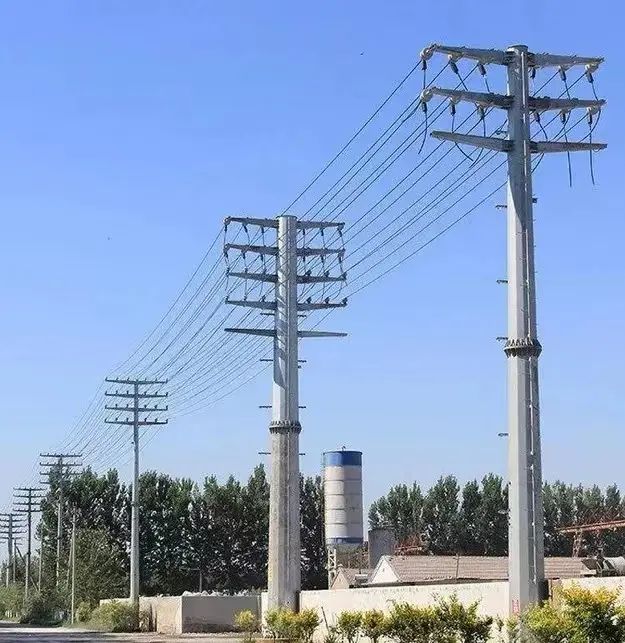
When a transmission line stretches across mountains and rivers, the true test of reliability happens where steel meets the sky. High voltage steel pipe towers do more than carry conductors—they anchor the entire grid against wind, ice, and time. Few manufacturers understand this better than Anbang, a China-based company that has quietly engineered some of the most dependable power transmission infrastructure in demanding environments. In this post, we look at what sets their steel pipe towers apart and why grid planners keep coming back.
How Steel Grade Affects Tower Performance Under Load
Steel grade sets the floor for how much stress a tower member can carry before permanent deformation begins. Yield strength—often 235, 355, or 460 MPa in structural grades—directly shapes the allowable load envelope. A lower grade like S235 will start to yield under bending or axial compression at noticeably lower stress than S355, which matters most in slender leg members and heavily loaded chord plates. But the relationship is not simply that stronger is better. Higher yield strength usually comes with reduced ductility, so a tower built entirely from ultra-high-strength plate may survive a static overload yet crack prematurely when cyclic wind or seismic loads demand repeated plastic strain. The practical choice often hinges on whether the controlling limit state is first yield or fatigue-driven crack growth.
Under compressive load, grade also alters buckling behavior in a subtle way. If a designer switches from S275 to S460 to cut weight, the required cross-sectional area shrinks, which increases the member's slenderness ratio. That can push the member from a stocky, yield-limited column into a slender, buckling-limited one, meaning the full strength of the S460 is never actually mobilized. Local buckling in plate elements can become the governing failure mode long before the material reaches its nominal yield point. This is why tower designs that use high-strength steel often pair it with stiffened sections or smaller spacing between gussets and diaphragms—otherwise the theoretical strength gain evaporates.
Weldability and toughness further separate grades in real tower performance. Higher-strength steels typically demand tighter preheat and interpass controls, and a mismatched filler metal can create a heat-affected zone that fails below the rated strength of either the plate or the weld. Under cyclic loading, a fatigue crack does not care much about the static grade; it propagates according to stress range and detail geometry. So upgrading from S355 to S460 without revising weld details or surface finish may leave fatigue life unchanged. In cold climates, Charpy V-notch requirements at low temperature become decisive—some high-strength grades lose toughness quickly below -20°C, while certain normalized or thermomechanically rolled grades retain enough ductility to avoid brittle fracture at the base of a tower subjected to sudden gust or ice-shedding loads.
Inside the Welding Cell: Consistency at Every Joint
Step inside the welding cell and the first thing you notice is rhythm. Each torch moves along a preprogrammed path, but the real story isn't the automation itself — it's the feedback loop happening between arcs. Sensors read temperature, wire feed, and gas flow continuously, adjusting on the fly so the weld pool behaves the same way from start to finish. Operators don't babysit the machine; they monitor nuance, catching the slight hum that signals a change in material thickness or a clamp losing grip.
Consistency here comes down to repeatable setup, not just repeated motion. The fixtures are machined to tight tolerances, and every consumable swap follows a documented sequence. You'll see welders checking contact tips and nozzle cleanliness as habit, not chore. Because in a cell turning out hundreds of identical joints per shift, the enemy isn't a bad weld — it's a thousand tiny variations that accumulate into one rejected batch. The cell's design enforces discipline without making it feel rigid.
What separates this from older robotic welding work is the use of adaptive control. When the vision system spots a gap slightly wider than nominal, the weld schedule shifts its weave pattern and travel speed. It's not about forcing the same parameters into every joint; it's about delivering the same final quality despite input drift. That balance — between rigid tooling and adaptive logic — is where true consistency takes root, joint after joint.
Multi-Layer Coatings for Harsh Environments
Designing surface protection for extreme conditions rarely comes down to a single material choice. Multi-layer coating systems combine distinct functional layers, each addressing a specific failure mode such as corrosion, thermal shock, or abrasive wear. Instead of relying on one thick deposit, engineers stack a ductile underlayer for stress absorption, a hard intermediate layer for load support, and a chemically resistant topcoat that faces the environment directly. This layered logic allows combinations that would be impossible in a single-phase coating, like pairing a soft metallic bond coat with a ceramic outer shell.
The real advantage appears when operating parameters swing unpredictably. Offshore drilling equipment, for instance, might see salt spray, high-velocity sand, and temperature gradients within the same hour. A well-designed stack keeps the failure front from advancing across the entire coating thickness: the top layer may crack locally, but the next layer arrests that crack and preserves adhesion to the substrate. Field data from gas turbine hot sections and subsea valves shows that such systems can extend component life by a factor of two to five compared with monolithic alternatives, even under cyclic thermal stress.
Processing matters as much as material selection. Each layer must be deposited with controlled residual stress, and interlayer roughness has to stay within a narrow window or delamination becomes likely. Modern approaches often use physical vapor deposition for the outermost erosion-resistant layer, electroplating for corrosion barrier layers, and thermal spray for thick build-ups. The result is not a generic “protective coating” but a tailored stack whose individual thicknesses and interfaces are tuned to a particular harsh environment—whether that is molten salt exposure, high-velocity impact, or acidic condensate.
Custom Geometry for Difficult Line Routes
Difficult line routes rarely reward a one-size-fits-all frame. Steep climbs, off-camber corners, loose rock gardens, and high-speed chutes each demand a different weight distribution and steering response. Stock geometry forces riders to compensate with body English—hanging off the back on descents, crowding the bars on climbs—which saps energy and confidence. Custom geometry starts from the rider's actual limb lengths, flexibility, and preferred attack style, then shapes the frame so the bike naturally sits balanced in the worst sections of the trail.
The adjustments go beyond simply slacking the head angle. A slightly longer reach paired with a shorter stem keeps the front wheel weighted on steep pitches without making the cockpit feel stretched. Dropping the bottom bracket by a few millimeters lowers the center of mass for more planted cornering, but only if pedal clearance still works through rock steps. Chainstay length gets tuned to the rider's climbing posture—longer for seated grinders who need rear traction, shorter for riders who stand and muscle over ledges. Even the seat tube angle shifts a degree or two steeper so the hips stay forward when the trail tilts upward. None of these numbers work in isolation; the magic is how they interact when the line gets ugly.
Riders who switch to custom geometry for hard lines often describe the same sensation: the bike disappears beneath them. Instead of fighting the bike through every rock roll and rutted switchback, they can focus on line choice and braking points. The frame tracks predictably when speeds rise, holds a tighter arc through loose gravel, and recovers faster from mistakes. For anyone whose regular riding includes trails with consequences, that kind of tailored confidence is worth more than any component upgrade.
Simulated Stress Tests Before Production Begins
Putting a product through simulated stress tests before the first production run is like walking a tightrope with a safety net below. Engineers don't wait for real-world failures to teach them lessons; they create extreme conditions on purpose. Extreme temperatures, voltage spikes, sudden load changes, and even physical vibration get thrown at prototypes until something cracks or bends out of tolerance. It's not about being pessimistic—it's about finding the weak points while there's still time to fix them without stopping an entire assembly line.
These early stress tests often reveal surprises that no design review catches. A connector that works fine on a bench might fail after repeated thermal cycling. A plastic housing that looks sturdy in CAD can warp under continuous pressure. By ramping up stress beyond normal operating limits, the team gets a clearer picture of the margin between "works" and "fails". They can then adjust materials, change tolerances, or add reinforcement before ordering thousands of parts. The goal isn't to make the product indestructible—it's to know exactly where the safe zone ends.
Once the stress tests are done and the fixes are in place, production can start with confidence. Instead of hoping nothing goes wrong in the field, the team ships a design that has already survived harsher conditions than customers will ever see. It's a slower way to launch, but it almost always saves time and money in the long run. A product that survives the lab's worst-case torture usually sails through real life without drama.
End-to-End Project Support from Factory to Foundation
We don’t hand off a drawing and disappear. From the first factory batch inspection to the final torque check on the anchor bolts, one team tracks every detail. That means production schedules, crating specs, port paperwork, and delivery routing all sit under the same roof, so surprises get caught before they reach the site gate.
When a foundation dimension shifts or a late design change hits the shop floor, the project lead pulls in the right people immediately—no ticket queues, no lost emails. Our engineers review the revised load path, the factory adjusts the fabrication sequence, and the site crew gets updated layout drawings the same day.
At the foundation, support doesn’t stop at unloading. We stay through fit-up, alignment, grouting, and commissioning readiness. If a base plate sits 3 millimeters out of level or a cast-in anchor needs rework, the team already has a fix in motion before the client asks for the next progress report.
FAQ
The towers are fabricated from high-strength structural steel, often Q345 or Q420 grades, with hot-dip galvanizing applied to all surfaces. This combination provides the necessary load-bearing capacity while protecting against rust in humid, coastal, or industrial environments.
Each order starts with a site-specific structural analysis that accounts for wind speeds, ice loading, altitude, and soil conditions. The engineering team adjusts wall thickness, base plate dimensions, and cross-arm geometry to match the exact voltage level and conductor configuration.
Every tower goes through dimensional inspection, weld testing including ultrasonic and magnetic particle methods, and a trial assembly of the first complete unit. Batch samples also undergo tensile and impact tests to verify the steel's mechanical properties.
Yes, the towers are designed in modular segments with bolted flange connections. This allows them to be shipped in standard containers or flatbed trucks and then assembled quickly on site using basic lifting equipment, which reduces logistics costs in mountainous areas.
Beyond standard hot-dip galvanizing, the company offers optional duplex coating systems such as zinc-rich primer plus epoxy and polyurethane topcoats. Regular maintenance schedules can extend the design life beyond 30 years, even in aggressive atmospheric conditions.
Yes, experienced engineers can travel to the project location to supervise the first tower erection, train the local crew on bolt torque procedures and alignment checks, and verify that all connections meet the design specifications.
After drawings are approved, production usually takes 30 to 60 days depending on order size and complexity. Rush orders can be accommodated if steel stock is available, but a realistic schedule is always confirmed before contract signing.
Conclusion
At China High Voltage Steel Pipe Tower Company, transmission infrastructure is treated as a precise engineering discipline rather than a commodity. The choice of steel grade dictates how a tower behaves under heavy wind, ice, and line tension, so every batch is matched to the specific load profile of the route. In the welding cell, consistency is non-negotiable: automated torches and real-time parameter monitoring ensure that each joint meets the same penetration and fusion standards, eliminating weak points that could compromise the structure over decades. Multi-layer coatings—zinc-rich primers, epoxy intermediates, and UV-stable topcoats—are applied to withstand salt spray, industrial fallout, and abrasive desert winds, extending service life well beyond typical expectations.
Difficult line routes often demand more than standard towers, so our design team develops custom geometries that balance clearance, foundation loads, and terrain constraints without adding unnecessary steel weight. Before any drawing reaches the shop floor, simulated stress tests—using finite element models and full-scale load case libraries—verify buckling, fatigue, and resonance behavior under extreme weather scenarios. This front-loaded validation reduces field surprises and keeps projects on schedule. From the first foundation bolt pattern to final torque checks on the assembly jig, we provide end-to-end project support: logistics planning, erection supervision, and on-site technical audits. The result is a transmission line that stands stable, predictable, and maintenance-lean for its entire intended lifespan, backed by a manufacturer that treats reliability as an engineering deliverable rather than a marketing phrase.
Contact Us
Contact Person: antor khan
Email: [email protected]
Tel/WhatsApp: 8613863903569
Website: https://www.qdabtower.com/