

China Industrial HVLS Fans: Revolutionizing Large Space Ventilation
2026-06-22
When it comes to cooling industrial facilities, warehouses, and commercial spaces, traditional solutions often fall short—until now. China’s innovations in HVLS (High Volume, Low Speed) fan technology are changing the game, and VINDUSFAN is at the forefront of this revolution. But what makes these giant fans so effective, and why are they becoming the go-to choice for large-space ventilation? Dive in to discover how cutting-edge engineering is turning hot, stagnant zones into breezy, comfortable environments—all while slashing energy costs.
The Ventilation Dilemma in Large Industrial Spaces
Managing air quality in vast warehouses and factories isn't just about installing a few fans. The sheer volume of these spaces means that temperature layers form quickly, with hot air trapped near the ceiling while workers at ground level might be shivering. This stratification forces systems to work harder, often leading to a frustrating cycle of constant adjustment without ever achieving true comfort. You can almost hear the conflict: massive exhaust units roaring overhead while floor-level dampers remain stubbornly closed, creating pockets of stale air that lurk between machinery and inventory racks.
Then there’s the shape of the building itself—high ceilings, long bays, and heavy equipment can disrupt airflow in unpredictable ways. A ventilation setup that works perfectly in one corner might fail entirely fifty meters away. Drafts become a real nuisance, whipping through loading docks and chilling operator stations, while other areas become stagnant heat islands. The real challenge is designing a system that adapts to these microclimates without burning through energy, because opening a bay door for a minute can undo an hour’s worth of carefully balanced climate control.
And let’s talk about pollutants. Industrial processes often release fumes, dust, or excess moisture right where people are working. Without targeted extraction, these hazards linger, mixing with stratified air and slowly degrading both health and equipment. The dilemma deepens when we try to balance exhaust with fresh air intake—too much, and you’re paying to condition outside air; too little, and you’re just recycling contaminants. It’s a constant tug-of-war between safety, cost, and comfort that keeps facility managers up at night.
What Makes HVLS Fans a Game Changer?
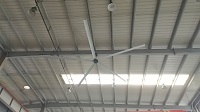
Walking into a massive warehouse on a sweltering summer day used to mean bracing for stagnant, oppressive heat. Traditional high-speed fans just push hot air around, creating noise without real relief. HVLS fans flip that entirely—by moving enormous volumes of air at a slow, steady pace, they generate a floor-wide breeze that makes people feel up to 10°F cooler, transforming the entire environment from unbearable to comfortable.
What really sets them apart is the smart energy story. Instead of cranking up the AC and watching bills skyrocket, these fans use the natural principle of destratification—equalizing temperature layers from ceiling to floor. In a typical high-ceiling building, warm air collects up top, forcing HVAC systems to overwork. A single HVLS unit can replace dozens of smaller fans, cutting energy consumption for cooling by as much as 30% while keeping the air fresh and moving.
And it’s not just a summertime solution. In colder months, running the fan in reverse gently pushes trapped heat back down to floor level, slashing heating costs without a draft. Add in the whisper-quiet operation and minimal maintenance, and it’s easy to see why facility managers across industries—from aircraft hangars to dairy barns—are calling this a quiet revolution in climate control.
China's Edge in HVLS Fan Manufacturing
China's dominance in HVLS fan production stems from a deeply integrated industrial ecosystem. The concentration of raw material suppliers, motor specialists, and component fabricators within key manufacturing hubs slashes lead times and fosters iterative design improvements. This clustered setup allows for rapid prototyping and customization, letting factories adapt quickly to shifting market demands without the logistical drag faced by competitors abroad.
Over the past decade, Chinese manufacturers have moved well beyond simple replication. They now invest significantly in proprietary aerodynamic blade profiles and ultra-efficient drive systems, often co-developing these innovations with local universities. The result is a new generation of fans that push air more quietly and with less energy, while withstanding the rigors of large-scale industrial use. Quality control has sharpened in tandem, with top producers adhering to international certifications and deploying automated testing rigs that ensure consistency across high-volume output.
Cost advantage remains a factor, but it’s now a product of scale and process refinement rather than corner-cutting. By operating massive in-house stamping, welding, and powder-coating lines, these factories eliminate middlemen and tightly control margins. Alongside, many now offer hybrid models that integrate IoT-based smart controls, giving facility managers granular oversight of airflow, schedules, and energy consumption. This blend of manufacturing muscle and digital fluency gives Chinese HVLS fans a unique position — delivering reliability and modern features at a price point that’s hard to match globally.
Key Technological Breakthroughs Behind Modern HVLS Fans
Modern HVLS fans owe their performance leap to the integration of permanent magnet brushless motors. Unlike traditional AC induction motors, these advanced drives use powerful rare-earth magnets to generate torque, slashing energy consumption by up to 50% while running virtually silent. The elimination of mechanical brushes means there's less friction, less wear, and a dramatically longer lifespan—making them ideal for continuous operation in demanding industrial spaces.
Another quiet revolution lies in blade aerodynamics. By borrowing principles from aircraft wing design—think tapered profiles, swept tips, and precisely contoured airfoils—manufacturers have managed to move massive volumes of air with minimal turbulence. The result is a more uniform, ceiling-to-floor airflow pattern that eliminates the hot and cold spots typical of older paddle-style fans. Computational fluid dynamics simulations now allow engineers to optimize blade shapes for specific mounting heights and coverage areas, ensuring efficiency isn’t just a claim but a measurable reality.
Digital controls have transformed these once-simple machines into smart infrastructure. Variable frequency drives paired with onboard sensors can adjust fan speed in real time based on temperature stratification or occupancy levels, often integrating with building management systems via open protocols. Some models even use edge computing to learn usage patterns and preemptively adjust output—all while delivering granular energy-use analytics. This intelligence squeezes out further efficiency gains without requiring manual intervention.
Real-World Applications: From Warehouses to Sports Arenas
Autonomous mobile robots have quietly reshaped how goods move behind the scenes in modern warehouses. Instead of relying on fixed conveyor belts and manual pickers, facilities now deploy fleets of compact, self-navigating machines that weave around shelves, collect totes, and drop them at packing stations. The shift goes beyond simple substitution—it enables warehouses to operate in the dark, slash energy costs, and dynamically reroute tasks when a sudden order spike hits. Companies like Amazon and DHL already run thousands of these units daily, achieving throughput levels that static infrastructure could never match.
The same core technology morphs into something entirely different on the turf of a sports stadium. Giant camera-studded rovers now patrol the sidelines during NFL games, capturing angles that human videographers simply cannot reach mid-play. In Tokyo’s Olympic Stadium, drones equipped with LiDAR swept across seating sections to inspect for structural wear after months of disuse, all while the arena stayed empty. Even groundskeeping has gone robotic: autonomous mowers with centimeter-level GPS trace team logos onto hybrid grass pitches overnight, ensuring crisp lines by morning without a single grounds crew member stepping onto the field.
The Future of Energy-Efficient Air Circulation
Improving how air moves through buildings is no longer just about comfort; it’s becoming central to reducing energy waste. New approaches focus on shaping airflow with precision, using dynamic vents that open and close based on occupancy and indoor conditions. Instead of brute-force fans running at constant speed, algorithms interpret real-time data from thermal sensors and CO2 monitors, adjusting circulation only where and when it’s needed. This shift eliminates the inefficiency of conditioning empty rooms while ensuring fresh air reaches occupied zones, slashing electricity use without compromising air quality.
Materials science is quietly reshaping the hardware of circulation. Surfaces that mimic natural microstructures—like the ribbed texture of shark skin—reduce drag inside ductwork, allowing air to slide through with less resistance. Fans themselves are being reinvented with biomorphic blades that borrow from bird wings or maple seed pods, generating consistent flow at lower rotations. Some prototypes even integrate piezoelectric fibers that harvest tiny vibrations, powering auxiliary sensors independently. These subtle design evolutions add up, gradually chipping away at the energy lost to turbulence and friction in traditional systems.
Looking further ahead, the line between ventilation and energy generation blurs. Small-scale wind harvesters embedded in vents or facade openings could capture building-induced airflow, turning passive exhaust into a supplementary power source. Combined with smart phase-change materials that store coolness at night for daytime circulation, future systems will function less like one-way appliances and more like adaptive networks, balancing thermal loads across entire buildings. The goal is an air infrastructure that breathes with the environment rather than fighting it, making energy efficiency an inherent property rather than an afterthought.
FAQ
Instead of creating disruptive, focused gusts like conventional fans, China’s HVLS fans use massive blades rotating at low speeds to generate a gentle, column-like airflow that moves evenly across enormous spaces. This design consumes far less energy while effectively mixing air from floor to ceiling, eliminating hot and cold spots without the deafening noise or whirlwind effect.
They excel in any large-volume structure, from warehouses and distribution centers to aircraft hangars and convention halls. You’ll also find them widely used in manufacturing plants, livestock barns, indoor sports arenas, and even shopping malls—anywhere people, goods, or animals need consistent comfort without breaking the bank on air conditioning.
By creating a perceived cooling effect through steady air movement, they can make personnel feel up to 10°F cooler without actually lowering the room temperature. This directly reduces fatigue, heat-related errors, and downtime, while also enhancing concentration. In colder months, the same fans gently recirculate warm air trapped near the ceiling, cutting heating costs by redistributing it back to floor level.
Absolutely. A single industrial HVLS fan can replace dozens of high-speed floor fans or reduce the load on air conditioning systems drastically. Many facilities report cooling-related energy reductions of 20–30% or more, with payback periods often falling within a year or two due to both lower electricity bills and reduced maintenance costs.
Chinese manufacturers have pushed the envelope with direct-drive permanent magnet motors that eliminate gearboxes, resulting in near-silent operation, exceptional reliability, and minimal maintenance. They also integrate aerodynamic blade profiles inspired by aircraft wings and smart control systems that sync multiple fans and integrate with building management platforms—all at competitive price points that challenge legacy European or American brands.
Yes, many Chinese HVLS fans come in sealed, corrosion-resistant designs rated for washdown environments, cold storage warehouses, and high-humidity settings. Stainless steel components, IP65 protection, and anti-corrosion coatings are commonly available, ensuring safe operation in food processing, pharmaceutical, or outdoor semi-covered areas without risk of contamination or rust.
Typically no. Most systems mount directly to existing roof purlins or I-beams using a compact hub design that adds minimal dead load. Installers can often complete setup in a few hours without heavy equipment, and extensions or angled brackets handle inclined ceilings. Many Chinese models are specifically engineered for easy retrofitting in older buildings with low clearances, needing as little as 12 inches of space above the blades.
They help reduce overall energy consumption for temperature control by supplementing or downsizing HVAC equipment. This directly lowers a facility’s carbon footprint and assists in earning points for LEED, BREEAM, or China’s Green Building Evaluation Standard. Additionally, the long lifespan and low-maintenance design mean fewer materials consumed over the fan’s life cycle, aligning with circular economy principles.
Conclusion
In vast warehouses, factories, and event halls, traditional fans and HVAC systems often struggle to keep air moving efficiently, leading to stagnant zones and soaring energy bills. China’s industrial HVLS fans have completely shifted this dynamic by using massive, slowly rotating blades to generate a gentle, columnar airflow that covers thousands of square meters from a single unit. Unlike high-speed fans that merely stir hot air near the ceiling, HVLS designs leverage their sheer size and low velocity to create a pervasive cooling effect, destratifying heat layers and making working conditions consistently comfortable. The real breakthrough, however, lies not just in the fan concept but in how Chinese manufacturers have perfected the underlying technology. With integrated permanent magnet motors, precision-balanced airfoils, and smart controls that adapt to real-time conditions, modern HVLS fans deliver silent, maintenance-light operation while slashing energy use by up to 30% compared to older systems. China’s manufacturing advantage—combining advanced engineering with scalable production—has made these solutions globally accessible, turning what was once a niche industrial tool into a mainstream choice for ventilation retrofits.
The impact is unmistakable across sectors: logistics centers now maintain stable temperatures without excessive air conditioning, sports arenas keep thousands of spectators comfortable with whisper-quiet circulation, and agricultural facilities ensure uniform climate for livestock and crops—all while reducing carbon footprints. This isn’t just about moving air; it’s about rethinking how large spaces interact with thermal dynamics. Looking forward, China’s continued focus on R&D is pushing HVLS fans into even smarter territory, with IoT-enabled diagnostics, modular blade designs for custom airflow patterns, and hybrid systems that pair with natural ventilation. As energy codes tighten and operational costs climb, the quiet revolution of these giant fans is setting a new benchmark for sustainable large-space climate control, one that marries physics with practical ingenuity and a keen eye on the bottom line.
Contact Us
Contact Person: Michael Danielsson
Email: [email protected]
Tel/WhatsApp: +1 951 565 7769
Website: https://www.vindusfans.com