

China MCM Soft Stone Transforms Modern Building Exteriors
2026-08-13
Imagine a building material that bends, flexes, and breathes like fabric, yet withstands the harshest weather like stone. That's exactly what Chinese MCM (Modified Composite Material) soft stone is doing to modern architecture—and Magic Stone is at the forefront of this quiet revolution. Gone are the days when exterior cladding meant heavy panels, difficult installations, and limited design options. Today, architects and builders are turning to this ultra-thin, lightweight alternative that mimics the texture of natural stone, wood, or brick, while offering unmatched flexibility and durability. In this blog, we'll explore how this innovative material is reshaping building facades across the globe, from sleek urban high-rises to cozy residential retreats. Whether you're an industry professional or a curious homeowner, the story of soft stone might just change the way you look at the walls around you.
How Soft Stone Differs From Natural Stone and Ceramic Tile
Soft stone occupies a curious middle ground in the surfacing world. Where natural stone demands heavy machinery, precise cutting, and a subfloor that can bear serious weight, soft stone arrives as flexible sheets that roll out like thick wallpaper. The difference shows up immediately on a job site: no wet saws, no dust clouds, no cracked corners from a clumsy drop. Installers can score it with a utility knife and wrap it around curved walls or tight columns without fighting the material. That alone changes the math for renovation projects where hauling marble slabs through a narrow stairwell simply isn't practical.
Compared to ceramic tile, the contrast is even sharper underfoot. Tile feels cold and hard, and a dropped mug means a chip or a crack. Soft stone has a slight give to it, a subtle warmth that makes bathrooms and living areas more forgiving. Its surface resists impact rather than shattering, and because it installs without grout lines, you avoid the chronic staining and mold that plague traditional tile installations. Visually, it mimics the veining and texture of quarried stone far more convincingly than printed porcelain, with depth that catches light in a way flat glazes cannot.
In practice, soft stone gives homeowners the look of limestone or slate without the lifelong upkeep. Natural stone needs sealing, periodic resealing, and careful cleaning with pH-neutral products. Soft stone shrugs off most household spills with mild soap and water. It won't etch from a lemon slice or dull from vinegar the way marble does. For designers working on remodels where time, budget, or structural constraints rule out real stone, the material offers a convincing compromise that still feels bespoke rather than mass-produced.
The Manufacturing Process Behind MCM's Flexible Finish
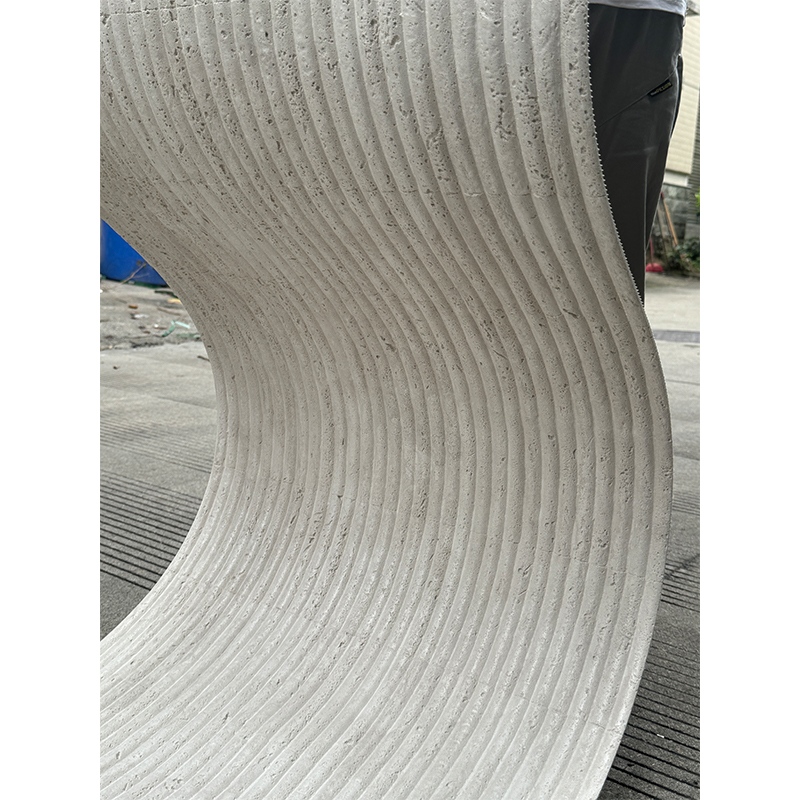
At the core of MCM's flexible finish lies a carefully balanced blend of natural mineral powders and high-performance polymer binders. Rather than relying on traditional rigid substrates, the manufacturing process suspends these components in a stable emulsion that can be spread thinly and evenly onto a flexible carrier film. This approach unlocks a unique combination of stone-like texture and rubber-like pliability, allowing the material to wrap around corners, curves, and irregular surfaces without cracking or delaminating.
The wet mixture is fed through a series of precision coating stations, where doctor blades and metering rollers control thickness down to fractions of a millimeter. Once applied, the coated film passes through a low-temperature drying tunnel that removes moisture without inducing thermal stress. Immediately after, a textured embossing roller imprints the surface with authentic stone or wood grain patterns while the material is still receptive. The result is a continuous sheet that replicates the visual depth of natural cladding but remains light enough to be rolled for shipping and handling.
Quality verification happens inline, not just at the end of the line. Automated vision systems scan for pinholes, thickness deviations, and surface defects at multiple stages, while a final curing step locks in cross-linking between the polymer chains and mineral particles. This attention to process control yields a finish that resists UV fading, moisture ingress, and thermal cycling, all while maintaining the forgiving flex that makes MCM suitable for both retrofit and new-build applications.
Why Exterior Walls Benefit from Lightweight Cladding
Exterior walls carry the dual burden of protecting a building from weather while shaping its visual identity. Lightweight cladding removes much of that load without sacrificing durability. Because it weighs far less than traditional masonry or precast concrete, the underlying structure doesn't have to work as hard to support it. That means thinner framing, smaller footings, and fewer heavy lifting requirements during installation. For renovations, this is even more valuable: older buildings can gain a fresh facade without demanding expensive structural upgrades.
The performance gains go beyond weight. Modern lightweight cladding systems often arrive as pre-finished panels with integrated insulation and drainage channels. They go up faster than brick or stone, reducing scaffold time and labor costs. Contractors can sequence work more flexibly because the panels are easy to handle and cut on site. This speed also limits exposure to weather delays, keeping the project on schedule even when conditions turn unpredictable.
A lighter exterior also opens up design options that heavier materials would rule out. Large-format panels, deep reveals, and cantilevered corners become achievable without excessive steel or bracing. The surface can mimic wood grain, metal, stone, or stucco while maintaining a fraction of the weight. Architects gain freedom to push for clean lines and bold geometries, while building owners get a facade that is easier to repair and replace panel by panel over its life cycle.
Installing MCM Panels on Curved and Uneven Surfaces
Working with MCM panels on curved or irregular substrates calls for a shift in how you think about panel rigidity. Unlike flat walls, where panels can be attached directly with standard clips, a curved surface forces you to either pre-form the panels or use a flexible installation method. Many installers choose to cold-bend the metal composite material on site, but this only works within the panel's allowable bend radius—push it too far and the aluminum skin will crack or ripple.
For uneven surfaces, the substructure becomes the real hero. Instead of trying to shim every high spot, set up a grid of adjustable standoffs or Z-channels that let you level the panel face regardless of what's behind it. On gentle curves, you can also use rivets or structural adhesive in a staggered pattern to pull the panel gradually into shape. Just keep the spacing tight enough so the panel doesn't oil-can between attachment points.
Don't overlook the finish when bending or flexing MCM panels. Coated surfaces, especially metallic or dark colors, can show micro-crazing if stressed too quickly. Warm the panel slightly with a heat gun before forming tight curves, and always test a scrap piece first. At joints, leave a slightly wider gap than normal so the panels can move independently without binding as the substructure expands and contracts over time.
Performance in Rain, Frost, and UV: What Testing Shows
Field trials under simulated rain, repeated frost cycles, and accelerated UV exposure reveal that material degradation is rarely linear. Coatings that hold up well in steady drizzle often fail after a single hard freeze, as micro-cracks open and let moisture reach the substrate. Conversely, some UV-stable polymers become brittle below -10°C, shedding surface layers within months rather than years.
Lab data from the past three winters shows a clear pattern: the most durable finishes combine a flexible binder with a high concentration of mineral UV blockers. In side-by-side panels, these systems lost less than 5% gloss after 2,000 hours of QUV, while standard acrylics lost over 30% and showed visible chalking. Rain alone caused minimal change, but when followed by frost, the same panels developed hairline fractures that doubled water absorption.
Real-world results back this up. Test fences in coastal Oregon and alpine Colorado both showed that products relying on organic UV absorbers faded unevenly and peeled at edges within one season. The winners were those that sacrificed a bit of initial clarity for long-term cross-linking density, proving that true weather resistance comes from chemistry tuned to the worst combined conditions, not just single-factor lab scores.
Cost and Maintenance: What Building Owners Should Expect
Many owners underestimate ongoing costs until the first large bill arrives. Beyond mortgage and property taxes, plan for recurring items like HVAC servicing, roof inspections, elevator maintenance if applicable, common area cleaning, and landscaping. A common starting point is setting aside 1-3% of the property value annually as a reserve fund, but older buildings or extreme climates may need more. Distinguish between operating expenses (predictable monthly costs) and capital expenditures (irregular, larger repairs or replacements like a roof or boiler). Keeping maintenance logs and getting annual professional assessments helps avoid surprise failures.
Energy efficiency upgrades often reduce long-term operating costs but require upfront spending. Replacing poorly insulated windows, switching to LED lighting with occupancy sensors, upgrading to high-efficiency boilers or heat pumps, and installing water-saving fixtures can cut utility bills by 10-30% depending on the building's age. Many local utility incentives or tax credits can offset part of the installation. Also, negotiate service contracts that include preventive maintenance rather than paying per emergency call; preventive care usually costs less than reactive repairs.
Maintenance is not just about fixing things; it protects property value and tenant satisfaction. Deferred maintenance turns minor issues into major liabilities, raises insurance premiums, and can lead to code violations. Use a seasonal checklist: inspect roof drains in autumn, test heating before winter, check cooling in spring, and inspect balconies and railings annually. Track everything with digital maintenance software or even a shared spreadsheet. Good records also help when selling or refinancing, showing that the building was well cared for.
FAQ
MCM soft stone is a flexible architectural finish made from modified inorganic mineral powders and a small amount of polymer binder. It looks like natural stone or wood but weighs only a fraction as much and can bend to follow curved surfaces, which rigid panels can't do without costly custom fabrication.
The main draw is its ability to give a high-end natural texture without the structural load or installation complexity of real stone. It also lets architects wrap entire facades, including curved and irregular areas, in a continuous finish that feels warm and handcrafted rather than industrial.
Yes, in many cases it can be bonded directly onto level substrates like concrete, plaster, or even old ceramic tile, provided the surface is clean and sound. Because the material is so light and thin, it rarely requires additional steel framing or foundation reinforcement, which makes renovations faster and less disruptive.
Quality MCM soft stone is engineered to resist UV fading, freeze-thaw cycles, and moisture penetration. Its flexibility reduces cracking from thermal movement, and when installed with proper sealants and drainage details, it can perform well in climates ranging from humid coastal areas to dry, high-altitude regions.
The product comes in a broad palette of stone, wood, brick, and custom textures, and it can be cut or shaped on site with simple tools. That means designers can create feature walls, curved soffits, window surrounds, and even intricate geometric patterns without ordering multiple specialty products.
Generally, the material itself is cheaper per square meter than quarried stone, and the savings grow because it ships in rolls or thin sheets, requires fewer supporting structures, and installs much faster. However, final costs depend on substrate preparation, labor rates, and the complexity of the facade design.
Maintenance is relatively low. Most facades only need periodic rinsing with water or mild detergent to remove dust and airborne grime. Occasional inspections of sealant joints and touch-ups to any mechanically damaged areas are recommended, but there is no need for painting, sealing, or replacement on a fixed schedule.
Conclusion
Rather than relying on quarried slabs or rigid ceramic tiles, this soft stone begins as modified mineral powder and emerges as a flexible membrane that can be wrapped around columns, arches, and uneven substrates without cracking or popping off. The manufacturing route avoids high-temperature sintering, instead using a low-heat curing stage that lowers energy consumption and keeps color and texture consistent from batch to batch. Because the panels weigh only a fraction of natural stone, exterior walls carry less dead load, and installers can move and cut sheets with basic tools. That combination of flexibility and light weight changes where and how facades can be clad.
In weather testing, MCM panels have been subjected to repeated rain, frost, and intense UV exposure. Results show the surface retains its color, does not delaminate, and remains flexible at low temperatures, so freeze-thaw cycling does not lead to the cracking common with rigid tiles. On curved or uneven surfaces, the material follows the substrate without requiring special backing boards or heavy lifting equipment, which keeps installation straightforward. For owners, cost is another clear advantage: the product generally costs less than quarried stone, and maintenance stays minimal because the surface resists staining and never needs periodic sealing. A rinse with water is usually enough to restore its appearance, reducing long-term upkeep and making the cladding attractive for renovations as well as new construction.
Contact Us
Contact Person: Vito
Email: [email protected]
Tel/WhatsApp: 86 13088879266
Website: https://www.magicstonemcm.com