

Chinese Battery Foil Rolling Mills Power the Global Shift to Electric Vehicles
2026-11-02
The electric vehicle revolution runs on batteries, and batteries run on foil—ultra-thin, flawlessly rolled aluminum that few people ever see. In China, the world's battery workshop, GRM rolling mills are pushing that foil to new limits, one micron at a time.
Chinese Foil Mills Set the Tempo for Global EV Production
China's battery foil producers have moved well beyond supplying domestic cell makers. Their rapid capacity expansions and aggressive pricing strategies now dictate how quickly automakers in Europe and North America can scale up electric vehicle assembly lines. A single new rolling mill in Jiangsu or Shandong often adds more annual foil output than the entire current demand of several smaller European battery plants combined.
The tempo is set not just by volume but by the speed of technical iteration. Chinese mills were among the first to master ultra-thin 8-micron and 6-micron foil for high-energy-density cells, cutting material weight without sacrificing conductivity. This has forced global competitors to either match these specs or lose supplier slots in next-generation EV platforms. Meanwhile, the mills' willingness to lock in long-term contracts at thin margins has compressed lead times across the industry.
As a result, global EV production schedules increasingly revolve around foil delivery dates from Chinese ports. When a new cathode plant opens in Poland or Tennessee, its commissioning timeline often hinges on the availability of Chinese-rolled foil, which now accounts for over three-quarters of worldwide battery-grade aluminum foil. The downstream effect is clear: if Chinese mills slow their expansion or shift focus, the entire global EV ramp-up loses its metronome.
Why the World's EV Battery Lines Hinge on Chinese Rolling
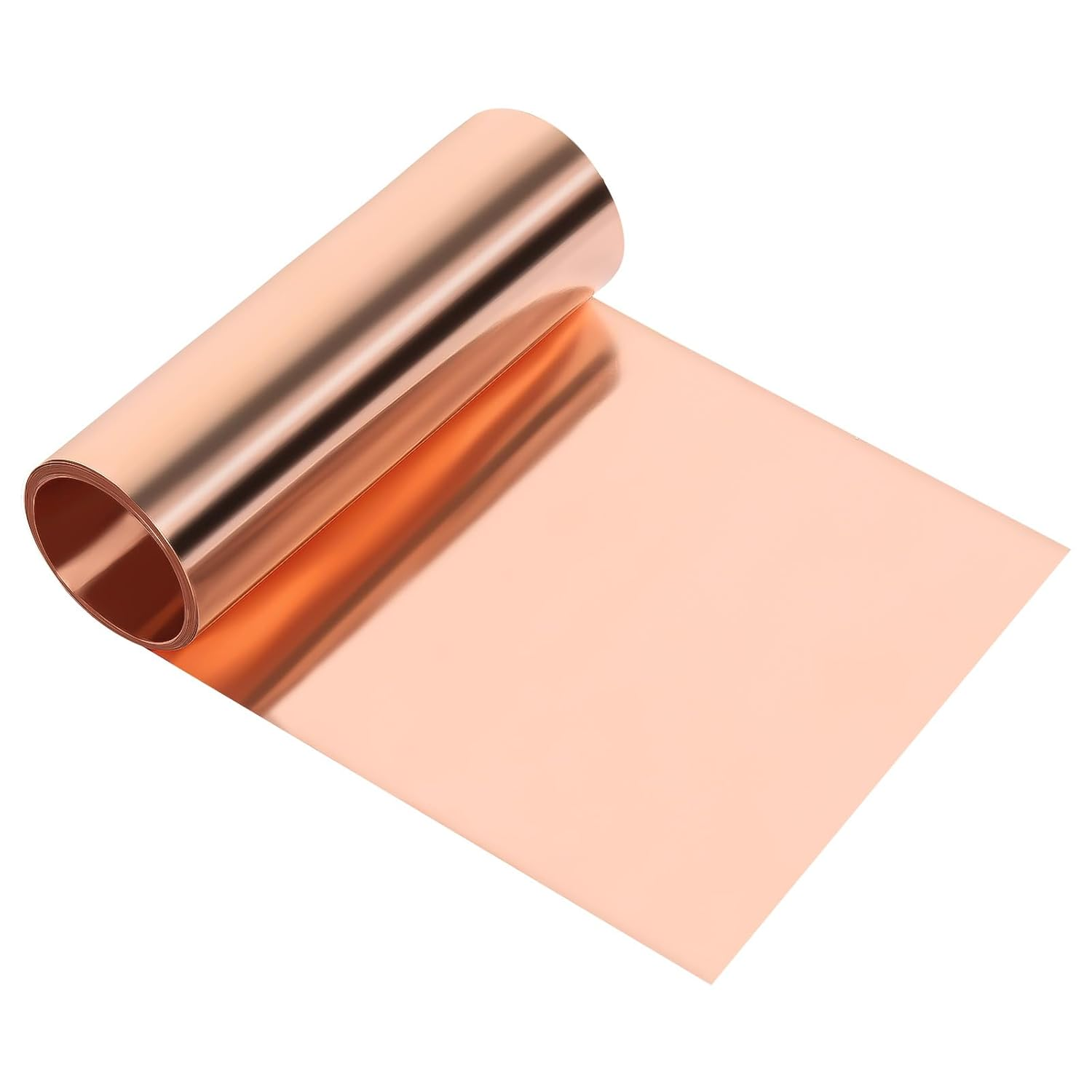
The heartbeat of any gigafactory is the electrode rolling line, where coated foils are compressed to micron-level tolerances. Chinese machinery builders cracked this niche years ago, perfecting hydraulic systems that hold thickness variations under ±0.5 microns across a two-meter-wide web. European and North American plants tried sourcing rollers from local suppliers, but the yield penalties were brutal: a 2% deviation in density meant a 7% drop in cell energy density, pushing scrap rates past what any CFO could swallow. So the procurement folks quietly circled back to Changzhou and Wuxi, where the roller gap control algorithms had been battle-tested across ten thousand production shifts.
What gets less attention is the calibration ecosystem. Every Chinese rolling line ships with a proprietary in-line laser interferometer that re-zeros the roll gap every forty minutes, no operator input needed. Japanese and Korean rivals offer similar add-ons, but they cost three times as much and still require a month of on-site tuning. Meanwhile, the Chinese service teams fly in with pre-configured thermal compensation tables for your exact anode slurry recipe. It's not just about hardware; it's the accumulated know-how of handling everything from silicon-heavy anodes that crack under pressure to ultra-thin separators that wrinkle at 80 degrees Celsius.
Disruption would be painful. If tomorrow a trade barrier cut off Chinese rolling equipment, the immediate headache isn't the roll press itself but the consumables: the mirror-finished chrome-plated rollers need replacement every 9,000 kilometers of foil, and nearly all of those are re-ground in Suzhou. Battery makers in Europe have stockpiled spares, but a full swap-out of a rolling line's core components without Chinese OEM support? You're looking at six months of downtime and a 15% dip in throughput. That's the kind of math that keeps plant managers up at night, even as they publicly talk about diversifying supply chains.
The Precision Behind China's Battery-Grade Aluminum Surge
In the quiet corridors of metallurgical labs, the difference between industrial aluminum and the battery-grade variant comes down to a stubborn decimal point. Purity levels that once hovered comfortably at 99.7% are now pushed past 99.99%, where a single stray iron atom can compromise an entire cathode coating. Chinese smelters didn't just tweak old recipes; they rebuilt the filtration cascade from scratch, swapping traditional ceramic foam for laser-drilled polymer membranes that capture impurities smaller than a virus. The result is a metal so clean it barely conducts heat the way engineers expect, forcing a rewrite of thermal management specs for every cell pack that leaves the factory floor.
What separates winners from also-rans isn't the furnaces, but the invisible choreography of trace element control. Boron, silicon, and zinc—each lingering at parts-per-billion levels—are now monitored in real time through spectrometers welded directly into the casting line. Operators no longer wait for batch samples; they watch impurity curves drift on dashboards and adjust argon flow before the melt solidifies. This isn't just metallurgy, it's a kind of material telemetry borrowed from chip fabs. And that borrowing shows: the cleanrooms at newer aluminum plants look less like foundries and more like semiconductor packaging halls, with workers in full bunny suits handling coils that will never feel a human fingerprint.
The surge itself is quieter than expected. No announcements, no ribbon cuttings—just a steady month-over-month climb in certified output that caught overseas buyers off guard. Battery makers, burned by past supply hiccups, now send auditors for unannounced line walks, and those auditors keep finding the same thing: tolerances measured in microns, traceability down to the individual ingot, and a refusal to ship anything that hasn't been aged for thirty days to let internal stresses settle. It's a slow, almost obsessive cadence. But that's precisely why the material works where others crack under thermal cycling, and why the rest of the world is still playing catch-up on a game China quietly changed the rules for.
From Chinese Mills to Electric Highways: The Foil Connection
The aluminum foil rolling off a mill in Shandong doesn't look like much—just a dull, silvery ribbon thin enough to slice a finger. But that ribbon is the hidden backbone of every electric vehicle on the road. Without it, there's no current collector, no anode, no battery pack. Chinese mills have quietly perfected this material over two decades, pushing thickness down to six microns while maintaining tensile strength that would surprise most metallurgists. From those factory floors, the foil travels in climate-controlled crates to gigafactories on three continents, where it gets coated, slit, and stacked into the energy core of cars that will soon hum past gas stations without a second thought.
Think of an electric highway not as a physical road but as the path electrons take inside a cell. The foil is that highway's asphalt—smooth, conductive, and ruthlessly consistent. A single microscopic pinhole or a variation of half a micron can turn a promising battery into a dud, which is why Chinese mills have invested in laser inspection systems and AI-driven rolling controls that would have been unthinkable a decade ago. The result is a foil that lets battery makers pack more active material into the same space, stretching range from 300 to 400 miles on a single charge. That extra hundred miles isn't just a spec sheet victory; it's the difference between a driver making it to the next charging station or calling a tow truck on a cold night.
The connection between a mill in Henan and a charging plaza outside Berlin might seem abstract, but follow the supply chain and it tightens like a drumhead. When foil prices drop by a few cents per square meter—thanks to scale and recycling of scrap—battery costs follow, and suddenly a fast-charging network becomes financially viable in places that once dismissed EVs as a coastal luxury. Chinese producers now supply over seventy percent of the world's battery-grade foil, not because of subsidies or low wages alone, but because they treat the material as a precision instrument rather than a commodity. That mindset is what turns a thin strip of metal into the quiet enabler of a global shift away from the internal combustion engine.
How China's Rolling Capacity Outpaces Global EV Demand
中国电动汽车工厂的规模扩张速度远超全球消费者的吸收能力。过去几年,地方政府补贴和资本涌入推动建设了数十个新工厂,许多生产线的利用率不足一半。行业内普遍估计,仅中国本土的年度产能就已经超过2000万辆,而全球电动车的实际年销量还在1000万辆上下徘徊。
这种错配在国内市场表现得尤为明显。车企为了维持现金流,只能不断降价,甚至亏本销售,导致整个行业的利润率被大幅压缩。与此同时,大量未消化的产能转向出口,使得中国电动车在海外市场的份额迅速上升,但也引发了欧盟、美国等主要经济体的关税反制。
更棘手的是,产能扩张的惯性很难在短期内停止。许多项目已经进入后期建设或设备调试阶段,即便需求增长放缓,企业仍需继续投入。这种“产能竞赛”不仅扭曲了市场价格,也让全球供应链面临更大的调整压力。
The Quiet Expansion Fueling the Electric Vehicle Boom
Behind the sleek new electric models and flashy battery announcements, a much quieter build-out is taking shape across industrial parks, utility corridors, and shipping hubs. It rarely makes headlines, but it is the reason more drivers now consider an EV practical: the rapid, almost invisible expansion of high-voltage charging depots and grid upgrades. In places like central Texas and the Rhine-Ruhr valley, electricians and engineers are laying cable, installing transformers, and stress-testing substations long before the first charger goes live. This work is unglamorous, often delayed by permitting, and largely unseen from the road.
At the same time, component suppliers are adding capacity not for the cars themselves, but for the connective tissue around them. Copper wire orders have lengthened, switchgear lead times have stretched, and specialized contractors are now booked out for months. A single truck-stop charging plaza can require as much power as a small town, and grid operators are quietly upgrading feeders and relays to avoid brownouts. That expansion seldom appears in product brochures, yet it determines whether a charging stop takes twenty minutes or two hours.
The result is a geographic patchwork that grows unevenly. Some corridors now have redundant fast-charging options every thirty miles, while others still rely on a single station with one working plug. Municipalities that moved early on electrical permitting and zoning are seeing private investment cluster near them, not because of incentives, but because the underlying wires and switchyards are already there. For every headline about a new gigafactory, there are dozens of these smaller grid and charging projects finishing behind chain-link fences, quietly removing the friction that once made electric driving feel like a gamble.
FAQ
Their edge comes from rapid scale-up, advanced wide-width rolling lines, and tight integration with nearby cathode and cell plants, which shortens lead times and lowers freight costs.
Most automotive-grade aluminum foil is now rolled to between 8 and 15 microns, while copper foil can go below 6 microns for high-energy-density cells.
Even tiny pinholes or oil residues can cause coating defects or internal shorts, so rolling mills have to maintain clean-room-like conditions and use special work rolls.
By producing battery foil at very large volumes with high yields, they push down the cost per square meter of foil, which directly lowers the bill of materials for cell makers worldwide.
Yes, there are active efforts in the US and Europe to qualify local foil suppliers and build new rolling capacity, but the transition will take years because automotive qualification is strict.
Many operate wide, high-speed foil mills with automatic gauge control, on-line surface inspection, and tension leveling systems that allow consistent production at high throughput.
They rely on closed-loop control systems that measure thickness continuously and adjust roll gap and speed in real time, combined with carefully maintained roll profiles.
Yes, a serious export disruption would likely delay battery production in multiple regions, especially Europe, because alternative high-quality foil capacity is still limited.
Conclusion
The global shift to electric vehicles depends on more than battery chemistry or charging networks; it leans heavily on a less visible industrial backbone: China's battery foil rolling mills. These plants produce the ultra-thin aluminum foil used as current collectors inside lithium-ion cells, a material requiring micron-level thickness control, pristine surface quality, and flawless flatness. Chinese manufacturers have scaled production so rapidly that they now set the operational tempo for EV assembly lines on three continents. Nearly every serious gigafactory—whether in Germany, Texas, or South Korea—relies on foil shipments from mill clusters in Shandong, Henan, or Jiangsu. The precision behind this surge is not accidental. Years of investment in wide-width cold rolling mills, high-speed slitting, and inline surface treatment have turned Chinese suppliers into the default source for battery-grade aluminum. While Western governments push for local supply chains, the reality on factory floors is that the world's EV battery lines still hinge on Chinese rolling capacity.
This expansion has been quiet but relentless. While public attention fixes on cell manufacturers and vehicle brands, the actual pace of the electric highway rollout rests on how quickly mills in eastern China can ship another thousand tons of foil. China's rolling capacity now comfortably outpaces global EV demand, creating a supply buffer that lets battery plants expand without fear of material shortages. That headroom came from a decade of heavy capital spending on aluminum rolling complexes built specifically for battery foil runs. The result is lower unit costs and a logistical advantage that competitors find hard to match. From Chinese mills to electric highways, the connection is direct and quantifiable: each additional gigawatt-hour of battery output pulls roughly 400 to 500 tons of aluminum foil through the supply chain. As other regions attempt to replicate this link, they face not only the capital cost of new mills but also the accumulated process know-how, quality control systems, and port logistics that China has already mastered. For the foreseeable future, the global shift to electric vehicles will remain powered, to a surprising degree, by Chinese rolling mills.
Contact Us
Contact Person: Rayna
Email: [email protected]
Tel/WhatsApp: 86 -173 1474 6343
Website: https://www.grmrollingmill.com/