

Commercial Cube Ice Maker Wholesaler Guide to Smart Purchasing
2026-11-16
Looking to stock cube ice makers that actually move off your shelves? The commercial ice machine market is crowded, but smart wholesalers know the difference between a fleeting trend and a reliable profit generator. Before you place your next bulk order, consider what separates a dependable supplier from a costly gamble. In this guide, we break down the key factors for purchasing commercial cube ice makers—and why YOMAN has become the name trusted by wholesalers who refuse to settle for mediocrity.
What Actually Separates a Workhorse Cube Ice Maker from a Disposable One
The difference starts with the compressor. A workhorse cube ice maker uses a real refrigeration system—think of the same sealed compressor you'd find in a full-size fridge—while disposable models rely on a cheap thermoelectric chip that struggles to freeze anything when the room gets warm. The result? The disposable one might make soft, cloudy cubes after 20 minutes on a cool day, but the workhorse churns out hard, clear ice batch after batch, even in a hot garage or crowded bar.
Build quality tells the rest of the story. Workhorse units have stainless steel evaporators, thick insulation, and metal gears in the harvest mechanism. Disposable ones use thin plastic trays, flimsy sensors, and plastic drive motors that strip after a few hundred cycles. You'll notice it in the sound too—a workhorse hums steadily while a disposable unit rattles and clicks like it's apologizing for every cube.
Then there's the maintenance reality. A workhorse ice maker is designed to be cleaned, with accessible water lines, a removable bin, and cycles that actually purge mineral buildup. A disposable one gets gummed up with scale, grows slime in hidden corners, and eventually just stops—because taking it apart voids the warranty and the parts aren't sold. That's why a workhorse can run daily for a decade, while a disposable unit is usually a one-summer appliance.
Why Peak-Hour Ice Demand Should Drive Your Capacity Choice
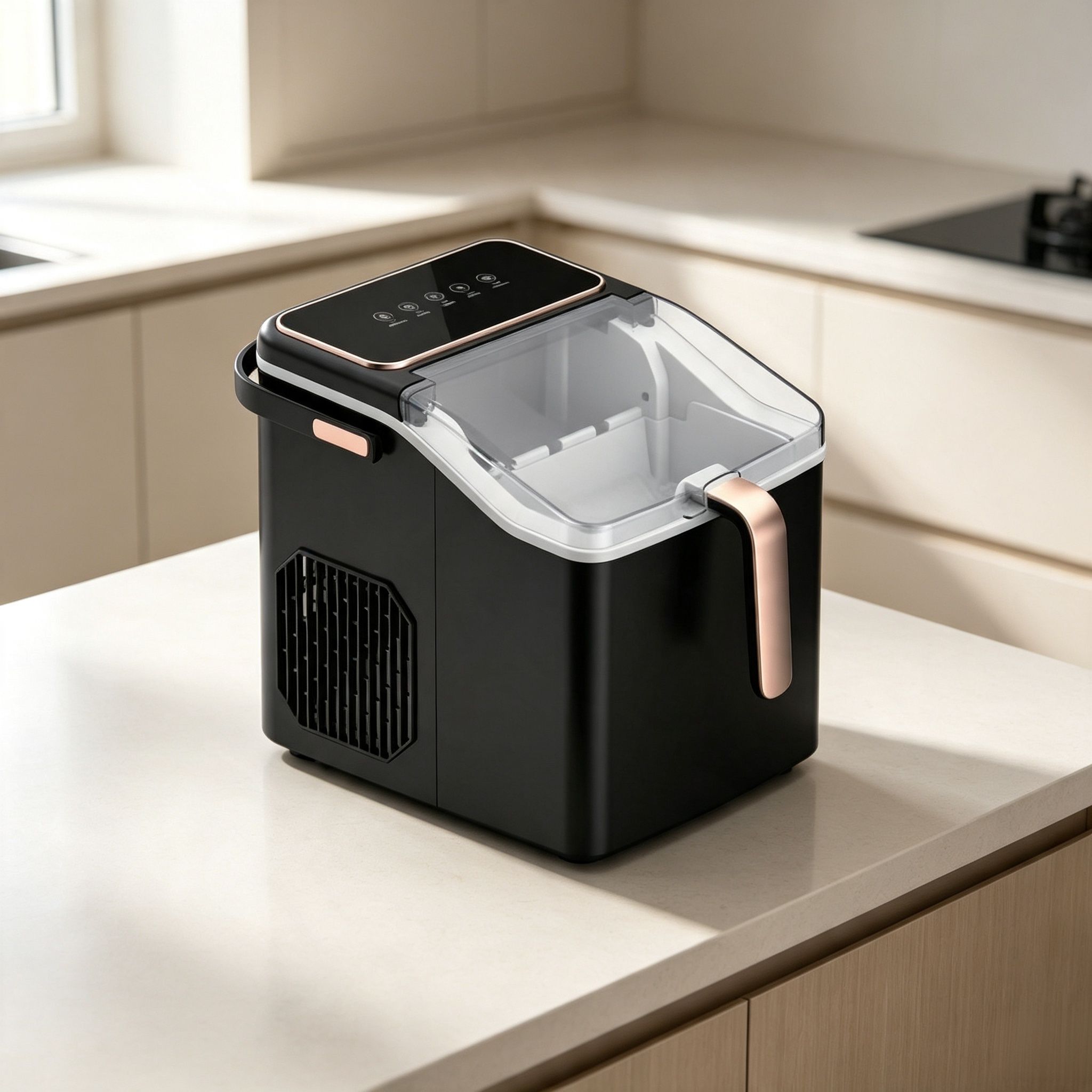
Most operators pick an ice machine by looking at total daily volume, but that number rarely tells you what happens between 5 p.m. and 8 p.m. on a busy Friday. If your bar or restaurant can burn through forty pounds in ninety minutes while the kitchen is also filling drink bins and seafood displays, a machine rated for 500 pounds per day might still leave you running to the corner store. Peak-hour demand exposes the gap between average production and the bursts that actually matter.
Rather than matching capacity to a 24-hour average, start with the worst hour or two you expect. Count every station that pulls ice at the same time—servers, bartenders, to-go packing, maybe a prep sink—and add a buffer for recovery. A machine that can keep up during that rush without emptying its bin will handle slower stretches without cycling constantly, which also puts less strain on the compressor. Choosing capacity this way means you are sizing for the moment your business actually depends on, not the spreadsheet number.
Condenser Types and the Installation Surprises They Bring
Air-cooled units look straightforward on paper, but the first surprise usually hits on the roof. What starts as a simple lift-and-place job turns into a structural assessment when the existing steel supports can't handle the dynamic load of the fan. I've watched a 200-kg unit balloon into a 600-kg retrofit because nobody checked the roof rating. Then there's the recirculation problem: if the discharge air doesn't have enough clearance, it gets sucked right back into the intake, and head pressure climbs. Neighbors complaining about fan noise at night is another common post-installation gift that was never mentioned in the catalog.
Water-cooled condensers bring their own set of curveballs. The piping that worked perfectly for the old unit can suddenly show a 30% flow drop because the new condenser's pressure drop is higher than the spec sheet implied. Water quality gets ignored until scale builds up on the tube walls and the approach temperature starts drifting. In colder climates, forgetting to add drain valves on the water side turns a simple seasonal shutdown into a cracked shell by spring. And if the cooling tower is on a different level, air pockets in the piping will drive the pump crazy until someone installs proper vents.
Evaporative condensers combine both worlds, so the installation surprises multiply. Placing a unit too close to a wall means it ends up recirculating its own humid exhaust, and efficiency drops by double digits before anyone notices. The spray nozzles can clog within weeks if the water has even moderate hardness, pushing an unplanned water softening system into the budget. And because these units need both water and airflow access, the maintenance clearances are often underestimated—technicians end up squeezing between the unit and a parapet just to reach the drift eliminators. Every condenser type looks manageable in the brochure, but the roof or mechanical room always has a different story to tell.
Reading Between the Lines on Warranty and Service Commitments
Warranties often look impressive at first glance, but the real story lives in the exclusions. A ten-year guarantee may only cover specific internal parts, while labor charges quietly fall outside the scope. Check whether shipping costs, diagnostic fees, or transferability are mentioned at all—those gaps can turn a bold promise into a narrow one that works mostly in the manufacturer's favor.
Service commitments deserve the same scrutiny. "Priority support" or "rapid response" sounds reassuring, yet without stated timeframes or named channels, it means very little. Look for specifics: Is phone support actually available on weekends? Are replacement parts kept in regional warehouses rather than shipped from overseas? What happens if the product is discontinued shortly after you buy it?
Finally, pay attention to what the document doesn't say. Vague terms like "normal wear and tear" or "reasonable efforts" leave plenty of room for interpretation, and that ambiguity usually benefits the company. If a clause is unclear, ask for written clarification before making the purchase. A warranty is only as good as the definitions behind it, and those definitions rarely show up in the marketing copy.
The Energy and Water Costs No Sales Sheet Volunteers
If you’re picturing a clipboard full of product pitches, forget it. Volunteers in this program don’t carry sales sheets or push any kind of upgrade. Instead, you learn to spot everyday energy and water drains that quietly add up on a bill. A leaky toilet flapper, an uninsulated hot water pipe, a thermostat left too high—those are the real targets.
Most people never see the connection between a fifteen-minute shower and a higher gas bill. But once you show them that heating water accounts for roughly 18% of home energy use, the pattern clicks. You might point out that sealing a drafty window can cut heating costs by 10%, or that switching to a low-flow showerhead saves both water and the energy used to heat it. No product required—just a change in habit.
That’s what makes this volunteer role different. You’re not there to sell a service or hand over a glossy brochure. You’re there to translate confusing utility charges into plain language and leave behind simple, doable fixes. The only thing you hand over is a piece of paper with handwritten notes—if that. No sales sheet, no commission, no pressure on the person opening the door.
Questions to Ask a Wholesaler Before You Commit to a Purchase Order
Locking in a purchase order without pressing a wholesaler on their actual operating rhythm is a fast way to burn cash. Start with the unglamorous basics: what's the real lead time from payment to dispatch, and how firm is that number when their factory gets busy? Ask for a production calendar, not a promise. Then dig into minimums—some will quote a low MOQ to get you hooked, only to reveal that the price breaks at double or triple that volume make the initial quote pointless. Request a tiered pricing sheet in writing before you commit to any PO.
Quality claims mean little until you see how they handle defects. Ask what percentage of an order they consider acceptable for flaws, and whether replacements, refunds, or credit notes are on the table. If they hesitate to share a sample from current production stock rather than a pre-approved prototype, walk away. Also clarify their inspection process: do they check every unit, use random sampling, or rely on the factory's word? The answer tells you more about their reliability than any polished catalog.
Payment terms are where many deals quietly fall apart. Don't just ask for a discount; ask what happens if the shipment is late, damaged, or different from spec. Will they hold inventory if you need to stagger deliveries? What are their chargeback and cancellation policies once the PO is signed? A wholesaler who answers these without dodging is worth the risk. A vague "we'll work it out" is your cue to keep looking.
FAQ
A dependable wholesaler provides detailed specifications on ice hardness, cube dimensions, and daily output under real-world conditions, not just lab numbers. They also offer transparent lead times, clear warranty terms, and a track record of supplying businesses in your sector—restaurants, bars, or healthcare—without frequent compressor failures.
Request a sample unit and run it through at least three freeze-and-harvest cycles. Pay attention to noise level, water drainage consistency, and whether the cubes come out uniformly shaped without cracks or cloudiness. Also ask for the condenser type and whether it is rated for your local climate; a unit that struggles in high humidity will cause headaches later.
They focus too heavily on upfront unit price and ignore energy draw, water consumption, filter replacement frequency, and typical service call costs. To avoid it, calculate the cost per 100 pounds of ice over a five-year span, including estimated maintenance parts. A slightly pricier machine often becomes cheaper by year three.
Look beyond a generic CE mark. For North America, require NSF/ANSI 12 certification for food equipment and UL or ETL safety listing. For Europe, check compliance with the Low Voltage Directive and relevant food contact material rules. Also confirm refrigerant type—R290 or R404A—and whether it matches local environmental regulations.
Instead of pushing only on unit price, ask for tiered volume discounts, free spare parts kits for the first year, or extended compressor warranty. Offer to provide case studies or testimonials in exchange for a small discount. Suppliers are often more willing to lower price when you help reduce their marketing costs.
Look for a dedicated technical support line with real humans, not just email tickets. Ask if they stock critical components like control boards, water pumps, and ice thickness sensors locally. Also request a written response time guarantee for compressor failures—anything beyond 48 hours during peak season should raise a red flag.
Modular units make sense when you have a separate ice storage bin and need to scale production during summer months. They also allow you to replace just the head unit if the compressor dies, instead of hauling away an entire machine. Self-contained units are simpler but limit flexibility and often have smaller daily capacity for the same footprint.
Clear, solid cubes melt slower and dilute drinks less, which bars and high-end restaurants value. Cloudy cubes trap air and impurities, making them softer and quicker to melt, leading to more refills and wasted product. Wholesalers who explain this to their customers can justify a 10–15% premium for machines with better water filtration and freeze control.
Conclusion
A smart wholesale purchase starts with recognizing the difference between a cube ice maker built to handle daily abuse and one that will limp through a single season. Look beyond the stainless shell and check the evaporator plate thickness, the type of compressor, and whether the frame resists corrosion. Then match your capacity to the worst hour, not the daily average. If lunch rush strips your bin by 1:00 p.m., a machine rated just above total daily output will fail you. Peak-hour demand should dictate the bin size and recovery rate, not a salesman's one-size-fits-all chart. Also, never assume a condenser type will fit your space—remote units need proper ventilation and a drain, while water-cooled models can spike your water bill and require plumbing changes that surprise first-time buyers.
Warranties reveal more than promises; they expose how a manufacturer really feels about its own build quality. Read the fine print for labor coverage, parts availability, and whether the compressor carries a separate, longer guarantee. Ask the wholesaler who actually handles service calls in your area—not just during year one, but five years out. Hidden energy and water costs will quietly eat your margin, so demand real utility figures, not peak-performance lab data. Before you sign a purchase order, pin down the wholesaler on lead times for replacement parts, emergency service response, and whether they stock common wear items locally. A cheap upfront price means nothing if you're down for a week in August.
Contact Us
Contact Person: Mr. Sun
Email: [email protected]
Tel/WhatsApp: 8618867635088
Website: https://www.nbyoman.com/