

Container Refrigeration Room Energy Storage Battery Exporter Powers Reliable Cold Chain Logistics
2026-11-29
Cold chain logistics rarely makes headlines until something goes wrong—a shipment of vaccines loses potency, or fresh produce arrives spoiled. Behind every seamless delivery is a quiet layer of engineering that most shippers never see. That’s where PAULAIR enters the picture: not just as a container refrigeration room specialist, but as an energy storage battery exporter solving the power headaches that keep cold chain operators awake at night. This post looks at why reliable backup energy is becoming the difference between a protected load and an expensive insurance claim.
Cold Chain Failures Usually Start With the Wrong Battery, Not the Compressor
Most cold chain failures don't begin with a loud mechanical breakdown. They start quietly, often when the batteries inside temperature loggers, wireless sensors, or door alarms give up in a low-temperature environment. A compressor that fails makes noise and trips an alarm, but a sensor that drops offline because its power source sagged in the cold can leave a gap in the record without anyone noticing until product is already compromised.
The assumption is often that any battery with enough nominal capacity will work, but cold storage is unforgiving. At low temperatures, internal resistance climbs and available voltage drops, especially in batteries that were never designed for sustained sub-zero duty. A batch of labels can read full charge at room temperature, then fail to wake the radio or backlight once the trailer hits its set point. The issue isn't capacity on paper; it's whether the battery can deliver a clean voltage under real load and real cold.
Because this kind of failure leaves the compressor humming and the fans turning, it's easy to blame a door left open or an aging seal. The better check is simpler: put batteries on the preventive maintenance schedule, specify cells tested for the lowest expected operating temperature, and verify them under load before installation. That single change can prevent more excursions than replacing a perfectly good compressor ever will.
What a Refrigerated Container Room Actually Demands From an Energy Storage Pack
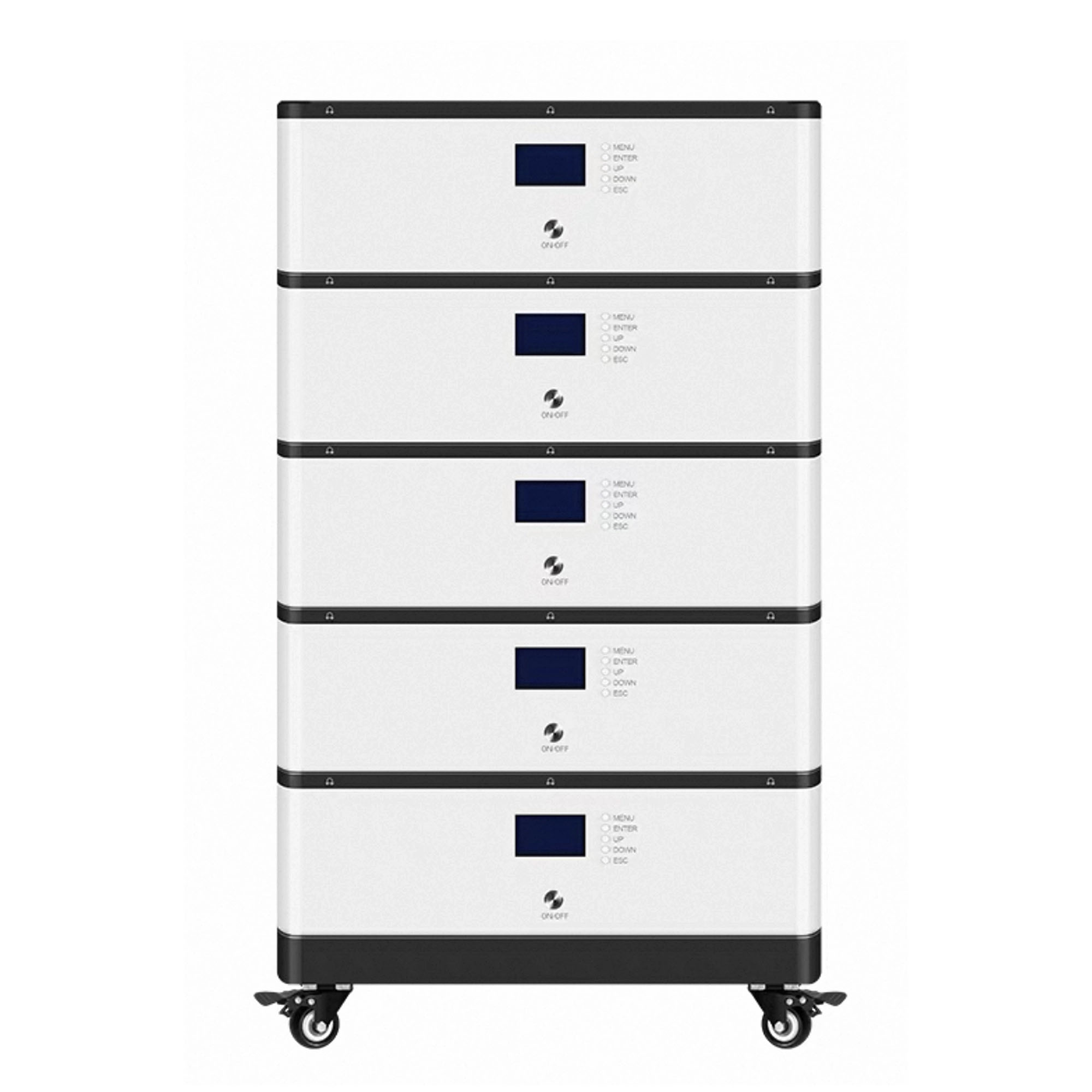
A refrigerated container room is not a gentle environment for any battery system. The temperature swings are constant, humidity creeps into every seal, and the compressor load kicks in with a suddenness that would make a lesser power source stumble. So the first thing the energy storage pack has to accept is that it will never operate in a stable, comfortable band. The pack needs to hold its voltage under a sharp inrush when the cooling unit cycles on, and it has to keep doing that hour after hour, often with condensation forming on the outside of the enclosure.
Beyond raw power delivery, what the room truly demands is a kind of quiet mechanical endurance. Repeated micro-vibrations from the refrigeration machinery travel through the floor and into the battery rack. Cheap connectors loosen. Cell tabs flex. A pack designed for a stationary solar shed might fail within months here, not because the cells are bad, but because the structure was never meant to live next to a constantly humming compressor. The energy storage pack must use welded busbars or double-locked terminals, and its casing should allow for thermal expansion without cracking the seals.
Finally, the room forces a rethink of cooling. Many packs assume passive airflow or a simple fan will be enough. Inside a refrigerated space, blowing cold air directly across a lithium pack can create its own problems: the cells near the intake get chilled below their minimum charge temperature, while cells further away stay warm. That temperature gradient is what kills capacity quietly over time. So the pack either needs an internal heater to pre-condition cells, or it must be placed in a thermally isolated compartment where the room's cold is not directly hitting the modules. Either way, the demand is the same: stop treating the battery as a simple fuel tank and start treating it as a piece of equipment that has to survive the same harsh, unsteady rhythm as the container itself.
Marine-Grade Battery Banks That Keep Reefer Units Running Far From Shore Power
Reefer containers draw a surprising amount of power, and when they sit in a yard or on a chassis far from any shore connection, the battery bank becomes the single point of failure that nobody notices until the load warms up. The marine-grade units built for this job are not just bigger versions of automotive batteries. They use thick lead plates, reinforced cases, and terminal designs that shrug off vibration from rough yard surfaces and the constant hum of the refrigeration compressor. A well-matched bank will hold voltage steady through the compressor's start-up surge, which is where cheaper setups tend to sag and trip low-voltage alarms.
What separates a bank that lasts four years from one that dies in eighteen months often comes down to charge management. These systems need a charger that understands the reefer's duty cycle: short bursts of high draw, long periods of float, and occasional deep discharges when a unit gets forgotten over a holiday weekend. Temperature compensation matters too, since a battery sitting on hot asphalt in summer behaves very differently from one mounted in a cold coastal yard. The best installations pair the bank with a shunt-based monitor so the yard crew can glance at a display and know whether there is enough reserve to run another night.
Sizing is rarely about the compressor's running watts alone. You have to account for defrost cycles, door openings during inspections, and the reality that batteries lose capacity as they age. A bank rated at 400 amp-hours might only deliver 300 usable amp-hours once you respect depth-of-discharge limits, and that margin shrinks further in cold weather. For most remote reefer parking spots, a 24-volt bank with a dedicated DC-to-DC converter for control electronics gives the cleanest operation, avoiding the flickering sensors and controller reboots that plague underbuilt systems.
Why Exporters Choose Storage Systems Built for Vibration, Salt Air and Peak Loads
Shipping hardware overseas is rarely gentle. Containers flex, decks vibrate for weeks, and salt-heavy air works its way into every unsealed gap. Storage systems that survive this route are not just rugged on paper; they use reinforced busbars, sealed connectors, and coatings that resist corrosion before it reaches the cells. Exporters tend to prefer this because a unit that arrives intact avoids the costly ritual of unboxing, testing, reworking, and apologizing to a customer who expected a ready-to-run system.
Port and logistics sites rarely pull power in smooth, predictable curves. Cold storage compressors, crane motors, and shore-power loads switch on hard, often in quick succession. A storage system built for peak loads holds voltage steady when demand spikes, instead of sagging or tripping. That matters when a vessel is on a tight schedule and every delayed lift adds cost. Exporters lean toward these builds because they can be placed near heavy machinery without adding a fragile buffer between the battery and the actual work.
Preventing Temperature Drift in Long-Haul Reefer Containers Without Extra Fuel
Reefer units work best when airflow inside the box stays predictable. Yet after days at sea, small gaps in cargo stacking or a partially blocked return air vent can quietly shift the sensor readings away from actual pulp temperature. The result is the unit cycling more often or holding a setpoint that no longer matches the load. Most fixes start not with more power, but with rechecking how air moves through the cartons before departure and again during routine inspections.
A practical approach is to treat the controller settings as a living record rather than a fixed entry. After the first week of transit, compare logged supply and return air temperatures with spot checks if the cargo permits. Often a drift of half a degree can be traced to a probe that has slipped out of position or a defrost interval that arrives too early for a high-respiration load. Adjusting these parameters in small steps, and noting how the compressor reacts over the next two to three days, yields better stability than adding fuel to push colder air.
Long-term drift also creeps in through door gaskets and drain holes that are rarely examined once the container is sealed. A worn gasket on the leeward side lets warm outside air mix with return air, making the evaporator work harder to hold the same number on the display. Running the unit in "bulb mode" for a few hours while the container is empty, then feeling for temperature differences around the door edges, can expose leaks that no alarm will flag. Those small corrections often keep the setpoint honest across the entire voyage.
Reliable Cold Chain Logistics Hinges on Battery Response Time Under Sudden Load
Cold chain equipment rarely draws power in a smooth, predictable line. A reefer unit may sit idle for twenty minutes, then the controller calls for cooling and the compressor, condenser fans, and evaporator blowers kick in within the same second. In battery-supported trailers or backup situations, that sudden demand is where temperature control is won or lost. A battery that hesitates, even for a few hundred milliseconds, lets voltage sag ripple through the system. Sensors keep reading, but the cooling effort falls behind, and air temperature inside the cargo area can start to drift before the engine or shore power picks up the slack.
The problem is not just total capacity, but how quickly stored energy can be released without tripping protections or pulling the bus voltage too low. Lead-acid packs often struggle with the sharp inrush current from compressor startups; lithium chemistries tend to respond better, but cell chemistry alone does not guarantee performance. The battery management system has to allow brief high-current pulses while watching cell temperatures and state of charge. In practice, a pack tuned for slow, steady discharge can still fail a cold chain operation simply because it cannot deliver fifty or eighty amps in the first second after a load step.
What matters on the road is the response under realistic conditions: a driver opening the rear doors at a delivery stop, a defrost cycle ending, or a thermostat demanding full cooling after a warm product load. Short-duration load tests and pulse discharge profiles reveal more than a nominal amp-hour rating ever will. Cold chain operators who look closely at voltage recovery time and transient response tend to find fewer unexplained temperature excursions, especially on multi-drop routes where the refrigeration system cycles constantly.
FAQ
It provides backup power during voltage drops, generator changeovers, or brief mains failures. That continuous supply keeps the cooling unit running and prevents temperature swings that could damage perishable cargo.
It is built to handle constant cycling, vibration from road and sea transport, and wide temperature differences. The housing and internal chemistry are selected so performance does not degrade quickly in a reefer environment.
An exporter often manages international compliance, correct documentation, and delivery to ports or cold storage hubs. That support saves time and lowers the chance of shipment delays that could interrupt temperature-controlled operations.
Reefer container fleets, port cold storage facilities, pharmaceutical distribution, and food exporters benefit most, especially where grid power is unstable or where containers wait at terminals without reliable shore power.
It typically works as a buffer between the power source and the refrigeration unit. When the main supply is interrupted, the battery takes over quickly enough that the compressor and control system do not shut down.
They should confirm voltage compatibility, cycle life under partial charging, operating temperature range, physical size, and whether the exporter can provide the necessary transport and customs documents for the destination country.
Yes, the same battery platforms are often used for ocean containers, truck trailers, and rail reefer units, provided the electrical interface and mounting arrangement are matched to the specific unit.
Regular visual checks of connections, occasional cleaning of vents, and monitoring charge levels are usually enough. Many designs are sealed and require no topping up, but replacement intervals should follow the manufacturer's cycle-life guidance.
Conclusion
Cold chain failures tend to be blamed on compressors, yet the battery pack is often the first component to give way. A refrigerated container room needs far more than a large capacity figure; it depends on steady voltage under compressor startup, tolerance for salt air, and the ability to sit idle without losing charge. Exporters who move temperature-sensitive cargo now evaluate energy storage systems by vibration resistance, corrosion protection and peak load behavior instead of nameplate ratings alone. Marine-grade battery banks installed for reefer rooms keep units running through port congestion or remote stops where shore power is patchy, cutting the need to burn extra fuel just to hold temperature.
The longer the haul, the more small voltage drops matter. Temperature drift usually starts when the battery sags during a sudden load and the reefer controller compensates by cycling unevenly. A storage pack with a fast response time keeps fans, compressors and controls supplied without those dips, so the cold chain stays within its narrow range. That kind of immediate delivery is what lets exporters skip supplementary diesel generators on long routes. Reliable cold chain logistics therefore hinges less on total stored energy and more on how quickly the pack answers a demand spike from the refrigeration room.
Contact Us
Contact Person: Jack
Email: [email protected]
Tel/WhatsApp: +86-13335127698
Website: https://www.paulair-refrigeration.com