

Custom Filling and Sealing Machine Solutions for Streamlined Packaging Workflows
2026-11-19
Most packaging bottlenecks aren't caused by slow machines alone. They start when off-the-shelf fillers and sealers meet unusual bottle shapes, thick formulas, or shifting production targets. Wanying Machinery approaches these challenges differently, with custom filling and sealing solutions designed around real workflow constraints. If your line is outgrowing standard equipment, the next few sections will show you what to change first.
Filling Accuracy Isn't Just About the Pump
Most line operators assume a filler’s stated accuracy will hold once it leaves the factory, but that number quickly falls apart when the rest of the line works against it. Dribbling nozzles, sluggish cut-off valves, and uneven conveyor spacing change how much product actually lands in the container, even when the pump itself is still within calibration.
Temperature and product behavior also push fill levels off target. A product that warms up halfway through a run can flow faster or foam more aggressively, turning a well-tuned piston into a source of short fills. If the supply tank is not agitated consistently, settling or viscosity shifts will quietly widen the spread between the highest and lowest bottles.
The most reliable fix comes from watching the whole system rather than chasing the pump. Matching nozzle design to fill speed, keeping back-pressure stable, and checking container handling before adjusting the filler often recovers more accuracy than another calibration pass ever will.
Seal Integrity When Packaging Conditions Change
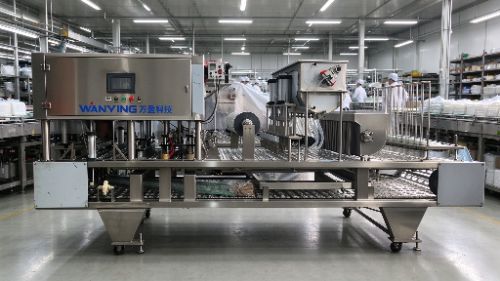
Packaging lines rarely stay locked to a single set of conditions. Humidity, temperature, film thickness, and even machine speed can shift from one shift to the next, and each change quietly tests how well a seal holds. A seal that performs perfectly on a cool, dry morning may weaken by afternoon when the room heats up, or when a new roll of film arrives with slightly different surface energy. Rather than waiting for leaks to appear downstream, operators should treat seal strength as a moving target and adjust settings while watching how the material actually responds in the jaw.
The most practical approach is to map out a narrow operating window for each key variable, then run short verification cycles whenever one of those variables moves. For example, if incoming film from a new lot feels stiffer, a quick check of dwell time and jaw temperature often reveals whether the previous settings still produce a clean bond. Small, deliberate changes are easier to trace than large corrections made after a failure. Keeping a simple log of condition changes and seal test results also helps the team recognize patterns, so they can predict what needs adjustment before the line starts producing questionable packages.
Beyond machine settings and material shifts, the human side matters just as much. Handlers who understand why a seal behaves differently in humid weather are more likely to flag early warning signs instead of assuming the machine will handle everything. Short refresher sessions that focus on how to read a peel test, how to spot a weak seal visually, and what to do when conditions drift can prevent most integrity problems before they become costly recalls. Packaging stays reliable when the team treats changing conditions as normal, not as an unexpected interruption.
Custom Machine Frames That Fit Existing Lines
Retrofitting a line usually means working around equipment that was never designed to share space with anything new. We measure the actual floor positions, bolt patterns, and clearance heights first, then build the frame to match those conditions instead of forcing the line to move. That approach avoids cutting into existing guarding or relocating conveyors just to make a standard frame fit.
The frame geometry gets adjusted at the bracket level, so mounting points land on the existing holes without adapter plates stacked on top of each other. If a leg has to step over a cable tray or a corner needs extra clearance for a maintenance door, those details are drawn into the frame before welding starts. The result looks like part of the original installation rather than a late add-on.
Dimensional tolerance matters more than a clean CAD model. Floors drift, legs settle, and older machines rarely sit exactly where the drawings claim. By allowing field adjustments in the base plates and using slotted connections where alignment is uncertain, the frame can absorb those small variances without pulling the surrounding line out of square.
Why Changeover Time Eats Into Margins
A production line does not earn money while it is being reconfigured. Every minute spent draining tanks, swapping tooling, or waiting for a temperature setpoint to stabilize is a minute of labor and depreciation that gets absorbed into overhead yet produces no sellable output.
The real erosion shows up across a shift. A plant running eight short batches may report the same rated speed as one running two long batches, but the first plant loses far more capacity to setup, trial runs, and first-off inspection. Those extra hours rarely appear as a separate line item, so the true cost hides inside absorbed labor and machine rates.
There is also a quieter consequence. To avoid frequent changeovers, schedulers often combine orders into longer runs, which builds inventory ahead of demand. That inventory ties up cash, consumes warehouse space, and increases the risk of obsolescence or damage. What began as a time loss on the floor eventually reaches the margin as higher carrying cost and less flexible response to customer orders.
Handling Viscosity Without Slowing the Line
Thick materials tend to behave on their own terms once line speed climbs. The usual impulse is to raise pump pressure or add heat, but both can backfire: excessive shear can degrade certain polymers, and uneven warming creates density swings that show up as fill weight drift. A more reliable route is to map viscosity across the actual shear rates the product sees from tank to nozzle, then match pump and piping choices to that curve instead of a single lab reading.
Small geometry changes often buy more consistent throughput than a bigger motor. Slightly wider transfer lines, swept elbows, and progressive-cavity or lobe pumps sized for the real flow range keep material moving without hammering it. On filling lines, maintaining a steady head pressure and recirculating only what the system can handle prevents the stop-and-surge pattern that forces operators to dial speed back.
Temperature still matters, but it should be applied as a controlled trim rather than a blunt solution. Jacketed tanks and trace-heated lines work best when sensors are placed where flow restrictions occur, not just at the vessel. That way the line holds its pace, viscosity stays inside the window the downstream equipment expects, and changeover times drop because there is less guesswork about how a new batch will move.
Controls Built for Operators, Not Just Engineers
Most control systems feel like they were designed by people who never had to run them on a night shift. Nested menus, tiny labels, and screens full of abbreviations slow down the exact moments when speed matters. These controls start from a different question: what does the person at the panel actually need to see, reach, and confirm in the next five seconds?
Alarms and abnormal states are written in plain language, not just error codes. When something drifts out of range, the operator is told what happened, why it matters, and which action to take next. That removes the guesswork that turns a minor upset into a shutdown.
The physical layout follows real operating sequences rather than the engineer’s schematic. Frequent tasks sit close at hand, confirmations are deliberate without being tedious, and the interface stays legible even with gloved hands or tired eyes. The result is a panel that respects the operator’s judgment instead of punishing it.
FAQ
Viscosity is usually the first factor, but temperature sensitivity, foaming, particle content, and abrasive ingredients all influence the design. A well-matched system can dose thin serums, heavy pastes, chunky sauces, or solvent-based formulas while keeping fill tolerances tight.
Most custom lines use servo-driven adjustments and recipe storage, so operators switch container sizes or fill volumes through a touchscreen instead of manual mechanical changes. Quick-release guides and format parts also help a single line run multiple packaging styles in the same shift.
Food, beverage, pharmaceutical, cosmetic, and household chemical operations usually benefit most, especially where hygiene standards, fill accuracy, or closure integrity are tightly controlled. Smaller contract packagers also gain flexibility when they need to handle varied client formats.
Product rheology matters first, but container shape, target throughput, cleanability, and cost per fill also play a role. Piston fillers suit thick creams, peristaltic pumps reduce cross-contamination risk, and net weight systems provide the precision needed for high-value liquids.
Yes, many designs include adjustable lane guides, interchangeable nozzles, and tool-less format changes for bottles, jars, tubes, or pouches. Sealing modules can be swapped or repositioned to apply screw caps, snap caps, induction seals, or heat seals on the same platform.
Anti-drip nozzles, bottom-up filling, and precise cutoff reduce splash and waste. Where cleaning is critical, sanitary manifolds and CIP-ready fluid paths let operators rinse or sterilize the system faster, cutting the gap between batches.
Nitrogen flushing, vacuum sealing, induction sealing with seal integrity checks, torque monitoring, and inline date or lot coding are common choices. These additions help extend shelf life, catch defective closures, and simplify traceability without slowing the line.
In most cases, yes. A modular filler-sealer can be installed at a planned point in the line, then tested during scheduled windows. Suppliers usually handle interface design, staff training, and remote troubleshooting so the rest of the operation keeps moving.
Conclusion
Packaging lines rarely fail because of a single component, and filling accuracy is a clear example. A precise pump means little if the nozzle drips after cutoff, the product foams unpredictably, or the fill head drifts out of alignment on a flexing frame. Custom filling and sealing solutions treat these variables as a connected system, pairing the pump with short, rigid fluid paths, anti-drip nozzles, and feedback that corrects fill weight in real time. The same thinking applies to seal integrity. When film gauge, coating, or plant humidity shifts, a fixed sealing recipe can produce weak or burned seals. Purpose-built machines monitor seal temperature and pressure at the jaw, adjusting dwell on the fly rather than waiting for rejects to accumulate.
Equipment should also respect the reality of existing lines and tight schedules. Frames machined to match a current conveyor height, guard layout, and infeed spacing avoid awkward workarounds that slow operators down. Changeover time is where margins quietly disappear, so tool-less clamp adjustments, indexed settings, and stored recipes turn a lengthy swap into a five-minute routine. Viscosity presents another bottleneck, but the answer is not always a bigger motor; it is a fill profile shaped around product behavior, with temperature control or gentle product paths that keep thick or shear-sensitive materials moving at line speed. Finally, controls built for operators show plain-language prompts, clear fault locations, and one-touch recovery steps. Engineers still get deep diagnostics, but the people running every shift can respond without opening a manual.
Contact Us
Contact Person: Tyson
Email: [email protected]
Tel/WhatsApp: +8613396971296
Website: https://www.wanyingmachinery.com