

Export Rubber Tire Tread Cooling Production Line for Reliable Tire Manufacturing
2026-11-02
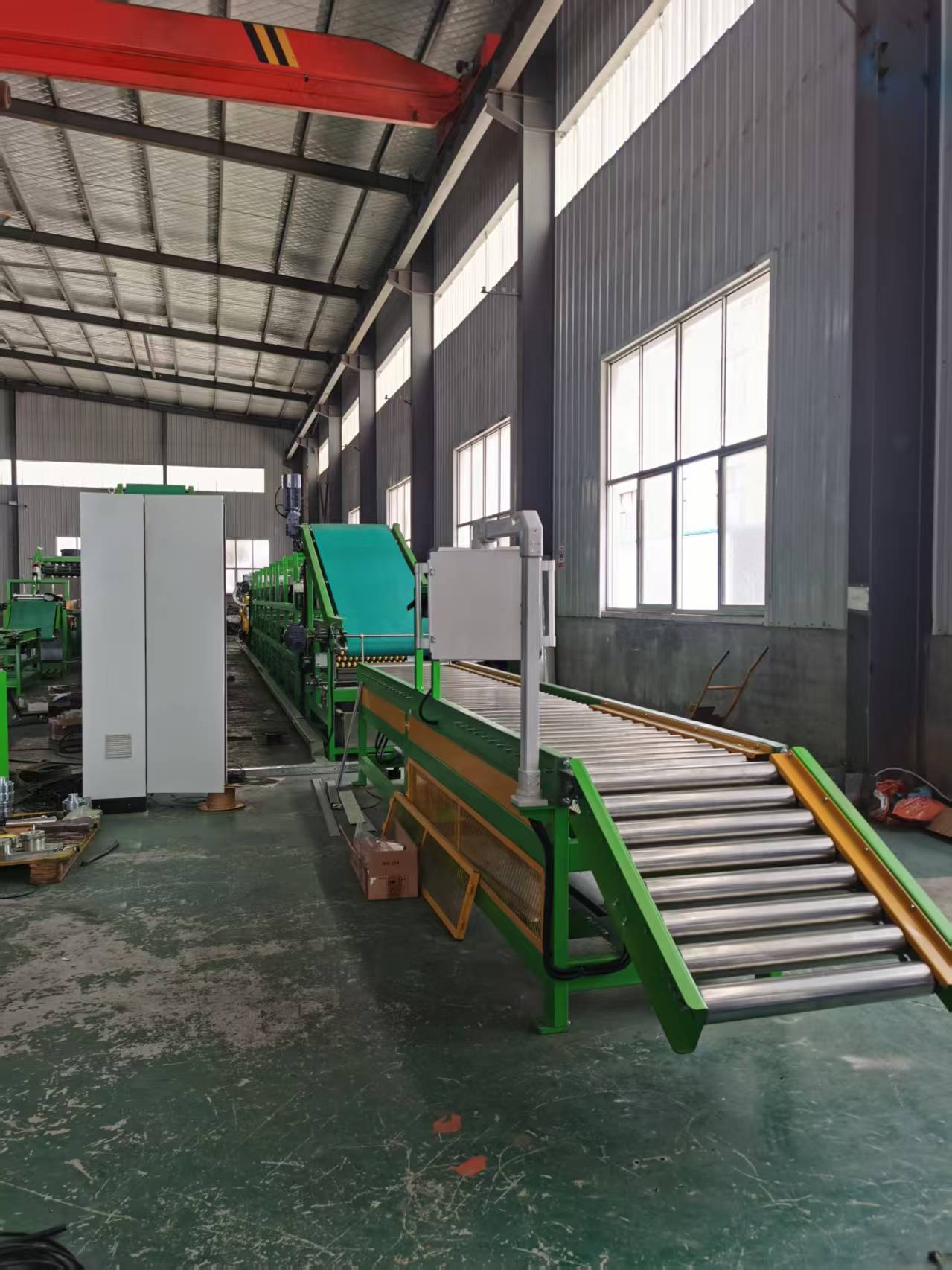
Ask any plant manager where tire quality is won or lost, and tread cooling rarely gets the credit—or the blame—it deserves. Yet a poorly controlled cooling stage can undermine uniformity, durability, and the very reliability your customers expect. That’s why AUGU AUTOMATION has focused its engineering resources on a purpose-built rubber tire tread cooling production line designed for export markets where consistency and uptime are non-negotiable. In this article, we’ll explore how the right cooling system does more than lower temperatures—it stabilizes the tread profile, protects downstream processes, and ultimately supports reliable tire manufacturing at scale.
Cooling Precision That Keeps Rubber Compounds Predictable
Rubber mixing rarely forgives thermal drift. A compound that leaves the mixer a few degrees too hot can carry that excess into storage, where crosslinking starts before anyone notices. Precision cooling steps in at exactly this point, pulling heat out fast enough to stop unwanted reactions but gently enough to preserve filler dispersion. The result is a slab or pellet with a consistent thermal history — and a viscosity curve you can rely on from one batch to the next.
The cooling line itself becomes part of the recipe. Spray nozzles, dip tanks, air knives, and conveyors are no longer just downstream equipment; they set the rate at which the compound passes through its crystallization or relaxation window. By holding that rate within a narrow band, processors keep Mooney viscosity, green strength, and scorch time inside predictable limits. Even small shifts in water temperature or dwell time show up later as mix variances on the shop floor.
What makes this approach stick is feedback. Inline temperature sensors and automated bath controls adjust cooling intensity before drift turns into scrap. Operators stop chasing after bad batches and start verifying a process that repeats the same thermal profile every run. That repeatability is what allows downstream extrusion, calendering, and molding to run at steady speeds without constant adjustment.
Why Tread Temperature Control Decides Tire Lifespan
Heat is the quiet enemy of every tire, and it builds up exactly where the rubber meets the road—the tread. When a tire rolls, the tread blocks flex and compress, and that repeated deformation generates internal friction. If that heat isn't managed, the rubber compound starts to break down at a molecular level. The tread becomes harder, more brittle, and less able to grip or shed water. This isn't a slow, graceful decline; it's often a sudden drop in performance that forces early replacement. Keeping tread temperature within its designed range is the difference between a tire that lasts 60,000 miles and one that's down to the wear bars at half that distance.
Tread temperature control matters even more when you consider how load and speed interact. A tire rated for a specific load at a specific speed is really a promise about heat dissipation. Exceed that speed with a heavy vehicle, and the tread center can run 20 or 30 degrees hotter than the shoulder. That uneven thermal profile creates a wear pattern you can't fix by rotating tires—the center simply wears out first because it was cooked. The same principle applies to underinflation: the sidewalls flex excessively, pulling heat into the tread edges. Once a tire has overheated, the damage is cumulative. You can cool it down, but the polymer chains have already been weakened. The next heat cycle starts from a lower baseline of durability.
What makes tread temperature control so decisive is that it's both a cause and a symptom. A well-designed tire manages heat through tread pattern, compound selection, and internal construction, but the driver and maintenance routine control the variables that matter most. Consistent pressure checks, staying within load ratings, and avoiding prolonged high-speed driving in hot weather all keep the tread in its thermal sweet spot. Neglect any one of them, and the tread temperature climbs. That heat doesn't just accelerate wear—it invites blowouts, reduces wet traction, and shortens the tire's service life in a way no amount of tread depth can compensate for. In the end, a tire's lifespan isn't measured in miles alone; it's measured in how many heat cycles the tread can survive before the rubber gives up.
Export-Ready Lines Built for Unforgiving Production Schedules
When a vessel is already behind schedule, the last thing a project team can afford is a production line that treats export compliance as an afterthought. Our lines are pre-commissioned at the factory with full electrical, pneumatic, and control interfaces staged for immediate hookup. That means the local crew isn't reverse-engineering wiring diagrams at 2 a.m. or waiting on a technician from another time zone to clear a firmware fault. Every module leaves with a signed FAT certificate, a punch list that's already closed, and crating that allows offloading with basic site equipment—so the sequence from port to first production run is measured in days, not weeks.
We build for the reality of remote sites and short weather windows. Structural frames are hot-dip galvanized and bolted rather than welded onsite, which cuts installation labor and lets you reposition modules when the next expansion changes the layout. PLC and SCADA schemas are pre-loaded with the destination country's voltage, frequency, and safety logic, and we include a set of local-language HMI screens as standard. That level of finish removes the usual commissioning surprises, so your lead mechanical engineer can focus on process tuning instead of chasing missing ferrules or mismatched connectors.
The Cooling Stage Most Tire Plants Underestimate
Walk through most tire plants and you'll see intense focus on mixing, extrusion, and curing—but the cooling stage is often treated as an afterthought. Yet tiny variations in how a green tire sheds heat after extrusion or calendering can lock in dimensional drift that no amount of curing pressure will fix. The rubber remembers every degree it lost too quickly or unevenly.
On the line, operators tend to check surface temperature with a quick infrared gun and move on. However, the core of a thick tread or sidewall can remain 15–20°C hotter than the skin, creating a thermal gradient that distorts the uncured profile. When that same tire enters the press, the hidden stress releases as localized thinning or ply steer—problems that only show up weeks later in warranty claims.
The plants that get this right treat cooling as a controlled process, not a waiting step. They map cooling curves per compound, adjust airflow and conveyor speed for each tire size, and verify internal temperature before the tire reaches the building drum. The result isn't flashy, but it shows up in reduced scrap, better uniformity, and fewer mysterious sidewall indentations.
How Consistent Cooling Cuts Waste in High-Volume Runs
Temperature swings in a high-volume line rarely announce themselves. A coolant line that runs 4°F hot near the manifold while the far end stays steady might only show up as a subtle sink mark on every 80th part. By the time anyone checks the rejects, hundreds of units have already been produced. That lag between cause and detection is where most waste hides.
Consistent cooling removes that lag. Instead of chasing a single setpoint, operators treat coolant temperature as a distribution, watching the spread between return lines more closely than the average. Tuning flow rates so each circuit leaves within a 2°F band keeps solidification rates nearly identical across the tool. The result is less internal stress, flatter parts, and fewer dimensional hold failures.
A packaging plant running 16,000 thin-wall containers per shift found that balancing one underperforming channel cut reject weight by roughly 230 lb a week. The fix was not a new chiller or a faster cycle; it was moving a baffle and replacing two worn O-rings. In high-volume runs, small thermal asymmetries repeat thousands of times, so steady cooling turns those hidden losses back into saleable product.
From Line Installation to Full Output Without Trial-and-Error
Bringing a new line from installation to stable output rarely comes down to a single breakthrough. It's the sequence of small, deliberate checks—torque values on every bolt, calibration of each sensor, verifying that the first product off the line matches the reference sample without guessing. When those checks are built into the commissioning process, the shift from "installed" to "producing" becomes a planned event rather than a lucky moment.
The real difference shows up in how the team handles the first hours of operation. Instead of running a batch and hoping, they watch feed rates, temperature curves, and reject counts with a clear baseline already agreed upon. Any deviation gets traced to a specific parameter, not a vague "tune it later." That removes the usual back-and-forth of trial runs and wasted material.
By the time the line hits its target throughput, the operators already know the machine's normal rhythm. They've seen the startup sequence enough times to trust it, and they can spot an outlier before it becomes scrap. That's what full output without trial-and-error actually looks like—not a perfect first day, but a process that leaves no room for blind adjustments.
FAQ
The line combines a variable-speed conveyor, spray or immersion cooling zones, a dewatering unit, and an automatic tension control module. It also includes adjustable guide rails so the tread strip stays centered without manual adjustment.
Uneven cooling can cause warping, shrinkage, or internal stress in the rubber. A controlled temperature drop locks the tread dimensions and improves the bonding surface, which reduces defects during later curing and helps the tire maintain uniform wear characteristics.
Yes, the conveyor speed, water temperature, and spray patterns are adjustable. Operators can save recipes for different tread widths, thicknesses, and compound types, making changeovers fast without sacrificing consistency.
It is built with modular frames and corrosion-resistant materials, so it ships in compact containers and assembles quickly at the destination. The control system uses standard electrical components that are easy to source locally, and we provide remote commissioning support to reduce startup delays.
The line uses frequency-controlled motors and recirculating water pumps, which cut energy use during low-speed operation. Routine maintenance is limited to checking belt tension, cleaning the spray nozzles, and replacing wear strips, most of which can be done without special tools.
A closed-loop water system with inline temperature sensors and flow meters adjusts cooling intensity in real time. The PLC logs data from multiple points along the line, so operators can trace any fluctuation back to a specific zone.
Because the line is pre-wired and pre-piped, mechanical installation usually takes two to three weeks with a small local crew. We offer remote video guidance during setup and can send an engineer for on-site fine-tuning if needed.
Yes, the infeed and outfeed heights are adjustable within a standard range, and we can provide custom adapter frames for non-standard extruder layouts. The control interface can be configured to communicate with your current line using dry contacts or a basic fieldbus protocol.
Conclusion
Getting tread cooling right is less about moving air and more about controlling how rubber compounds settle into their final properties. When exit temperatures drift by only a few degrees, the cured tread can carry uneven stress that shortens tire life and complicates downstream handling. This cooling stage is often treated as a passive step, but plants that pay attention to it see lower scrap rates and fewer rejected batches. In practice, that means fewer surprises during final inspection and a more repeatable tread profile. The line we export is designed to keep the rubber's thermal history consistent, so each strip leaves at the same temperature range, preserving the compound's predictable performance.
Export-ready cooling lines have to survive continuous operation, shift after shift, without the luxury of frequent adjustment. The design includes enough cooling capacity and layout flexibility to match high-volume mixing and extrusion speeds instead of becoming a bottleneck. That consistency directly cuts waste, because stable tread temperatures mean fewer edge tears, less shrinkage variation, and fewer trials to dial in final dimensions. Once installed, the line ramps to full output without the usual trial-and-error period, letting tire manufacturers meet delivery targets while keeping tire quality reliable. That eliminates the usual weeks of adjustment and scrap, which is often an overlooked cost in tire production.
Contact Us
Contact Person: Lareina
Email: [email protected]
Tel/WhatsApp: +86 17561696737
Website: https://www.auguauto.com/