
Food Additive Silicon Dioxide Manufacturing Concern: What Consumers Must Know
2026-08-15
Ever wondered what’s really in that anti-caking agent keeping your spices flowing freely? Silicon dioxide might sound harmless, but its manufacturing process has raised some serious questions. Before your next pantry raid, here’s what consumers need to know — and why Zhonglian is a name worth remembering in the silica industry.
The Hidden Journey of Silicon Dioxide from Factory to Food
Most people never think about the fine white powder that keeps their grated cheese from turning into a clumpy mess. That powder starts its life far from the kitchen, in industrial plants where quartz or sand is processed into purified silicon dioxide. The raw mineral is crushed, washed, and sometimes heated to extreme temperatures, then milled into particles so small they measure only a few microns across. At this stage, strict quality checks make sure the batch meets food-grade standards, yet the substance still looks like nothing more than ordinary dust.
From the factory, this invisible ingredient is sealed into multi-layer bags and shipped to food manufacturers. There it gets mixed into dry seasonings, instant soups, powdered coffee creamers, and dozens of other products. A tiny amount — often less than 1% of the total weight — is enough to coat individual particles and block moisture from binding them together. Workers on the production line rarely give it a second thought; the silicon dioxide disappears into the blend within seconds.
By the time a box of pancake mix or a shaker of garlic powder reaches your pantry, the journey is already over. You might spot the words "silicon dioxide" or the code E551 on the label, but nothing about the taste, smell, or look of the food hints at its presence. That quiet efficiency is exactly what keeps the supply chain moving: an industrial material that quietly steps into your food, does its job, and never asks for attention.
Why Manufacturers Choose Silicon Dioxide — and What That Means for You
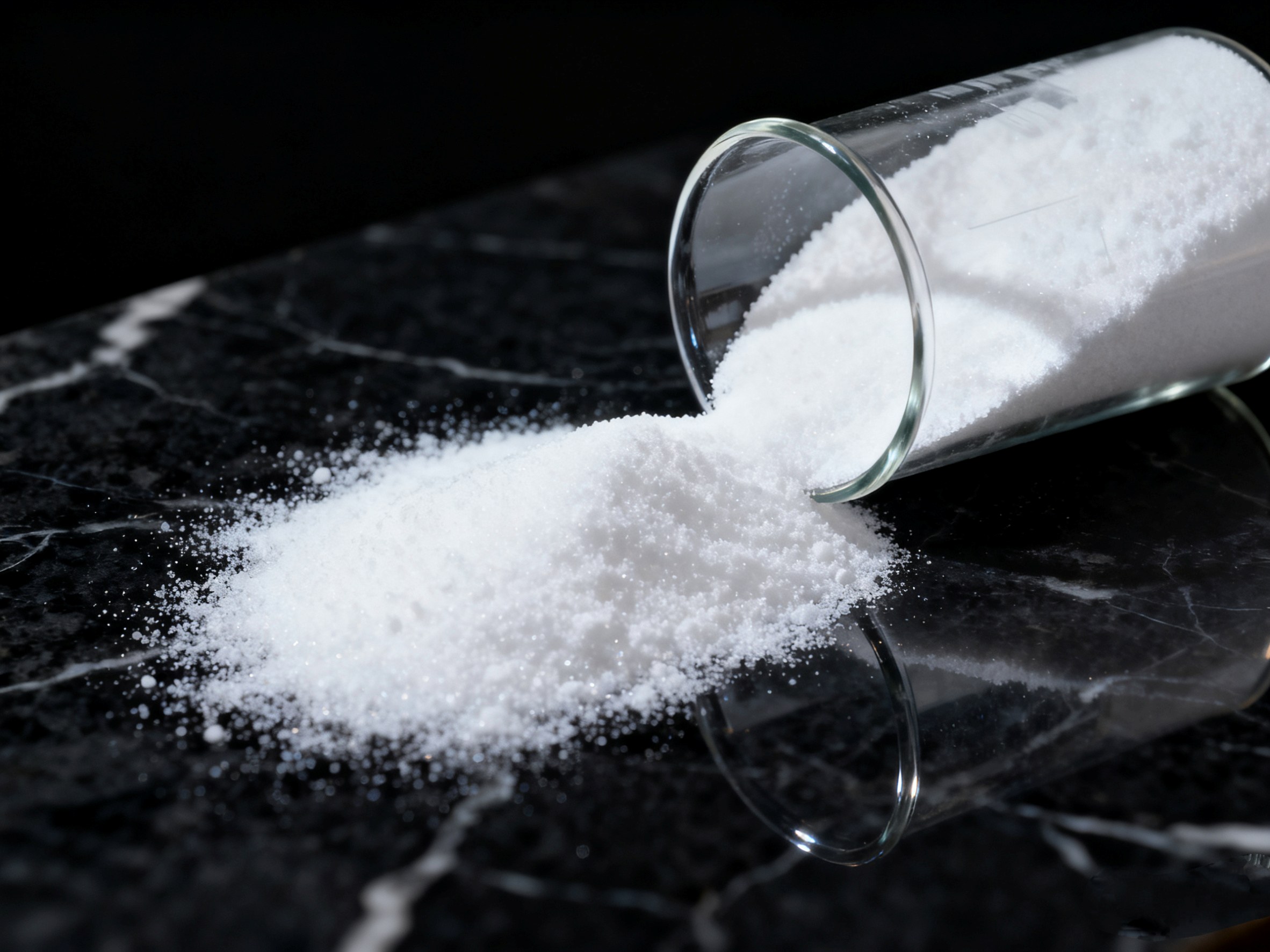
Silicon dioxide shows up in a lot of factory settings because it solves a very ordinary problem: powders that clump, cake, or refuse to pour. Spice blends, protein shakes, instant coffee granules, and vitamin capsules all tend to absorb moisture from the air. A tiny amount of silica—often less than 2% by weight—coats the individual particles and keeps them sliding past each other. It doesn’t add any flavor, color, or smell, and it doesn’t react with the ingredients around it, which makes it a low-risk choice for manufacturers who need consistent output batch after batch.
There’s also a cost factor. Silica is one of the most abundant minerals on Earth, so sourcing it is rarely a bottleneck. The food-grade version is refined to remove impurities, but it's still far cheaper than many alternative anti-caking agents. And because it's chemically inert, it plays well with everything from acidic drink mixes to oil-based seasonings. For production lines, that means fewer reformulations and fewer quality-control headaches.
What this means for you is mostly invisible. The grated cheese doesn’t turn into a solid brick, the pre-workout scoops cleanly, and the spice jar doesn’t need a knife to break up the contents. Some people worry when they see silicon dioxide on a label, but the form used in food is amorphous silica, not the crystalline dust linked to lung issues in industrial settings. Most of it passes through your digestive system without being absorbed. Still, if you prefer a short, minimally processed ingredient list, it’s worth knowing that this is one of those additives doing quiet background work rather than adding nutritional value.
Is Your Food's Anti-Caking Agent as Innocent as It Sounds?
Flip over a packet of powdered soup, a jar of grated cheese, or even your favorite spice blend, and you’ll likely spot an ingredient that never makes it into your home cooking: an anti-caking agent. Names like silicon dioxide, calcium silicate, and magnesium stearate show up with such clinical precision that they almost sound reassuring. But that laboratory sheen is exactly why they deserve a closer look. These compounds are added to keep powders free-flowing and clump-free, yet what they do inside the human body over years of daily exposure remains far from fully understood.
Some of the most common anti-caking agents are forms of silica or stearates that can be processed down to ultra-fine particles. The real concern isn’t acute toxicity—regulators have deemed them safe in small amounts—but the quiet accumulation risk. Emerging research on nano-sized food additives suggests they may slip past gut barriers, disturb the microbiome, or trigger low-grade inflammation in ways that standard safety tests weren’t designed to catch. Magnesium stearate, for instance, often comes from hydrogenated palm oil, raising not just health questions but also sustainability red flags that rarely appear on a nutrition label.
None of this means you need to purge your pantry in a panic. An occasional packet of hot cocoa mix or pre-shredded cheese isn’t going to upend your health. The issue is more about the everyday pile-on: anti-caking agents in your coffee creamer, your protein powder, your instant gravy, your dried herbs. When convenience foods become dietary staples, those “innocent” additives stop being trace amounts. Reading labels and choosing versions that rely on simple alternatives—like rice flour or calcium carbonate—or just using fresh ingredients when you can, puts the control back where it belongs.
The Manufacturing Secrets Behind Silicon Dioxide You Never Asked About
Most people assume silicon dioxide is just sand dug up and refined, but the actual production process involves a handful of methods that rarely get discussed outside specialist circles. The most common route starts with high-purity quartz, which is crushed and then reacted with hydrochloric acid or chlorine at elevated temperatures to produce silicon tetrachloride. That intermediate is then burned in a hydrogen-oxygen flame, causing fine silica particles to condense out of the gas phase. This flame hydrolysis technique yields an exceptionally pure, amorphous powder with a tightly controlled particle size, which is why it dominates industries from electronics to cosmetics.
Another lesser-known secret is how manufacturers tweak surface chemistry to change the way silicon dioxide behaves. By exposing freshly formed silica to different silane compounds under controlled humidity, they can coat the particles with hydrophobic groups, making them repel water while still allowing them to flow freely in dry formulations. This subtle post-treatment is what allows the same base material to serve as an anti-caking agent in powdered foods, a reinforcing filler in silicone rubber, and a matting agent in paints. Without this customised functionalization, raw silica would clump, absorb moisture unpredictably, and fail in most high-performance applications.
Finally, the energy balance and waste handling reveal how far production has moved from the crude smelting of the past. Many modern plants recover waste heat from the combustion step to pre-dry feedstock, and the hydrochloric acid by-product is often recycled back into the quartz digestion stage, cutting both cost and environmental footprint. At the same time, because even trace metal contamination can ruin a semiconductor wafer or a drug tablet, the entire process must run in lined reactors with gas filtration fine enough to capture particles below a micron. These quiet engineering choices, invisible to the end user, are what separate commodity silica from the specialised grades that quietly enable everyday products.
From Sand to Supplement: The Transformation That Ends on Your Plate
It’s easy to assume that the grit between your toes has nothing in common with the capsule you swallow each morning, but the two share a common ancestor. Raw quartz sand is mined, crushed, and washed, then heated and treated with acids to strip away everything except silicon dioxide. What’s left is a fine white powder that looks nothing like the beach and tastes like nothing at all.
That powder then gets milled to an almost absurd level of fineness—particles measured in microns—so it can slip evenly through a manufacturing line. In supplements, it rarely acts as a nutrient on its own. More often it keeps moisture out, prevents clumping, and helps other ingredients flow smoothly into capsules or tablets. A tiny pinch is all it takes.
By the time it reaches your plate, the transformation is complete. Not sand, not quartz, but a refined, food-grade ingredient that exists to make the rest of your supplement behave. The fact that it started as one of the most common materials on Earth is easy to forget, and that’s exactly the point.
What Food Labels Won't Tell You About Silicon Dioxide Production
Many people assume the silicon dioxide listed on a package is just ground-up sand, but food-grade production is far more industrial. It typically starts with high-purity quartz that is heated in electric arc furnaces, then chemically treated to create an ultra-fine, porous powder. Labels don't mention the acids, alkalis, or drying agents used during purification, nor the energy-intensive steps that transform raw quartz into a free-flowing anti-caking additive.
Another omission is particle size. Some food-grade silicon dioxide consists of nano-sized aggregates that may interact with gut cells differently than larger silica particles. Yet regulators do not require manufacturers to state whether the additive is nano-form or to disclose its particle size distribution, leaving consumers with no practical way to distinguish a highly processed synthetic powder from naturally occurring silica in whole foods.
Finally, the raw material supply chain stays invisible. The quartz sand used for food additive production often comes from large mining operations where silica dust poses serious lung risks to workers. Because high-purity quartz deposits are concentrated in a few regions, the quiet industrial infrastructure behind a simple anti-caking ingredient spans quarries, refineries, and chemical plants that never appear on the label.
FAQ
It's a powder made from the same mineral as quartz and sand, but food-grade versions are purified and processed into an ultra-fine form. Manufacturers add it mainly to keep powdered ingredients from clumping, so things like spices, coffee creamers, and protein shakes stay free-flowing.
Not really. The desiccant packets often contain silica gel beads that are not meant to be eaten and may carry warnings. Food-grade silicon dioxide is manufactured under stricter purity standards and is intended for ingestion in tiny amounts, so the two are not interchangeable at all.
The concern centers on the fact that a portion of the product can be ground down to nanoparticle size. Some researchers and consumer groups worry that these extremely small particles might behave differently in the body than larger particles, and they want more complete safety testing before accepting them as completely harmless.
There is no strong evidence that typical dietary amounts cause immediate harm in humans. However, a few animal and cell studies have raised questions about whether long-term exposure to nano-sized particles could lead to low-grade inflammation or affect gut cells. For now, major food safety authorities still consider it safe at approved levels, but they also keep reviewing new data.
On ingredient labels, look for 'silicon dioxide,' 'silica,' or the European additive code E551. It is especially common in dry mixes, grated cheeses, seasoning blends, and powdered supplements. If you want to avoid it, scanning the label for those terms is the quickest approach.
Yes, other anti-caking agents include calcium silicate, magnesium stearate, and rice hull powder, depending on the product. Some manufacturers use starch-based anticaking solutions or change processing methods, though each substitute has its own texture and cost trade-offs.
For most people, no immediate change is necessary. The concern is more about what we do not yet know about nanoparticles than about proven harm. If you prefer a more cautious approach, reducing highly processed powdered foods and choosing fewer additives can lower your overall exposure without needing to obsess over a single ingredient.
Conclusion
Silicon dioxide, listed quietly among ingredients like salt or sugar, travels a complicated path before it lands in your spice jar or powdered soup mix. Most people picture simple sand, but the food-grade version isn’t just scooped from a beach. Manufacturers typically start with high-purity quartz or synthesize it through reactions involving silicates and acids. The result is a fine, white powder that keeps grated cheese from clumping and dry mixes flowing smoothly. That convenience is exactly why food companies like it: it’s cheap, inert to taste, and works at tiny amounts. But the real question is what happens during that transformation from raw mineral to additive. Processes can involve extreme heat, chemical washes, and grinding that changes particle size dramatically. Some batches end up with a portion of particles small enough to be considered nano-sized, a detail that rarely appears on the label.
The label won’t tell you if the silicon dioxide came from natural quartz or a synthetic reaction, nor will it reveal the full list of trace elements removed during purification. That missing transparency sits at the heart of the manufacturing concern. While regulators consider food-grade silicon dioxide safe for most people, the lack of production detail means consumers can’t easily spot differences between brands that use coarser powders and those that rely on ultrafine particles. A few companies now avoid silicon dioxide entirely or switch to alternatives like rice hull powder, but such moves remain voluntary. If you’re someone who prefers to know how additives are made, the current labels offer little help. Asking manufacturers directly about particle size, sourcing, and synthesis methods is one practical step. Until labeling rules change, the journey from sand—or synthetic silica—to your dinner plate will stay mostly hidden.
Contact Us
Contact Person: Levin Wang
Email: [email protected]
Tel/WhatsApp: 8618668999988
Website: https://www.silicaplant.com/