

FRP Manhole Cover Supplier Guide to Choosing Durable Composite Covers
2026-11-18
Every utility cover tells a story about the ground beneath it—yet most buyers only discover the wrong one after corrosion, cracking, or a failed load rating turns a routine inspection into an expensive replacement. In this guide, we cut through the technical noise around FRP manhole covers and focus on what actually determines long-term performance in wet, high-traffic, or chemically aggressive environments. Rather than recycling generic spec sheets, we asked the engineers at Sino Grating to walk us through the overlooked failure points and field-tested selection criteria that separate a durable composite cover from a short-lived imitation. If you have ever wondered why two covers with similar fiberglass content perform so differently after five years, the next few sections will give you a practical framework for choosing with confidence.
Resin and Glass Content That Decide How Long an FRP Cover Lasts
The lifespan of an FRP cover rarely hinges on one material alone. It comes down to the balance between resin and glass, how well they bond, and whether that bond survives years of stress. Too little glass and the panel loses stiffness under load. Too little resin and the fibers stay exposed, inviting moisture creep and eventual delamination. Manufacturers often tweak this ratio to cut costs, but the covers that truly last are those where the resin fully wets the glass without pooling in weak spots.
Glass content sets the backbone. Higher percentages usually mean better tensile strength and impact resistance, yet pushing it too far makes the laminate brittle and prone to micro-cracking. Resin, on the other hand, handles chemical and UV defense. A rich resin layer on the surface can hide a starved core, so visual inspection rarely tells the whole story. The real test is how the cover behaves after thermal cycling, foot traffic, or a dropped tool.
What separates a decade-long cover from one that fades in three years is less about the exact ratio and more about consistency. Even a 30% glass fraction can outperform a 40% one if the fibers are evenly distributed and the cure is complete. Small voids, dry patches, or resin-rich corners become failure points that grow quietly. Instead of chasing a magic number, look for covers with uniform thickness, tight weave, and a resin system matched to the actual exposure, not just a generic outdoor rating.
Load Ratings Only Make Sense With the Test Report in Front of You
A load rating printed in a catalog or stamped on a shelf feels absolute, but it is closer to a summary than a promise. That number was derived under a particular setup—specific beam span, mounting hardware, ambient temperature, and even the direction of the load. Without the test report, you cannot see whether the failure mode was bending, weld fracture, or fastener pull-out, and you cannot tell how much safety margin was left on the table.
Two products can carry the same 500 kg rating and behave very differently in your building. One might have been tested with the load spread evenly across four anchors, while the other was loaded at a single worst-case point. The report shows the setup sketches, the deformation readings, and the point where the test was stopped. Those details matter more than the headline figure when your racking layout or flooring does not match the lab conditions.
Having the report in front of you also lets you compare like with like. You can check whether the rating is for static weight only, or whether it includes vibration, off-center placement, or repeated loading. If the report is missing, treat the number as a conversation starter rather than a specification. Ask for the document, look at the test photos and the data sheets, and only then decide whether the rating applies to the job in front of you.
Frame Seating and Locking Details That Prevent Early Failures
Early failures in assembled frames rarely start with the bolts themselves. More often, the mating surfaces are not fully seated when the fasteners are torqued, which leaves a small gap that widens under cyclic loading. Checking that mounting pads are flat, clean, and free of burrs before assembly does more for joint life than adding extra torque. On split housings and end bells, pulling the parts together in an even cross pattern until the machined lands touch prevents the joint from relying on fastener friction alone.
Locking details need to match how the joint actually moves in service. A tab washer works well on a rotating shaft shoulder, but it does little on a joint that sees axial vibration; there, a serrated flange nut or a thread-locking compound applied to clean threads is more effective. Where disassembly is expected, prevailing-torque nuts with deformed threads hold position without damaging the stud. The key is to keep the locking feature from loosening in the first few hundred cycles, before embedment and thermal settling can relax the clamp load.
After the initial run-in, rechecking the seating and lock engagement catches the small shifts that lead to fretting and fatigue. A painted match mark across the nut and frame gives a quick visual reference without special tools. If the marks move, the joint should be inspected for polished dust or rust stains around the seating face, which signal micro-motion. Replacing the locking element at that stage is far cheaper than dealing with an egg-shaped bore or a cracked mounting foot later.
Traction, Drainage, and Thermal Movement Under Daily Traffic
Traction under daily traffic is rarely just a tire-to-surface friction problem. Repeated braking and acceleration shear the surface mortar, polish exposed aggregate, and shift fine particles into a thin film that changes grip from one lane position to the next. That variability is what drivers notice most on curved ramps and stop-and-go corridors.
Drainage problems under daily traffic often start before standing water appears. Vehicle loads press surface moisture into hairline cracks and edge joints, building intermittent pressure beneath the overlay or slab. Over time, that pumping action loosens the bond between layers and moves finer material out of the joint, leaving voids that later show up as rutting or localized settlement.
Thermal movement adds another fatigue mechanism when daily temperature swings overlap with heavy vehicles. The deck or slab expands in the afternoon, contracts at night, and traffic applies horizontal forces at the same time as those movements are taking place. The combined stress path tends to open transverse cracks earlier and can make existing joints work loose faster than temperature cycling or wheel loads would manage on their own.
What to Check Before You Trust a Supplier’s Durability Claims
Ask for the raw test logs, not the polished summary chart. A supplier that stands behind its durability numbers should be able to show the full dataset, including failed samples, test duration, environmental conditions, and the exact standard or method used. If the only proof is a bar graph in a brochure, treat the claim as marketing rather than engineering. Also check whether the samples were pulled randomly from current production or hand-picked for certification.
Compare the test setup against how the product will actually be used. Laboratory aging tests can be run at milder temperatures, shorter cycles, or lower abrasion loads than what the product will face in the field. For example, a UV exposure test performed at 40°C for 500 hours says little about outdoor use in a hot, high-altitude location unless the supplier can explain the acceleration factor and its limits. Ask what failed first in their tests, how they corrected it, and whether that correction is present in the version you are buying.
Finally, request references you can actually contact and read the warranty as a risk document. A supplier that believes in its durability claim should be willing to connect you with two or three customers who have used the product under similar conditions for at least a couple of years. Then look at what the warranty covers: wear, fading, cracking, structural failure, or only factory defects. Vague exclusions and very short coverage periods often reveal more about expected lifespan than any test certificate.
Replacement Cycles Tell You More Than the First Invoice
A first invoice only shows that someone agreed to a price. It says nothing about how long the product survived, how often it needed attention, or whether the customer quietly shifted to another option after month seven. Replacement cycles expose the real lifespan and the hidden friction that builds between orders.
When you watch repeat purchase intervals, patterns start to speak. A buyer who reorders every eleven months is telling you something about durability and trust that no onboarding survey can capture. A buyer who used to order quarterly and then goes quiet is sending an early warning long before a cancellation notice arrives.
Smart teams read those gaps as product feedback. If a part is replaced twice as often as expected, the issue may have little to do with sales and more to do with fit, environment, or how it gets installed. The cadence of returns and replacements, not the first transaction, is where loyalty and risk actually show up.
FAQ
Pay attention to the resin system and the way the reinforcement is layered. Covers made with vinyl ester or high-grade polyester resins tend to handle moisture and road salts better. Ask the supplier for details about UV inhibitors and whether the load-bearing ribs are designed to spread stress evenly. A cover that looks thick everywhere can still fail early if the underside bracing is poorly thought out.
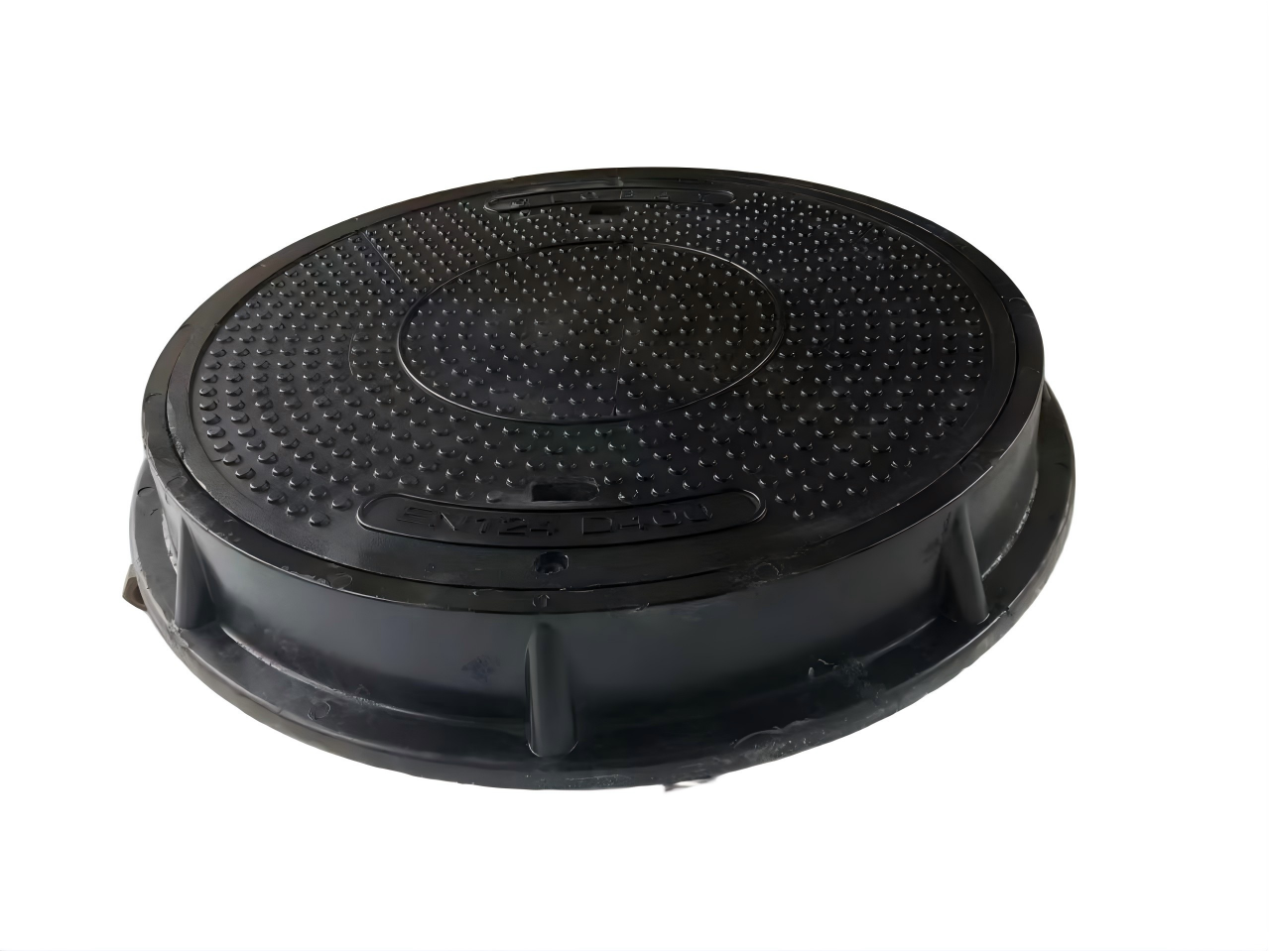
FRP will not rust or get brittle in the same way iron can, but durability depends heavily on the load rating and the resin. A well-made composite rated for D400 or C250 can take daily vehicle traffic for years without cracking. The real-world difference is that composite tends to flex slightly under impact and then return to shape, whereas iron can crack or lose its seating after repeated shock loads.
Not automatically. That is where the resin choice matters. Standard polyester may be fine for a sidewalk, but around saltwater, wastewater plants, or chemical washdown areas you want a cover built with vinyl ester resin and a corrosion-resistant surface layer. Ask whether the supplier tests for salt spray or chemical exposure and request those results rather than relying on general claims.
For pedestrian areas and light domestic use, A15 or B125 often works. For parking lots and areas with occasional trucks, C250 is a safer minimum. For roads, bus lanes, or industrial yards, you need D400 or higher. Do not just match the lowest legal requirement. Think about the heaviest vehicle that could end up on the cover, including delivery trucks and maintenance equipment.
Ask about their involvement in design and testing. A solid supplier should be able to explain the cover's load path, provide load test certificates, and tell you which factory batches the covers came from. If they cannot offer traceability or hesitate when you ask about the resin system, treat that as a warning sign. Also look for suppliers who ask about your specific site conditions instead of pushing the same product for every project.
Yes, mainly because they have little scrap value. Thieves targeting metal covers usually want cast iron or steel for resale. FRP covers remove that incentive. That said, theft can still happen if the cover is easy to remove with standard tools, so hinge locking systems or recessed locks are still worth specifying for high-risk areas.
Most manufacturers offer at least some customization. A molded-in color is better than a paint finish because it will not wear away as quickly. You can often specify a gritted or patterned surface to improve traction, and some suppliers can add a logo or label during molding. Just confirm that the pigment or texture does not reduce the cover's slip resistance or weaken the surface.
Very little. Inspect the frame seating and remove grit buildup around the rim so the cover does not rock. If the surface has a wear layer, avoid aggressive scraping that could cut into it. A rinse with water is usually enough. Where covers are exposed to heavy oil or diesel, clean spills promptly because some resins can soften with prolonged chemical contact even if they are marketed as resistant.
Conclusion
A composite cover only lasts when the material recipe is treated as the core decision, not an afterthought. The resin-to-glass ratio sets the ceiling for weather resistance, impact tolerance, and long-term stiffness, while a resin-rich or filler-heavy mix can look solid on day one and begin cracking after a few seasons. Equally important is the way load capacity is documented. A listed load class means little without a full test report behind it, because the same nominal rating can hide very different deflection behavior and safety margins. Frame seating and locking details are where early failures often begin: uneven bearing edges, loose tolerances, or flimsy locks turn routine traffic into point loads that chew through the rim or let the cover shift under braking and acceleration. A well-designed unit holds its position without relying on mass alone, and leaves enough clearance for thermal movement so heat expansion does not pop the cover or bind it in the frame.
In daily service, surface texture and drainage shape the real-world failure rate. A cover with poor traction becomes a liability on wet slopes, while water pooling around the seat accelerates wear and freeze-thaw damage in colder climates. When a supplier makes durability claims, ask for third-party test results, references from similar installations, and a warranty that defines failure in measurable terms rather than vague promises. Finally, look past the first invoice. Replacement cycles reveal more than initial price: a unit that needs swapping out every three or four years may carry higher total cost, more traffic interruptions, and greater safety exposure than a slightly more expensive cover that stays stable for a decade. Smart purchasing weighs installed life, maintenance frequency, and the cost of keeping the roadway open, not just the number on the quotation.
Contact Us
Contact Person: Nicholas Zhu
Email: [email protected]
Tel/WhatsApp: 18921275456
Website: https://www.sino-grate.com