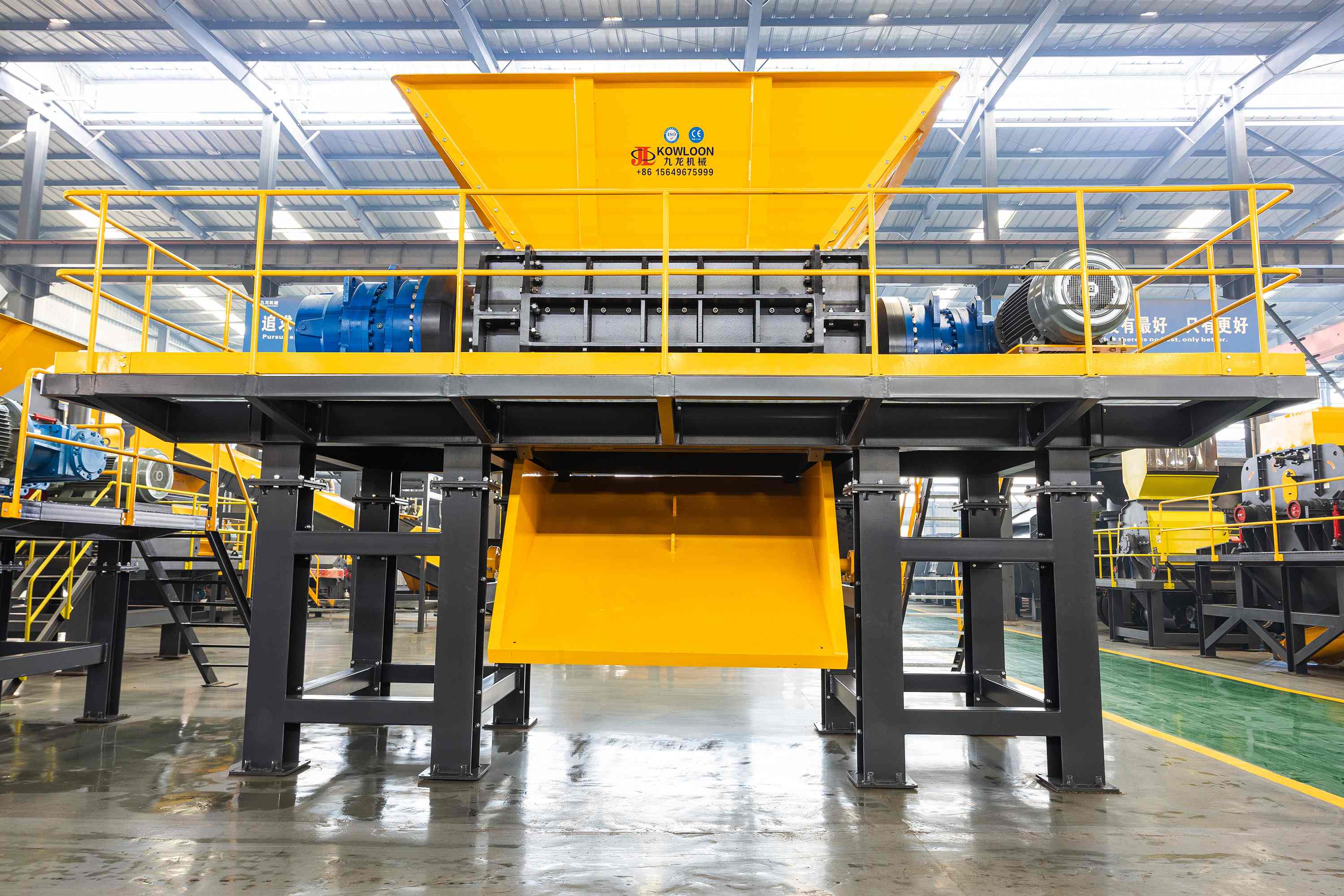

New Type Tire Shredder: The Future of Efficient Rubber Recycling
2026-07-04
Imagine doubling your tire recycling output without adding extra shifts or downtime. Kowloon Machinery's new type tire shredder makes this a reality, combining raw power with smart engineering to tackle the toughest rubber streams. Step into the future of efficient rubber recycling—where performance meets sustainability, and your bottom line gets a serious boost.
Rethinking Tire Recycling with Advanced Shredding Technology
Old tires have long been viewed as an environmental headache—bulky, non-biodegradable, and prone to stockpile fires. But peeling back the rubber reveals a valuable resource waiting to be unlocked. Advanced shredding technology is flipping the script on tire recycling, turning scrap into a precision-engineered feedstock.
Traditional granulation methods often produce inconsistent particle sizes and leave behind stubborn steel and fiber remnants. Modern high-torque, low-speed shredders use smart cutting chambers and adaptive screening systems to deliver clean, uniform output. This level of control matters because it directly influences the quality of downstream products—from crumb rubber for playground surfaces to devulcanized material that can re-enter tire manufacturing.
What sets the new wave of shredders apart is their ability to preserve material integrity while slashing energy consumption. By applying shear force instead of impact, machines are minimizing heat buildup and preserving the polymer chains that give rubber its resilience. It’s no longer just about tackling waste; it’s about re-engineering the lifecycle of tires so that every scrap drives a circular economy.
How Modern Shredders Cut Through Rubber Waste Faster
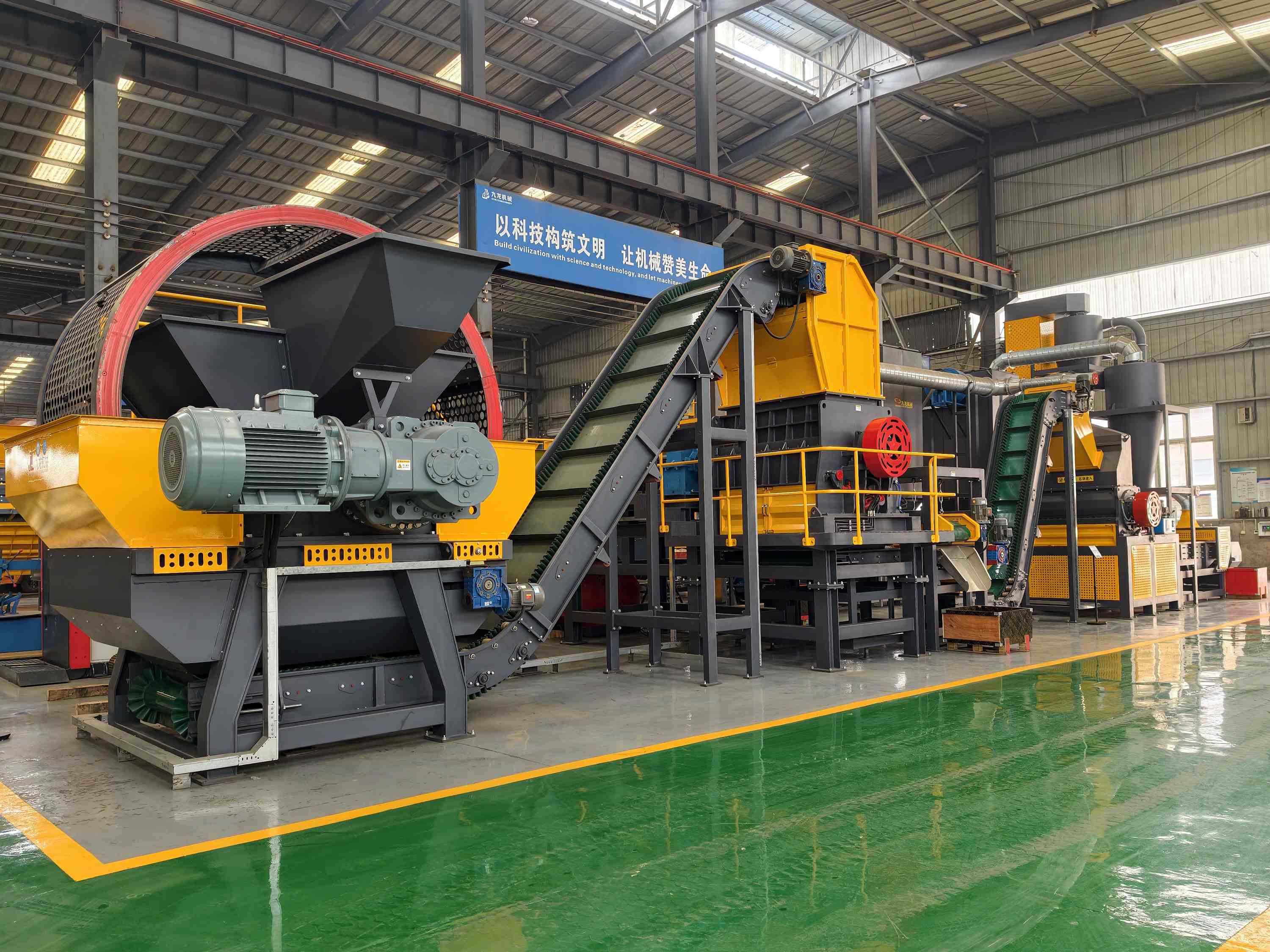
The jump in shredding speed isn't just about bigger motors. Modern machines use staggered blade geometries that grab and shear thick rubber in one pass, rather than chewing at it gradually. The teeth are designed to pull material downward while slicing, so tires and conveyor belts get processed before they can bounce or slip. Combined with adaptive ram systems that automatically vary pressure based on resistance, the machine maintains an optimal feed rate without constant operator tweaks.
Heat has always been the enemy when grinding rubber, often forcing slowdowns to prevent melting or fire risks. Newer shredders tackle this with internal liquid cooling circuits running directly behind the cutting chamber walls and through the rotor itself. This keeps temperatures low even during prolonged heavy loads, allowing continuous high‑speed runs. Some designs also integrate misting nozzles that cool the rubber as it enters, further reducing friction and letting the blades stay sharp longer.
Electronics play an underrated role too. Sensor arrays monitor torque, vibration, and particle size in real time, automatically reversing or adjusting rotor speed the instant a jam or overload is detected. This does away with the cautious, slow‑feeding habits that old machines demanded. The result is a system that hovers right at its performance limit, recovering from hiccups in seconds instead of requiring manual intervention, and ultimately double‑shifts through mountains of waste rubber that would have choked earlier equipment.
From Whole Tires to Reusable Materials in Minutes
Old tires pile up fast, but they don’t have to stay whole for long. Advanced machinery now shreds and separates rubber, steel, and fiber in a continuous flow, turning what was once waste into clean, ready-to-use raw materials. The entire process, from loading to output, happens in the space of a few minutes, making it practical for high-volume facilities that need quick turnaround without sacrificing material quality.
Inside these systems, tires are first rough-cut, then fed through high-torque grinders that reduce them to crumb-sized pieces. Magnets pull out steel wire, while air classifiers lift off fluff, leaving pure rubber granules behind. What sets the fastest lines apart is how they handle whole tires directly—no debeading, no pre-cutting—slashing handling time and letting operators process dozens of units every minute with minimal intervention.
The real payoff is in the output. In less time than a coffee break, a single tire can become uniform granules destined for playground surfaces, athletic tracks, or molded products. The steel retrieved is clean enough for smelters, and even the fiber finds use in certain industrial fillers. Because the cycle runs so rapidly, businesses can dramatically shrink their tire stockpiles while simultaneously generating consistent, market-ready materials.
What Makes Next-Gen Tire Shredders Stand Out
Next-gen tire shredders have moved far beyond simple brute force. They integrate adaptive speed controls that automatically adjust torque based on the rubber density and steel belt content, preventing jams and reducing energy spikes. Advanced cutting chambers with segmented blades can be swapped in minutes, not hours, allowing operators to handle everything from passenger tires to massive OTR sizes without extensive downtime.
What truly separates them from older models is their built-in intelligence. Real-time monitoring systems track wear on every knife and send alerts before a failure occurs, while dust suppression and noise reduction features make the workplace cleaner and safer. Combine that with oil-free bearing technology and longer service intervals, and you have machines that run cooler, last longer, and consistently deliver uniform chip sizes without constant fiddling.
Boosting Output Quality While Reducing Energy Use
The push to elevate output quality doesn't have to come with a surge in energy consumption. By rethinking workflows and tapping into more efficient tools, teams can produce sharper results while actually dialing down power demands. It often starts with streamlining data pipelines and pruning redundant processes that silently drain resources. Instead of brute-forcing every computation, smarter algorithms and selective sampling can achieve comparable or even better precision, all while cutting the energy footprint.
On the hardware front, adopting right-sized infrastructure makes a surprising difference. Shifting workloads to energy-efficient accelerators or leveraging dynamic scaling prevents overprovisioning, so servers aren't idling at full tilt. Meanwhile, fine-tuning models to run on lighter frameworks or lower-precision arithmetic often preserves—and sometimes improves—output fidelity without the heavy lifting. A growing number of practitioners are finding that these optimizations not only lower bills but also lead to code that's easier to maintain and iterate on.
The cultural shift matters just as much. When teams start measuring energy per unit of work, it changes the conversation from "how fast can we get this done?" to "how elegantly can we solve it?" Simple habits—like profiling code for energy hotspots, reusing precomputed results, and scheduling intensive tasks during off-peak renewable hours—compound into measurable gains. Over time, the pursuit of parsimony becomes a driver of quality, pushing developers to build systems that are both lean and remarkably effective.
The Real-World Impact of High-Efficiency Rubber Processing
When companies switch to high-efficiency rubber processing, the difference shows up where it matters most—on the balance sheet. Energy consumption drops sharply once older, single-stage mixing lines are replaced with advanced, continuous processing systems. One automotive parts manufacturer saw a 22% reduction in electricity use within the first quarter after upgrading, not just because the new machines drew less power, but because they ran faster and generated fewer rejected batches. That kind of saving compounds quickly when production scales up, turning what used to be a stubborn overhead cost into a lean, predictable line item.
Beyond the numbers, there is a quieter operational shift. Maintenance teams stop scrambling to fix recurring breakdowns, and quality control stops babysitting every third run for fear of inconsistency. In one facility, the move to precision-controlled mixing and extrusion cut unplanned downtime by almost 40% over eighteen months. Workers talk less about firefighting problems and more about fine-tuning output rates, which says a lot about how technology reshapes a factory floor. This shift ripples outward, too—when suppliers ship better materials on tighter schedules, downstream assembly lines gain their own margin of error, and product lead times shorten without anyone making a dramatic announcement.
The real-world effect also creeps into product performance. Take seals and gaskets: with low-hysteresis compounds mixed more evenly, parts hold their shape longer under heat and pressure, which means fewer field failures. Customers may not know their supplier changed a mixing rotor design, but they notice when a warranty claim rate drops by half. That kind of brand protection is hard to quantify in advance, yet it often becomes the strongest argument for modernizing—not just making rubber faster, but making it consistently better in ways that ripple through entire supply chains.
FAQ
It uses a dual-shaft, low-speed, high-torque design that minimizes heat buildup and energy consumption while delivering a more consistent particle size, something single-shaft or hammer mills struggle with.
The aggressive hook-like blades and a smart feed system pull whole tires directly into the cutting chamber, eliminating the need for debeading or slicing beforehand.
It's the primary size reduction step, turning bulky tires into manageable chips that can then be further processed into crumb rubber, steel-free granules, or fuel.
Yes, the hardened alloy blades are designed to shear through steel belting without significant wear, and a magnetic separator downstream easily removes the liberated steel fragments.
The low-speed operation reduces friction and power draw, and an automatic load-sensing system adjusts motor speed to match infeed material, avoiding energy waste during idle periods.
By changing the screen size and blade configuration, operators can produce chips ranging from 50mm to roughly 150mm, which is ideal for most secondary grinding equipment.
Primarily routine blade inspection and occasional rotation or replacement, along with grease point lubrication and checks on the hydraulic or drive systems—most daily tasks take under fifteen minutes.
Absolutely, several versions come mounted on trailers with integrated conveyors and generators, making them easy to relocate to stockpile sites or underserved regions.
Conclusion
The evolution of tire recycling has taken a decisive leap with the introduction of new-type shredders that fundamentally rethink how we handle rubber waste. Traditional methods often struggled with speed and material integrity, but advanced shredding technology now slices through even the toughest tires with remarkable efficiency. These modern machines can transform whole tires into reusable granules and shreds in a matter of minutes, dramatically cutting processing time. By incorporating smarter cutting mechanisms and optimized rotor designs, they handle the high-density rubber and embedded steel without the jams or slowdowns that plagued older systems. The result is a streamlined workflow that moves from bulky waste to valuable raw material faster than ever before.
What sets next-gen tire shredders apart is their intelligent approach to balancing output quality with energy consumption. They deliver consistent particle sizes that downstream manufacturers demand, whether for crumb rubber, playground surfaces, or asphalt modification, while using significantly less power per ton processed. Advanced monitoring systems adjust operational parameters in real time to minimize waste and prevent overheating, leading to longer equipment lifespan and reduced maintenance. The real-world impact is profound: recycling facilities can now process larger volumes at lower cost, turning a disposal headache into a profitable resource stream. This efficiency not only supports circular economy goals but also makes high-quality recycled rubber more accessible to industries worldwide.
Contact Us
Contact Person: Ray
Email: [email protected]
Tel/WhatsApp: +86 13733817580
Website: https://www.zzkowloon.com/