

OEM Metering Valve Solutions for Precise Fluid Control
2026-08-17
Precision in fluid control isn't just a technical requirement—it's the heartbeat of modern manufacturing. From medical devices to automotive assembly, even the smallest deviation in flow can compromise quality and yield. That's where OEM metering valves become the silent heroes of your production line. Yet not all valves are created equal. At AVM, we've spent decades refining metering technology to deliver repeatable accuracy, minimal dead volume, and reliable performance under the toughest conditions. In this post, we'll explore how the right OEM metering valve solution can eliminate guesswork, reduce waste, and unlock new levels of control in your fluid handling processes.
Matching Valve Materials to Demanding Fluid Chemistries
Selecting valve materials for aggressive fluid service is rarely as simple as checking a generic compatibility chart. Real process streams often contain trace contaminants, pH swings, and temperature cycles that push common alloys well outside their safe operating window. A valve that survives a clean acid at room temperature can fail quickly when the same acid carries a few parts per million of chlorides or when the temperature climbs just twenty degrees.
The practical approach starts with narrowing the field to alloys and polymers that have proven resistance to the dominant corrosive species, then testing candidates under actual flow conditions. Stainless steels, for example, are widely used but vulnerable to pitting and stress corrosion cracking in chloride-bearing streams. Nickel alloys like Hastelloy C-276 handle oxidizing acids well but may not be the best fit for reducing environments. Lined valves with PTFE or PFA offer broad chemical resistance, yet they introduce temperature and pressure limits along with permeation concerns that solid metal valves do not face.
Beyond base material selection, attention must go to seats, seals, and any wetted trim. A highly resistant body material means little if an elastomer O-ring swells or a hard-faced plug leaches metal ions into the fluid. Matching valve materials to demanding fluid chemistries therefore requires looking at the complete wetted flow path, not just the valve body, and validating choices with exposure tests that mirror the real process rather than relying on idealized laboratory data.
Calibrating Flow Paths for Sub-Microliter Dispense Accuracy
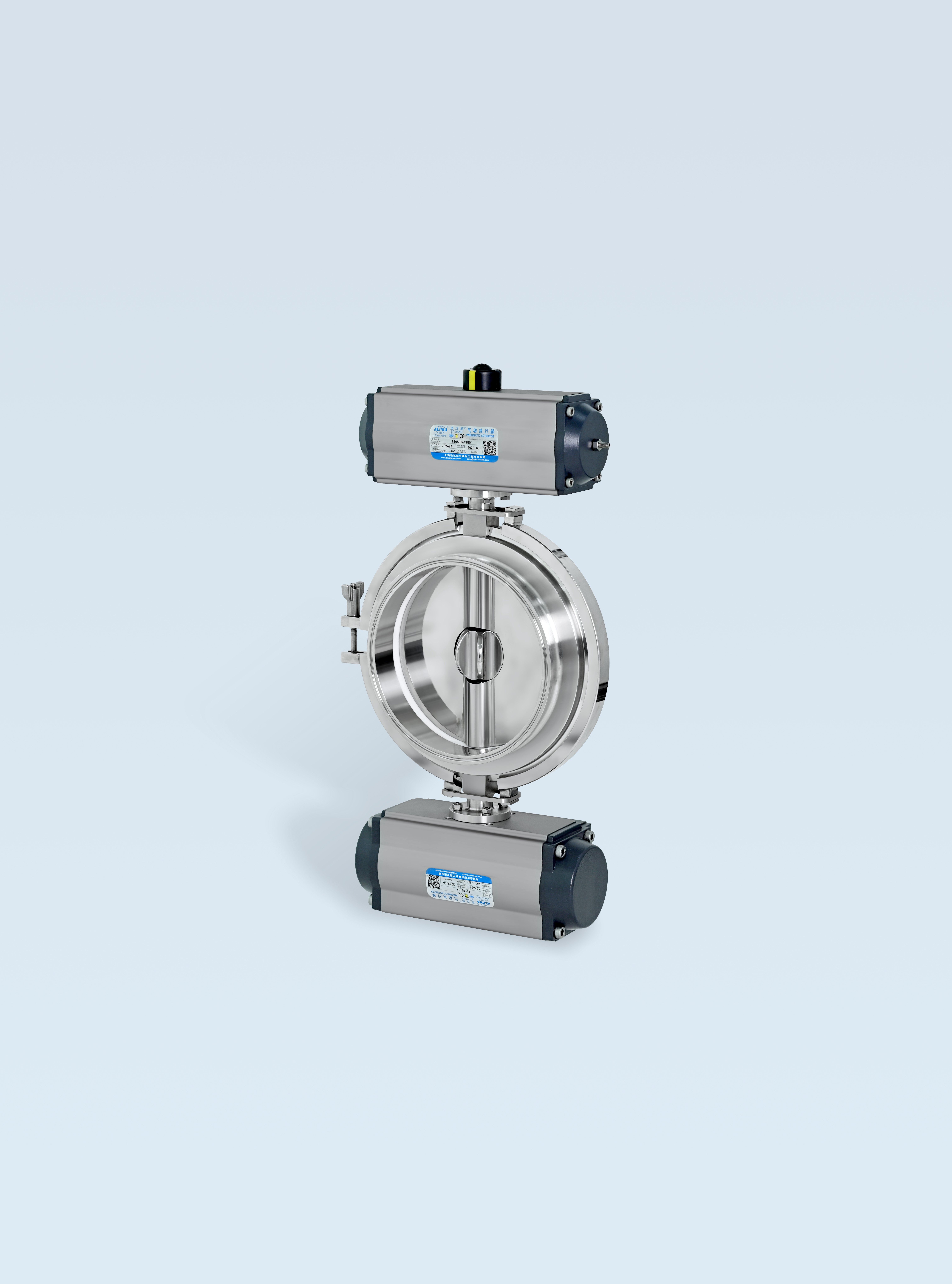
Achieving reliable sub-microliter dispense accuracy starts with treating the flow path as a dynamic system rather than a passive conduit. Even a 0.5 µL shift in dead volume or a micro-bubble trapped near the valve seat can produce errors that exceed the target coefficient of variation. Calibration therefore focuses on mapping pressure decay, valve timing, and tip wetting behavior across the exact fluid class being handled, not just water.
A practical routine involves gravimetric spot checks with evaporation traps, followed by automated optical meniscus tracking at the nozzle. The data feeds a compensation model that adjusts open time and retraction speed for each channel. Because surface tension changes with temperature and reagent composition, recalibration is tied to batch changes and ambient drift rather than a fixed calendar schedule.
For high-density formats, in-line pressure sensors and impedance-based volume verification close the loop without slowing throughput. These tools catch drift early, flagging a channel for purging or tip replacement before it contaminates a full plate. The result is a dispense system that maintains sub-microliter accuracy across long runs without constant operator intervention.
Shrinking Valve Footprints for Portable OEM Instruments
Miniaturizing valves for portable OEM devices starts with rethinking the entire fluid path, not just swapping in a smaller component. Every millimeter of width saved on a valve body often translates into a thinner analyzer or a lighter handheld monitor. Designers typically look for valves that can be mounted directly onto custom manifolds, eliminating tubing and fittings that would otherwise consume precious internal space.
One effective strategy is to consolidate multiple valve functions into a single compact block. Instead of arranging three separate solenoid valves side by side, a machined or molded manifold can house shared inlet and outlet channels, reducing the total footprint by 30 to 50 percent. Low-power latching valves and piezo-driven actuators further shrink the package because they need less bulky coils and can be positioned closer together without risking thermal interference.
The real test is maintaining reliable performance at these reduced scales. Smaller internal volumes lower dead space and speed up response times, but they also demand tighter tolerances and more careful material selection to avoid leaks or wear. When done well, a compact valve assembly can free up enough room for larger batteries, more reagent storage, or additional sensing channels, giving portable OEM instruments a genuine edge without compromising functionality.
Holding Tight Tolerances Across Production-Scale Batches
Maintaining tight tolerances across production-scale batches demands more than precise machinery—it requires a systematic approach that accounts for tool wear, thermal drift, and material variability. On the floor, operators often discover that what holds true for a five-piece pilot run breaks down when the counter hits 5,000. The key lies in establishing robust process windows early: by mapping how cutting forces shift as inserts dull, or how ambient temperature swings affect bearing preloads, teams can preempt drift before it pushes parts out of spec.
One underappreciated lever is in-process measurement tied to automatic offset adjustment. Instead of relying on end-of-line inspection to catch scrap after the fact, probing every nth part and feeding that data back to the controller keeps dimensions centered on nominal. This closed-loop tactic works especially well for high-mix lines, where fixturing variations and operator-to-operator setup habits otherwise introduce silent drift. Paired with SPC charting that flags trends rather than isolated outliers, it turns tolerance holding from a reactive firefight into a controlled, repeatable rhythm.
Finally, batch-to-batch consistency hinges on supplier material certificates and raw stock qualification. A single heat of slightly harder aluminum or a coil with uneven thickness can chew through your tolerance budget before the first toolpath runs. By locking in upstream specs and requiring incoming lot data that matches the process capability study, manufacturers stop chasing ghosts on the shop floor—and start shipping parts that measure the same at 10 p.m. on Friday as they did at 7 a.m. on Monday.
Integrating Actuation and Sensing Without Added Bulk
Combining actuation and sensing in the same structural layer often means accepting extra thickness, connectors, or dead weight. A different route treats the actuator itself as the sensing element, reading changes in resistance, capacitance, or impedance that occur naturally during deformation. This removes the need for an externally bonded strain gauge or pressure pad while preserving the softness and range of motion that made the actuator useful in the first place. In a thin pneumatic bladder, for instance, the conductive fibers woven into the membrane can report curvature and contact pressure without altering the bladder's folded geometry.
The real payoff shows up when these signals are used locally instead of being routed to a separate control unit. By embedding simple threshold circuits or voltage dividers along the same flexible substrate as the actuation electrodes, the system can react to touch, bend, or overload at the point where it occurs. This keeps reaction times short and avoids long wire runs that add stiffness and failure points. It also sidesteps the packaging overhead that usually comes with assembling sensor arrays onto moving parts.
Material choice matters here. Blends of silicone with carbon black or short metal fibers can serve as both compliant conductors and strain-responsive resistors. Because the sensing function rides on the same printed or cast features as the actuation traces, there is no extra lamination step, no alignment jig, and no mismatch in thermal expansion. The result is a lighter, quieter, and more robust package where the boundary between acting and feeling largely disappears.
Engineering Wear-Resistant Seats for Long Service Life
Heavy equipment cabins punish seats. The constant sliding in and out, abrasive work clothes, and exposure to dust and grime chew through standard upholstery in months. We start with a tightly woven 1000-denier nylon or vinyl-coated polyester that shrugs off snags and scrapes. Double-stitched seams with bonded nylon thread stop tears at the edges, while high-density foam inserts keep their shape after thousands of hours of compression. On agricultural tractors and wheel loaders, these materials outlast factory covers by a wide margin.
Beyond fabric, the frame and suspension take a beating. Powder-coated steel bases resist chipping and rust, and all pivot points use greasable bronze bushings instead of plastic washers. The suspension system—whether mechanical spring or air ride—is tuned to dampen vibration without bottoming out, which prevents premature wear on the seat cushion. For operators who drag themselves across the seat edge, a replaceable wear strip on the left bolster can be swapped in minutes without removing the entire seat.
Validation matters. Every seat goes through a cycle test that rubs the covering 100,000 times with a coarse denim pad under 50 pounds of pressure. We also run a 48-hour salt spray test on metal components and a cold-crack flex test at -40°F for the vinyl. Seats that pass these tests are designed to last 10,000 hours or more in the field, not just on paper.
FAQ
Media compatibility depends on the wetted materials. We routinely cover light solvents, water-based reagents, adhesives, fuels, and aggressive acids. For chemical exposure, seal choice matters more than the valve body; we offer EPDM, FFKM, PTFE, and 316L stainless as standard, with ceramic internals for abrasive or high-purity streams.
You can expect better than ±1% repeatability across most of the operating range, and ±0.5% when the valve is calibrated for a fixed pressure and viscosity. The actual number shifts with temperature swings and inlet pressure variation, so we always validate against your specific conditions before freezing the design.
Yes. Port configuration, mounting hole pattern, actuator orientation, and even internal flow path can be adjusted to match your manifold instead of forcing a redesign on your side. We often work from a STEP file or a marked-up drawing at the concept stage.
The common ones are analytical instruments, medical diagnostics, fuel cell humidification, semiconductor wet processing, and inkjet systems. Anywhere a small, stable flow needs to be delivered without pulsing or drift. We have also supplied valves for micro-dosing adhesives in automated assembly lines.
Most of our valves are tested beyond one million cycles with less than 5% flow shift. For sealing elements that wear faster with aggressive media, we use replaceable seat designs or self-compensating seals so field service does not require full valve replacement.
We do. Prototype runs from 5 to 50 units are common for integration testing. The lead time is typically 6 to 10 weeks after drawing approval, with an extra 2 to 3 weeks if you need a non-standard material or a custom driver circuit.
You receive a full 3D model, flow curves for your media, and electrical interface documentation. If needed, our application engineers join a design review to help with motor drive tuning, feedback signal conditioning, or placement of the valve relative to the nozzle or reaction chamber.
Conclusion
Precise fluid control in OEM instruments hinges on choices that often go unnoticed until a failure occurs. Matching valve materials to aggressive or unusual chemistries is the first line of defense—whether sealing against concentrated reagents, volatile solvents, or biofluids, the wetted path must resist swelling, corrosion, and leaching without compromising response. Beyond material selection, calibrating flow paths for sub-microliter dispense accuracy means paying attention to dead volume, surface finish, and the geometry of the seat and orifice. Even a few microns of variation can shift droplet size or timing, so production-scale batches demand tight tolerances that are verified by automated inspection rather than sampled checks.
The push toward portable and handheld instruments has put pressure on valve size, but shrinking the footprint cannot mean sacrificing reliability. Modern OEM metering valves integrate actuation and sensing directly into compact modules, eliminating external tubing and separate position feedback hardware. This consolidation reduces internal volume, lowers power draw, and simplifies assembly for manufacturers. Wear-resistant seats—often made from engineered ceramics, hardened alloys, or proprietary polymers—extend service life under millions of cycles, especially when paired with optimized seal preload and stroke control. Together, these elements let instrument builders achieve repeatable micro-dispensing in a package small enough to fit within portable diagnostic, analytical, and life-science devices, all while meeting long-term maintenance expectations.
Contact Us
Contact Person: Ananda
Email: [email protected]
Tel/WhatsApp: 8619016718200
Website: https://www.wzaomi.com