

Pickup Truck Floor Mat Exporter: What to Consider Before Choosing a Supplier
2026-08-28
Exporting pickup truck floor mats is rarely just a price game. The difference between a supplier that ships once and one that supports your growth often comes down to overlooked details—edge binding quality, anti-slip texture retention, and how well the mats resist warping when stacked in a container. Before you compare quotes, you need to know what separates a reliable exporter from a costly headache. At FANDEWEI, we believe the right choice starts with asking the right questions. This guide walks you through the factors that matter most when evaluating a pickup truck floor mat supplier.
How to Verify Material Claims Before You Order
A spec sheet can look flawless and still hide a weak supply chain. Before placing an order, ask for documents tied directly to the batch or lot number you’ll receive, not a generic PDF reused since 2019. Check whether the test report lists a specific standard, a dated lab signature, and values that match the claim—not just a checked box saying “passed.” If the supplier hesitates to connect the material claim to an actual production record, treat that as a warning sign.
Physical proof beats promises. Request a swatch, cut-off, or small sample before committing to bulk, even if you have to pay for shipping. Run simple checks yourself: weigh it to confirm density, bend it to see how it fails, or use a magnet, flame, or solvent depending on the material. A five-minute hands-on test can reveal more than a polished brochure, especially when the sample arrives with visible color shifts, uneven coating, or a smell that doesn’t match the claimed composition.
Certifications only matter if they’re current and relevant to what you’re buying. Verify the certificate number with the issuing body instead of trusting the logo on the page. Look for the exact product category, factory address, and valid date range. A certificate for a different factory, an expired audit, or a vague “family of materials” listing should make you pause. Legitimate suppliers expect this level of check and can usually provide verification within a day or two.
Custom Fit vs. Universal Fit: What Exporters Should Ask
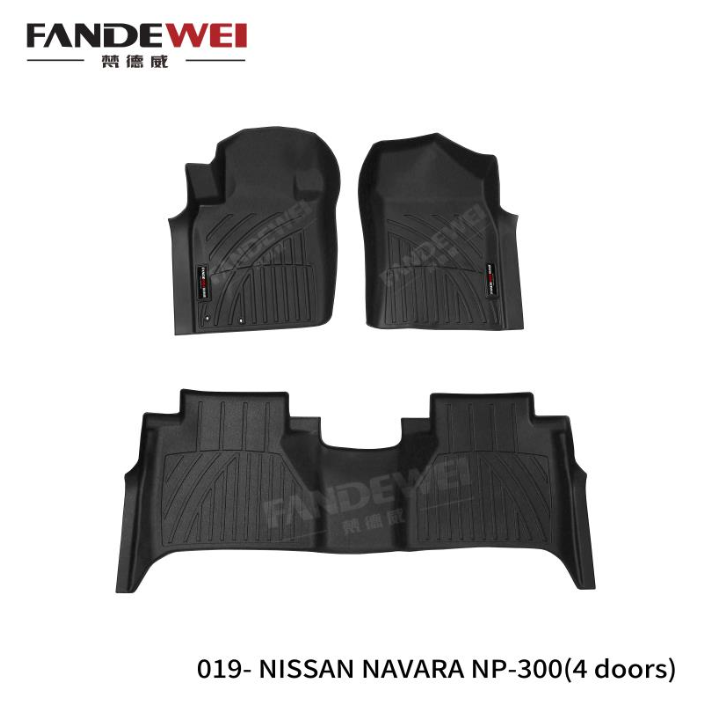
When sourcing components for overseas markets, exporters often get stuck debating whether to push for custom-fit parts or settle for universal-fit alternatives. The real question isn't which one is better in a vacuum—it's which one will survive the specific conditions your buyers actually face. A custom fit can solve a nagging vibration issue on a single engine platform, but it locks you into lower volumes and longer lead times. Universal fit, on the other hand, offers flexibility and faster turnover, yet risks leaving performance gaps that become warranty headaches later.
Before signing off on a design, ask your supplier pointed questions about tolerance stacking, material degradation under load, and how the part behaves across a range of ambient temperatures. Too many exporters assume the factory's default spec matches their market's reality. Instead, request full dimensional reports from both custom and universal samples, and have a local technician run a side-by-side durability trial. That data will tell you whether the extra engineering cost is actually buying reliability or just inflating your bill of materials.
Finally, consider the downstream service network. A universal part may fit dozens of applications, but if your distributors lack the training to handle minor fit adjustments, returns will spike. Custom parts, while precise, require you to maintain tighter inventory control and forecast demand more accurately. Ask yourself: does the margin improvement from universality outweigh the support burden? Often the answer lies not in the part itself, but in how your team communicates its limitations to the end user.
Packaging That Protects Mats From Port to Driveway
From the moment a mat leaves the port, it faces a gauntlet of forklifts, stacked pallets, salt air, and sudden downpours. Standard wrapping often fails at the edges, leaving corners scuffed or moisture trapped against the surface. We use a layered approach that starts with a breathable inner liner to prevent condensation, followed by reinforced corner guards and a high-cling outer film that resists tears during repeated handling.
The real test comes on the last mile. Long driveways, gravel paths, and tight garage turns put extra stress on packaging that looked fine in the warehouse. Our method includes a non-slip banding pattern that keeps multiple mats from shifting inside the bundle, plus a weather-resistant cover that can sit curbside for hours without soaking through. The result is a mat that arrives looking like it just left the showroom, not the shipping yard.
The Certifications That Matter for International Buyers
When sourcing products across borders, certifications act as shorthand for trust. A growing number of buyers now filter suppliers based on specific credentials before even opening a conversation. The ones that truly carry weight vary by industry, but a few recur across nearly every sector. For electronics, CE and RoHS signal compliance with EU safety and environmental standards. For textiles, OEKO-TEX and GOTS reassure buyers about chemical safety and organic provenance. Food and beverage importers lean on ISO 22000, HACCP, or organic labels like USDA Organic and EU Organic. These aren't decorative badges—they directly reduce the due diligence burden and shorten the path from inquiry to purchase order.
Yet the most meaningful certifications for international buyers are often the ones tied to specific market access requirements. For example, GCC countries frequently demand a G-Mark for low-voltage electrical equipment, while Saudi Arabia's SASO and China's CCC are non-negotiable for certain product categories. Buyers who overlook these region-specific stamps risk customs holds, returned shipments, or outright bans. Savvy importers ask for proof of certification upfront and verify the issuing body’s accreditation, because a certificate from an unaccredited lab can be worse than none at all.
Beyond mandatory marks, voluntary certifications increasingly sway purchasing decisions. B Corp status signals a supplier's commitment to social and environmental performance, while Fair Trade certification speaks directly to ethical sourcing concerns. For buyers prioritizing longevity and supply chain resilience, ISO 9001 (quality management) and ISO 14001 (environmental management) remain baseline filters. The lesson is simple: certifications that matter are those that align with the buyer's regulatory reality, risk tolerance, and values. Suppliers who can clearly articulate which credentials apply to a given market—and why—hold a measurable advantage in competitive negotiations.
Why Response Time Reveals More Than a Catalog
A catalog lists what's available, but response time exposes how the system actually behaves under real conditions. It's the difference between a promise and a proof. When a request returns quickly and consistently, it suggests a well-tuned backend, clean data access, and careful capacity planning—things no feature list can claim.
Slow or erratic response times often point to deeper issues: overloaded servers, poorly optimized queries, or hidden dependencies that only surface under pressure. You can read about a platform's capabilities all day, but watching how fast it answers tells you whether those capabilities are truly ready for production. That's why engineers treat latency as a first-class metric rather than an afterthought.
Over time, response time patterns become a signature. A sudden spike after an update, a gradual creep as data grows, or a steady improvement after refactoring—these signals reveal the health and maturity of a system far more reliably than any static catalog. Pay attention to the timing, and you'll understand what's really happening beneath the surface.
Pricing Tricks to Watch for in Floor Mat Quotes
One trick that shows up often is a low base price per mat or per square foot that looks unbeatable, but then the quote includes separate charges for edge binding, logo setup, freight, or even warehouse handling. By the time those line items are added, the real cost is nowhere near the figure you first compared. Always push for a fully itemized quote and ask which fees are one-time and which repeat on every order.
Vague material specs are another red flag. A supplier might write “commercial grade” or “heavy duty” on the quote without giving fiber weight, pile height, or the percentage of recycled rubber. That lack of detail makes it easy for them to swap in a cheaper product later. If the spec sheet doesn’t list ounces per square yard, mat thickness, and the exact backing material, treat the price as provisional.
Watch for lump-sum pricing that buries artwork setup, rush charges, or minimum order fees inside a single number. Some vendors also hook you with a low first-order price, then raise reorder rates after your logo is already in their system. Get the reorder price in writing, and confirm whether setup fees are charged again before you sign anything.
FAQ
Heavy-duty rubber and TPE are the usual workhorses. They shrug off mud, snow, and gravel far better than carpet, and they don't curl at the edges after a few hot days. Ask for the specific compound because "rubber" alone doesn't tell you much—some blends get stiff in cold weather or give off a strong odor in a closed cab.
Request photos of past branded mats they've produced, not just a generic catalog image. A capable exporter will explain whether they use molded-in logos, printed labels, or embroidery-style inserts, and they should confirm the maximum logo size and placement before quoting. If they dodge questions about past custom work, that's a signal to probe further.
For Europe, REACH and RoHS are common baseline requirements. US buyers often care about flammability standards. Some factories hold ISO 9001 as well. Don't expect every supplier to have every certificate, but they should provide third-party test reports when you ask—anything less is a risk.
Yes, most established exporters will send samples, though you may need to cover the courier fee. If they refuse any sample or demand a steep "sample development" charge before showing standard quality, treat that as a warning. A free sample isn't always a good sign either—it can hide inconsistent batch production.
Usually 200 to 500 sets per design, depending on the mold complexity. Stock designs might start lower. A very low MOQ often means thinner material or simpler packaging, so ask for a price breakdown at different quantities to see what you're actually trading away.
Freight can rival or even exceed the product cost because mats are bulky and heavy. Ask for both FOB and CIF quotes, and check if the supplier can nest or stack mats to reduce container volume. Even small packaging changes can make a real difference on a 40-foot container.
Most exporters cover manufacturing defects like cracking, warping, or logo peeling for 6 to 12 months. Get the exact terms in writing, including who pays for replacement shipping and what evidence you need to file a claim. Vague warranty language usually isn't worth much when problems show up.
Slow, evasive replies, an unverifiable business license, or pressure to pay outside standard channels should all raise concern. If the sample is flawless but they can't explain how mass production will stay consistent, or they refuse to share their QC process, it's smarter to keep looking.
Conclusion
Placing an order with a pickup truck floor mat exporter without checking material details is a gamble. Ask for a lab report or a swatch from the actual production line before you commit; if they claim heavy-duty rubber or TPE, they should be able to show shore hardness, density, and any odor test results. The fit conversation should start with your target truck models, not a generic catalog. Get a CAD file or a physical template of the footwell for every make, model, and year you plan to stock, because a mat that curls at the edges or blocks the accelerator will come back as a return. Packaging is another silent dealbreaker: mats that arrive bent, scuffed, or water-stained on the ocean voyage are unsellable. Demand reinforced corners, a moisture barrier, and flat stacking on strong pallets.
Certifications matter more when you sell across borders. Look for REACH or RoHS compliance and ask for the actual certificate number, then cross-check it with the testing lab. How fast a supplier replies to a technical question about trim levels or pedal clearance often reveals more than a polished brochure; delay now usually means delay during production. Watch for pricing games in the quote as well. Some factories quote a low unit price but then add mold fees, carton charges, and pallet wrapping as extras, while others offer a cheap first sample and later switch to a thinner, smellier compound. A dependable exporter will walk you through the full cost breakdown and adjust material or packaging to fit your market without hidden surprises.
Contact Us
Contact Person: Jet
Email: [email protected]
Tel/WhatsApp: 8619903745266
Website: https://www.fandewei.com/