

Top 10 PPGI Choices for Corrosion-Resistant Roofing and Cladding
2026-11-02
If you've ever specified PPGI for a coastal or industrial project, you know the frustration of watching budget coils rust before the warranty expires. That's exactly why we put together this list of the top 10 PPGI choices for corrosion-resistant roofing and cladding—options that actually hold up, not just on paper. One brand that kept coming up in field tests and fabricator feedback was LANYUN. Read on to see which coils made the cut and why the right choice matters more than you think.
Coating Chemistry That Keeps Salt Air from Reaching the Steel Core
Salt air is relentless on steel. Tiny chloride ions ride in on moisture, slip through microscopic pores in a coating, and set off electrochemical reactions that can pit or weaken the metal underneath. Without a chemically thoughtful barrier, even a hairline scratch becomes an open invitation for rust to travel beneath the surface and eat away at the steel core.
Modern protective systems do more than just sit on the surface. Zinc-rich primers act as sacrificial anodes, corroding preferentially to buy time for the steel while forming dense zinc salts that clog early corrosion paths. Epoxy and polyurethane topcoats add a second line of defense, using cross-linked polymer networks that resist the osmotic pull of salt-laden water and limit oxygen diffusion to the substrate.
The real chemistry happens in the formulation balance. Pigment volume concentration, resin flexibility, and adhesion promoters have to work together so the coating doesn’t crack or delaminate as the steel expands and contracts. In coastal environments, those small formulation choices often mean the difference between a coating that lasts a decade and one that holds up for forty years.
Why Some PPGI Sheets Stay Glossy for a Decade While Others Chalk
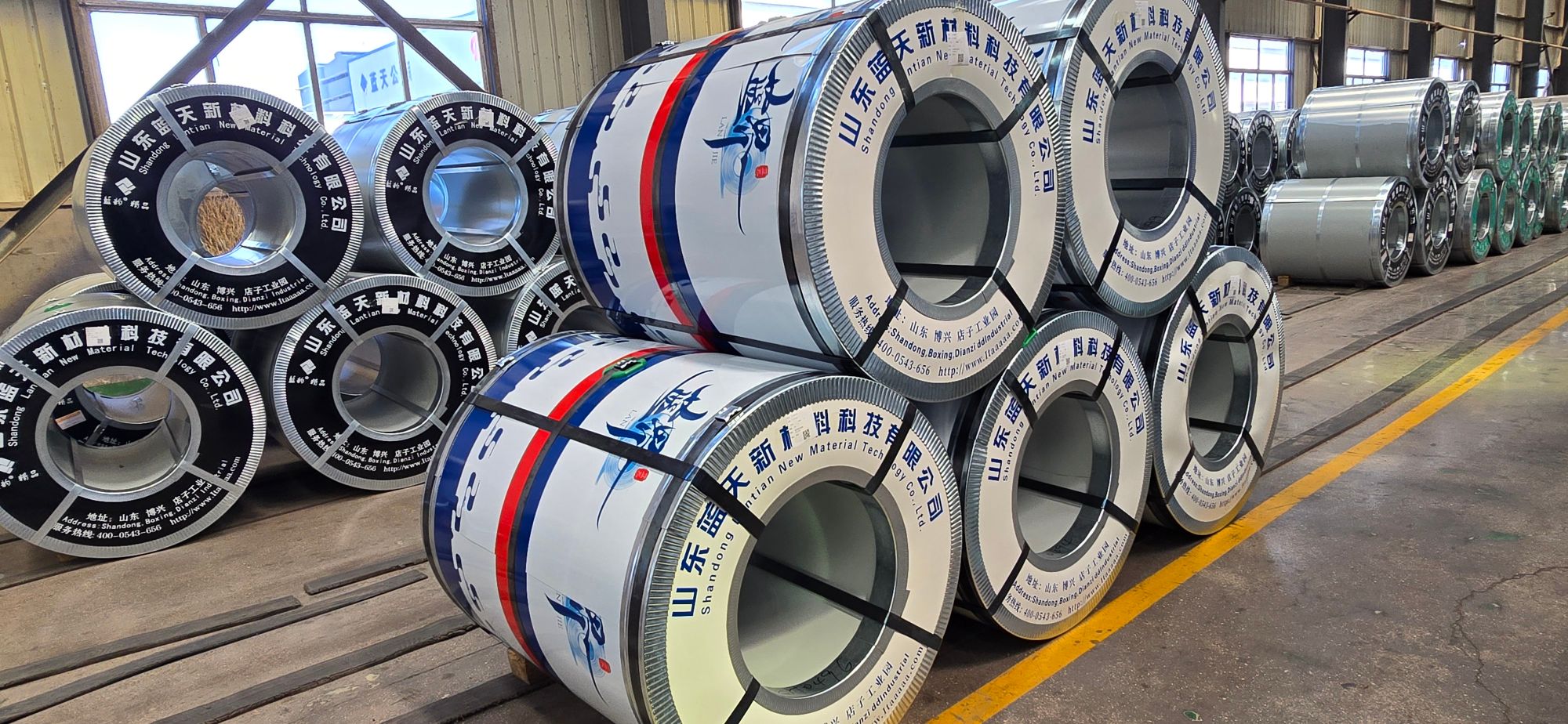
The difference usually comes down to paint chemistry, not branding. Chalking starts when ultraviolet light breaks down the resin that holds pigment particles together. Standard polyester topcoats, common on budget sheets, have shorter molecular chains and fewer weathering additives, so after a few years the resin erodes and leaves a dusty layer of titanium dioxide on the surface. Higher-end sheets tend to use PVDF (polyvinylidene fluoride) or silicone-modified polyester systems. These resins carry much stronger carbon-fluorine or siloxane bonds, which resist UV photodegradation far longer. A 25-micron PVDF topcoat can hold gloss above 70% for a decade, while a thin 15-micron standard polyester may begin chalking in three to five years.
Primer and pretreatment quietly decide lifespan too. A cheap PPGI line might skip chromate or nano-ceramic conversion coating under the paint, leaving galvanized zinc exposed to moisture and oxygen. Once micro-corrosion starts at a cut edge or a scratch, it creeps under the film and lifts the topcoat, speeding up dulling and chalking from the inside out. Higher-grade producers apply a two-coat system: a 5-8 micron epoxy or polyurethane primer that bonds tightly to both the metal and the topcoat, plus an anti-corrosion pre-treatment. That extra layer not only prevents rust; it stops alkaline byproducts from the zinc layer from attacking the paint resin, which is a common hidden cause of early gloss loss.
Film thickness and pigment choice matter more than most buyers realize. Ceramic pigments and light stabilizers like HALS (hindered amine light stabilizers) can extend gloss retention even under harsh sun. Cheap organic pigments fade and break down quickly, while a thin topcoat lets UV reach the primer faster. Quality sheets push topcoat thickness to 20-25 microns and use a tight, well-cured film that keeps moisture out. That combination, rather than a single magic ingredient, is why some roofs still look wet after ten years while others turn chalky in half that time.
The Fastener Problem: How Small Holes Become the Main Corrosion Entry Point
Fasteners are the quiet workhorses of any structure, holding panels, joints, and assemblies together under constant stress. But the very hole that accepts a screw, bolt, or rivet also creates a microscopic breach in the protective surface. Once the coating or paint layer is pierced during installation, moisture, salt, and oxygen gain direct access to the bare metal underneath. What starts as a hairline gap around the fastener head quickly becomes a capillary channel, drawing corrosive agents deep into the substrate. Over time, the surrounding material loses its passivity and begins to degrade from the inside out, often without any visible warning on the exterior.
The problem is amplified by dissimilar metal contact. A stainless steel screw in an aluminum panel, for example, sets up a galvanic couple where the aluminum around the hole acts as the anode and corrodes preferentially. This localised attack is far more aggressive than general surface rust, because the small area of exposed aluminum sacrifices itself to protect the larger fastener. Even with a washer or sealant, thermal cycling and vibration cause micro-movement that breaks the initial seal, reopening the path for electrolyte ingress. Once corrosion initiates in the hole, it expands the clearance, loosens the fastener, and creates a feedback loop that accelerates structural weakening and further moisture penetration.
Addressing this entry point requires thinking beyond the fastener itself. Designers are turning to oversized clearance holes with insulating sleeves, wet-installation with sealants that cure after assembly, and pre-coated fasteners that carry their own corrosion inhibitor into the joint. But the most effective strategy is simply acknowledging that every drilled hole is a potential failure site. By minimising the number of fasteners, isolating dissimilar materials, and specifying barrier coatings that can withstand the installation torque without cracking, engineers can turn a small vulnerability into a managed detail rather than an inevitable corrosion front.
Comparing Base Metal Thickness and Its Impact on Edge Rust in Humid Zones
Thinner base metals in humid environments tend to develop edge rust more readily, not because the material itself is inherently less corrosion resistant, but because the exposed cut edge presents a proportionally larger surface area relative to the overall panel thickness. This edge zone, often lacking the protective galvanic or organic coating found on the flat surfaces, acts as a preferred initiation site for moisture ingress. Once a small rust bloom appears, capillary action along the tight edge profile can draw water deeper into the interface between coating and substrate, accelerating underfilm corrosion.
Coating coverage on thicker substrates introduces a different set of challenges. Paint and powder coatings flow less uniformly over sharp, thick edges, leaving thinner dry film thickness at the very corner. In humid zones, this thin edge coating can fail early, exposing the underlying metal. However, thicker base metal provides more sacrificial material before structural compromise occurs, meaning that while edge rust may become visually apparent, the panel retains integrity for a longer service life compared to a thinner gauge where the same rust depth represents a larger percentage of total thickness.
Field observations from coastal and high-humidity installations suggest that the relationship is not linear. A moderately thick substrate with a well-designed edge rounding or hemming detail often outperforms a much thicker panel with a sharp, sheared edge left untreated. The mechanical deformation during cutting or punching also creates micro-crevices and residual stress, which in thinner materials can lead to localized corrosion cells that spread quickly along the edge. By contrast, thicker sections may exhibit more uniform edge rust but slower penetration, making them preferable where maintenance intervals are infrequent and visual rust is tolerated as long as function is preserved.
Choosing Between PVDF, SMP, and Polyester for Rooftop Heat and Chemical Exposure
Rooftop coatings face a brutal trifecta: relentless UV, thermal swings that can crack lesser films, and chemical fallout from industrial exhaust or coastal salt. PVDF (polyvinylidene fluoride) leads in longevity here, its carbon-fluorine bonds shrugging off degradation for 30+ years. But that durability comes at a price—often two to three times the cost of polyester. SMP (silicone-modified polyester) sits in the middle, trading some chemical resistance for better gloss retention and a friendlier budget. Polyester, while economical, tends to chalk and fade within a decade under harsh rooftop conditions, making it a short-term fix unless the building owner accepts periodic recoating.
The real decision hinges on what exactly hits the roof. If you're near a chemical plant, wastewater treatment facility, or heavy diesel traffic, PVDF's inert surface prevents acid rain and solvent vapors from etching the finish. For coastal rooftops where salt spray is the main aggressor, SMP often suffices, especially when paired with a good primer. Polyester works best on low-slope roofs in mild climates with minimal chemical exposure—think warehouses in temperate zones where UV isn't brutal. Ignoring these environmental variables leads to premature coating failure, and no warranty will save you from peeling film.
One under-discussed factor is thermal expansion. Rooftop panels can swing 50°C between day and night, and the coating must flex without micro-cracking. PVDF's tightly packed polymer chains resist this fatigue, but they're also harder to apply evenly on complex roof geometries. SMP offers better flow and leveling, reducing the risk of pinholes at fasteners or seams. Polyester's flexibility is decent, but its resin system breaks down faster under cyclical heat. Contractors who've fought leak calls after a few summers tend to steer clients toward PVDF or SMP for anything with a warranty beyond 15 years—because callbacks eat profit faster than material markup.
Installation Habits That Void Corrosion Warranties More Often Than Weather
Most corrosion-related warranty claims aren't triggered by rain, salt spray, or humidity. They start with a technician who didn't clean the mating surfaces before applying sealant, or who reused a gasket that had already been torqued once. Silicone smeared over rust acts as a moisture trap, not a barrier, and within months the pitting spreads under the coating where nobody looks until the panel warps.
Another silent killer is grounding hardware installed without dielectric isolation. When stainless bolts go through aluminum frames without nylon washers or anti-seize compound, galvanic corrosion begins the day the vehicle rolls out of the shop. The warranty inspector sees a white powdery bloom around every fastener and knows the installer skipped the isolation step—weather had nothing to do with it.
Improper drainage routing is just as destructive. If a drain tube from a sunroof or HVAC box is kinked or left pinched behind a trim panel, water sits in a low cavity for weeks. The exterior might stay bone dry, but the hidden seam wicks moisture into the lap joint until the paint bubbles from inside. That failure gets flagged as poor workmanship, not an act of nature.
FAQ
The difference usually comes down to the substrate and edge treatment. Panels cut on site without touch-up paint expose bare steel, so corrosion starts there. Factory-formed panels with sealed edges, plus a zinc-aluminum or aluminum-zinc coating, give the edge a sacrificial layer that keeps rust from creeping under the paint.
In salt-laden air, standard polyester struggles within a few years. A high-build PVDF or SMP coating over an aluminum-zinc substrate is a better pairing. These systems resist chalking and color fade while the metallic coating fights corrosion from humidity and chloride.
Thickness matters less for corrosion than for impact and wind load. A 0.5 mm base with a quality coating will often outlast a 0.7 mm sheet with a thin primer. Choose the gauge for structural needs, but never compromise on primer and topcoat quality.
No. The term hides big differences in primer type, topcoat chemistry, substrate coating weight, and even the quality of pretreatment. Two sheets can look identical on a rack but perform very differently after five years of rain and sun.
Frequent thermal cycling stresses the paint film. Panels with a low-quality topcoat crack around fasteners and ribs, letting moisture reach the metal. Better products use flexible resins and a primer with good adhesion to handle expansion without splitting.
Shaded, damp spots keep the surface wet longer, so any scratch or pinhole becomes a starting point for corrosion. If the area stays moist, use a heavier coating mass and make sure drainage and ventilation prevent standing water on the panel face.
Look beyond the number of years. Check whether the warranty covers edge creep, chalking, and perforation, not just peeling. Also ask if it applies to your specific environment, such as within a few kilometers of the coast or near chemical plants.
Ask for test data on salt spray hours, humidity resistance, and UV stability. A reliable supplier will share coating thickness, substrate coating weight, and real case histories. Then match those numbers to the exposure your building will actually face.
Conclusion
When evaluating PPGI for coastal or high-humidity roofing and cladding, the real differentiator often lies in how well the coating system isolates the steel core from moisture and salt. A tightly crosslinked primer and topcoat can keep chloride ions from migrating through microscopic pores, which is what ultimately prevents edge rust and underfilm corrosion. Base metal thickness also plays a quiet but critical role: thinner gauge sheets tend to show red rust at cut edges and fastener points much sooner in humid zones, while a heavier zinc layer and adequate steel thickness buy years of extra service life. On the chemistry side, PVDF remains the go-to for roofs facing strong UV and chemical fallout because it resists chalking and gloss loss far longer than standard polyester, though SMP offers a middle ground where cost and flexibility matter more than maximum weather resistance.
Just as important as the coating itself is how the panels are handled and fastened. Small holes at screws and rivets create direct pathways for moisture to reach the steel core, so sealing washers, correct torque, and touch-up paint at every penetration are not optional steps if you want the warranty to hold. Many corrosion failures blamed on harsh weather actually start with poor installation habits: dragging sheets across grit, leaving cut edges unsealed, or mixing incompatible fasteners. Gloss retention over a decade is rarely a matter of luck; it comes down to selecting a coating that can withstand rooftop heat and chemical exposure without breaking down into a chalky surface. In the end, the best PPGI choices combine a proven coating chemistry, sensible base metal thickness, and installation discipline that respects every hole and edge as a potential weak point.
Contact Us
Contact Person: Nia
Email: [email protected]
Tel/WhatsApp: +86 18954360337
Website: https://www.sdppgi.com