

Top Transmission Line Towers in China: Engineering Marvels Powering the Nation
2026-06-21
China’s vast and diverse landscape demands transmission line towers that are not just functional, but extraordinary feats of engineering. From record-breaking heights to designs that conquer extreme terrain, these structures silently power the world’s largest energy grid. Behind many of these marvels is the expertise of companies like Anbang, whose innovative steel towers stand at the forefront of this industrial artistry. As we explore the top towers defining China’s skyline, prepare to see how they blend strength, precision, and sheer ambition to keep the nation connected.
Giants in the Sky: The Record-Breaking Heights of China’s Transmission Towers
Across China’s sprawling river valleys and coastal corridors, a new breed of colossus rises from the earth—transmission towers so tall they rival the greatest man-made monuments. Reaching heights well beyond 350 meters, these steel latticework giants dwarf the Statue of Liberty and even outperform the Eiffel Tower in sheer vertical reach. Built primarily for ultra-high-voltage lines spanning turbulent waterways like the Yangtze or the Qiongzhou Strait, each structure is a carefully choreographed balance of strength and aerodynamic subtlety. They don’t simply carry cables; they redefine the silhouette of the landscape itself.
The extreme height is no act of architectural vanity. Beneath these lines pass some of the busiest shipping lanes on the planet, where enormous container vessels demand clearance that ordinary towers cannot provide. Long spans often exceed two kilometres, and without towering supports, conductor sag under thermal load would dip dangerously into the navigation envelope. Engineers counter with tapered lattice masts anchored deep into bedrock, using high-tensile steel and tuned mass dampers to shrug off typhoon-force winds. In winter, ice loading can add tonnes of extra weight, yet these structures stand resilient, their limbs shedding the freeze through nothing more than good design and rigorous testing.
Beyond their functional might, the record-breaking towers signal a deeper shift in how vast nations manage power. They are the vertical exclamation points of China’s west-to-east electricity transfer, striding across provinces to deliver clean hydro and thermal energy where it’s needed most. In remote mountain passes and over wide estuaries, they stitch together a grid that is as much a feat of logistical planning as of civil engineering. Often unnoticed by the passengers on high-speed trains streaking below, these silent sentinels quietly embody a relentless drive to connect, elevate, and endure.
Form Meets Function: How Innovative Designs Withstand Extreme Conditions
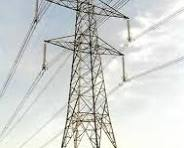
When a structure or product is pushed to its absolute limits, the line between aesthetic vision and engineering pragmatism vanishes. True resilience isn’t just about using stronger materials—it’s about weaving survival directly into the shape, the joints, the very flow of a design. Think of deep-sea submersibles that mimic the spiral geometry of a nautilus shell to distribute crushing pressure evenly, or modular flood barriers that lock together like a puzzle, their clever interlocking profiles turning rushing water into a force that reinforces the seal. These aren't compromises; they're elegant conversations between what’s beautiful and what’s durable.
Nature often hands us the blueprint. The honeycomb structure inside a lightweight helmet absorbs impact not by resisting it head-on but by collapsing in a controlled sequence, just like the cellular walls of a bone. Architects studying desert flora have developed building skins that open and close in response to heat, regulating interior temperatures without active energy input. This biomimicry isn’t a gimmick—it’s a shortcut to solutions that have been field-tested across millennia, allowing us to borrow patterns that harmonize adaptability with strength in ways a straightforward technical approach would miss.
Real-world testing, however, remains the ultimate proving ground. Prototypes are subjected to wind tunnels blasting salt-laden fog, shake tables replicating seismic chaos, and thermal chambers cycling from arctic freeze to furnace blast. In one notable case, a drone designed for wildfire monitoring survived direct flame contact because its frame strategically warped instead of shattering, diverting heat away from critical electronics. Such outcomes reveal that innovation in extreme environments is a discipline of humility—listening to the forces at play and responding with a design that respects them, rather than trying to overpower nature with brute force.
Threading the Needle: Tower Construction in China’s Most Inaccessible Terrain
Stringing power lines across China's most unforgiving landscapes demands more than just engineering prowess—it requires a dance with the impossible. In regions where roads dissolve into cliffside goat paths and helicopters dare not hover, every tower becomes a bespoke puzzle. Crews dismantle machinery into packable loads, hoisting steel by hand or with custom pulley systems that cling to vertical rock faces. The real art lies in footing the towers: anchoring them to slopes that seem to reject any human imposition, using micro-piles driven deep into unstable strata, or balancing entire structures on a single, carefully chosen pinnacle.
The weather doesn't negotiate—one moment it's searing heat warping metal, the next it's freezing fog coating every surface in treachery. Workers often commute via ziplines strung hours before, carrying not just tools but a mindset that mistakes aren't an option. There's no room for standard blueprints; each foundation is designed after geologists and mountaineers jointly survey the site, sometimes rappelling down to measure crevices that maps never captured. The towers themselves appear almost organic, their legs splayed at odd angles as if mimicking the gnarled trees that somehow survive there.
But the true unsung marvel is the ballet of logistics. Materials arrive not in trucks but on the backs of locals who know every hidden ledge, or via drone swarms programmed to navigate narrow canyons with payloads that weigh their own limits. Concrete is often mixed on the spot with water sourced from melting snow or distant streams diverted through temporary channels. When the final lattice section is bolted into place, it's less a construction milestone than a silent truce between human ambition and raw geography—a thin spire threading the needle between what's possible and what the mountain will allow.
Beyond Steel and Concrete: The Untold Stories of Ultra-High-Voltage Innovation
When we talk about ultra-high-voltage transmission, the headlines often fixate on towering pylons and thousands of kilometers of cable. But the real breakthroughs happened far from the drafting tables—in midnight conversations between field engineers who noticed something the manuals never predicted, in makeshift repairs that turned into permanent solutions, and in the stubborn refusal to accept that a thing couldn’t be done just because the textbooks said so. These are the quiet, unglamorous moments that built the grid.
Take, for instance, the winter of ’09, when a new line kept tripping for no obvious reason. The experts spent weeks running simulations, only to be schooled by a veteran lineman who pointed out that ice was forming in a way the models hadn’t accounted for—because the models assumed standard weather, and this valley had its own microclimate. His fix, a simple tweak to insulator positioning, wasn’t listed in any protocol, yet it became the basis for a new standard. Stories like his never made the press releases, but they’re the real architecture of UHV.
From Mountains to Megacities: The Backbone of a Renewable Energy Supergrid
The idea of a renewable energy supergrid stretches from remote mountain ranges to sprawling megacities, forming a vital link between where clean power is generated and where it is most needed. In many regions, the best renewable resources—hydroelectric dams in alpine valleys, wind farms along rugged ridges, and solar arrays in sun-drenched highlands—are located far from dense urban centers. Without a robust transmission backbone, this green energy would remain stranded, unable to displace fossil fuels in the cities that consume the bulk of electricity. The supergrid concept aims to close that gap, creating a continent-spanning network that can move power over vast distances with minimal losses.
At its core, this infrastructure must handle the variable nature of renewables, balancing supply and demand across time zones and weather patterns. Advanced high-voltage direct current (HVDC) lines are the unsung heroes, capable of linking disparate generation sites and delivering electricity efficiently to load centers. By connecting mountainous sources of hydropower—which can act as giant batteries—to wind and solar installations, the grid effectively stitches together a diverse portfolio of clean energy. This integration reduces reliance on backup fossil fuel plants and makes the entire system more resilient against local outages or weather-related dips in production.
Building such a supergrid is no small feat—it requires navigating challenging terrain, securing cross-border agreements, and investing in next-generation monitoring and control systems. Yet the payoff is immense: a decarbonized power sector that can support the electrification of transport, heating, and industry in megacities. From the granite peaks that cradle reservoirs to the humming data centers and skyscrapers of urban hubs, the transmission backbone becomes the circulatory system of a low-carbon economy. It’s a shared infrastructure project that could redefine how societies generate, share, and consume energy for decades to come.
Built to Last: Inside the Engineering Secrets That Defy Nature’s Fury
When a typhoon barrels toward Taipei, the 1,667-foot tower doesn’t just brace—it dances. Suspended near the top, a 660-ton golden sphere sways in opposition to the wind’s rhythm, a tuned mass damper that transforms chaotic gusts into a gentle waltz. This isn’t brute strength; it’s a conversation with physics, where the building absorbs and redirects energy rather than simply standing rigid. Engineers call it supplemental damping, but watching the silent pendulum in action feels more like witnessing a slow-motion secret handshake between steel and storm.
In Japan, the ground itself is an adversary that cannot be beaten, only outsmarted. Rather than anchoring buildings deep into the earth, some structures rest on arrays of rubber-and-steel bearings, effectively decoupling them from the shaking crust. During a quake, the ground might lurch sideways, but the edifice above glides with eerie calm—a technique borrowed from centuries-old pagodas that ride seismic waves on flexible wooden joints. Modern iterations add viscous fluid dampers, turning kinetic panic into heat, so that a seven-story building can shrug off a magnitude 7 tremor with barely a cracked window.
Water presents a different challenge, and here the Dutch have rewritten the rules entirely. Along the Maas River, amphibious houses sit on hollow concrete hulls, rising and falling with flood levels like ducks on a pond. Flexible mooring posts keep them in place while allowing vertical movement of up to 18 feet. No pumps, no panic—just an elegant surrender to the inevitable. It’s a quiet rebellion against dry-land thinking, proving that sometimes the best defense is not a wall but a willingness to float.
FAQ
The tallest transmission towers in China are part of the Zhoushan Island Overhead Powerline Tie, with two pylons reaching 370 meters (1,214 feet) in height, making them among the tallest in the world.
China hosts the world’s highest voltage transmission line, the ±1,100 kV Changji-Guquan Ultra-High Voltage Direct Current (UHVDC) link, stretching from Xinjiang to Anhui province.
Engineers reinforce towers with high-strength steel, aerodynamic designs to reduce wind drag, and special anti-icing coatings. In earthquake-prone regions, flexible joints and base isolation techniques are used.
The Yangtze River crossing of the ±800 kV Xiangjiaba-Shanghai UHVDC line features a span of over 2,400 meters, one of the longest for its voltage level, using massive towers over 200 meters tall.
Recent innovations include compact triangular lattice structures, tubular steel poles for urban areas, composite material insulators, and modular designs that speed up construction and reduce land use.
The ±1,100 kV UHVDC line can transmit up to 12,000 megawatts (12 GW), enough to power millions of homes, while 1,000 kV AC lines typically carry 4,000–6,000 megawatts per circuit.
Yes, builders minimize forest clearing, install bird diverters to prevent collisions, reclaim land after construction, and sometimes use underground cables in sensitive areas, though towers remain more cost-effective.
They form the backbone of long-distance power transfer, connecting remote renewable energy sources like solar and wind farms in the west to demand centers in the east, enabling cleaner energy integration.
Conclusion
From the frozen peaks of the Himalayas to the typhoon‑lashed coasts, China’s transmission towers rise as true giants, breaking height records not for glory but necessity. Their tapering, aerodynamic forms and cold‑forged alloys are engineered to laugh at gales that would shear lesser steel, while ice‑shedding geometries prevent catastrophic buildup. Each lattice vertex is a calculated response to seismic tremors and sub‑zero brittleness—a union of form and function so seamless it borders on art. These structures don’t merely carry current; they embody a design philosophy that turned wild extremes into a canvas, defying nature’s fury with quiet, resilient elegance.
Building them in near‑vertical gorges and uninhabited plateaus meant threading the needle with surgical precision: helicopter crews ferried tower segments piece by piece, often in white‑out conditions, while foundations were anchored with minimal ecological scar. Behind the scenes, ultra‑high‑voltage direct current links emerged as the untold heroes—near‑lossless highways of power that stitch the nation’s renewable heartlands to its megacities. Today, this supergrid backbone pulses with clean energy from Gobi winds and Tibetan sun, transforming remote abundance into urban lifelines. Each tower stands as a silent sentinel in a system that is future‑proofing China’s net‑zero ambitions, one span at a time.
Contact Us
Contact Person: antor khan
Email: [email protected]
Tel/WhatsApp: 8613863903569
Website: https://www.qdabtower.com/