

Which Preserved Rose is Best? How to Pick a Long-Lasting Bloom
2026-09-13
Choosing a preserved rose that truly lasts isn't just about pretty packaging—it's about knowing what separates a fleeting keepsake from a bloom that holds its beauty for years. From petal quality and color retention to the preservation technique used, small details make a big difference. Whether you're gifting or decorating, this guide will help you spot the signs of a high-quality eternal rose. And when you're ready to see craftsmanship that stands out, explore PHLEEYA for preserved roses designed to endure.
Why Some Preserved Roses Fade Within Months (and Others Don’t)
Not all preserved roses are made the same way. A big part of the difference comes down to the dyeing and chemical treatment stage. Cheaper producers often rush this step, using low-grade dyes that sit on the petal surface rather than bonding with the plant tissue. Within weeks, those color molecules start to break apart, especially when exposed to any kind of light. Higher-end studios use a slower, multi-stage infusion process where the color replaces the natural sap deep inside each petal. That kind of pigment lock is far more stable and can hold for years without obvious fading.
Then there’s the environment where the roses end up. Direct sunlight is the fastest killer for any preserved bloom, but humidity and temperature swings play a sneaky role too. Damp air can reactivate residual plant enzymes or encourage microscopic mold growth on the petal edges, which shows up as patchy discoloration. Quality preserved roses are often sealed with a thin, flexible coating that blocks moisture exchange, but budget versions skip this. So the same rose kept in a bright bathroom will fade months before an identical one tucked into a dry, shaded corner of a living room.
The original rose itself matters more than most people expect. Thick-petaled varieties with naturally high anthocyanin content—think deep reds and purples—tend to preserve better than thin, pale blooms. Growers who harvest at exactly the right stage and condition the stems within hours also produce roses that hold color longer. Add to that how you handle them: touching petals frequently transfers oils and dirt that can accelerate surface wear, and placing them near heat vents or electronics adds low-level stress. A well-crafted preserved rose treated with care can easily outlast its fading cousin by two or three years.
The Petal Test: A Simple Way to Judge Longevity at a Glance
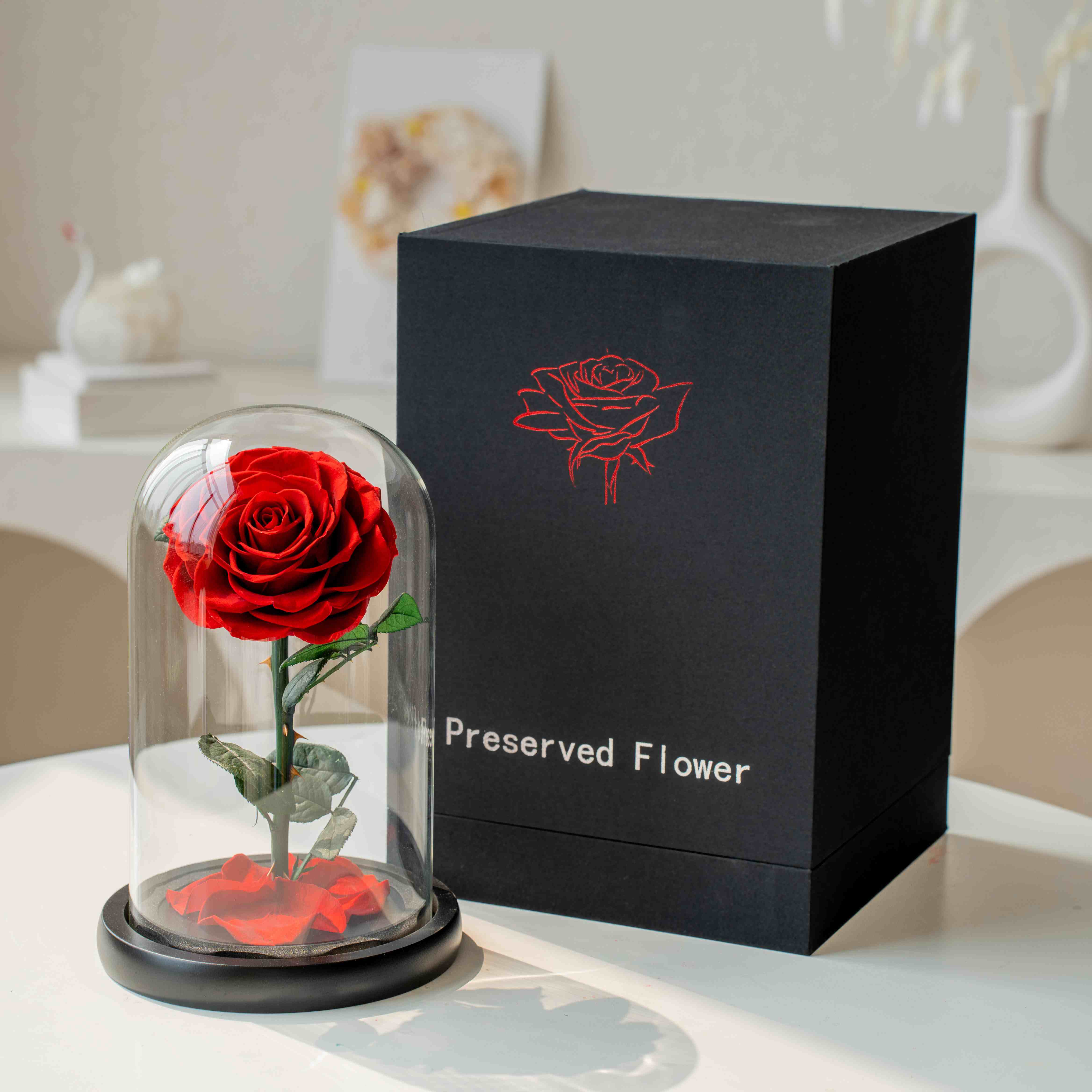
Pinch a petal between your thumb and forefinger, then let go. If it springs back without creasing, the flower still has plenty of life left. A petal that stays folded or feels thin and papery is a sign the bloom is already on its way out. This quick touch test works on roses, tulips, daisies, and most common cut flowers, and it tells you more than looking at the stem or leaves ever will.
Look closely at the petal edges before you buy or bring flowers inside. Healthy, long-lasting blooms have crisp, even edges with no browning or water-soaked patches. Once you see a translucent rim or a dark line creeping inward, the cells are breaking down—even if the center still looks fine. Compare two stems side by side and the difference is immediate.
Give the flower head a gentle shake. If petals rain down like confetti, it's already past its prime. If they hold firm with just a slight tremor, you can expect several more days in the vase. No tools needed, just your fingertips and a few seconds of attention.
Color Matters More Than You Think for a Long-Lasting Bloom
The difference between a bloom that lasts three weeks and one that fizzles out in five days often comes down to pigment, not just genetics. Deep reds and purples look dramatic but tend to soak up more infrared, which accelerates petal scorch and water loss when the sun gets brutal. Pale blues, soft pinks, and creamy whites reflect a larger slice of the spectrum, so their petals stay cooler and hold shape longer on a ninety-degree afternoon. That's why a drift of white cosmos can still look crisp while a neighboring row of dark maroon zinnias turns papery by midafternoon.
There's also a chemical side to color that's easy to overlook. The same anthocyanins that paint petals blue or burgundy often act like a built-in sunscreen and pest deterrent, giving some richly colored varieties a subtle durability boost. But that protection isn't universal: a saturated petunia may shrug off UV rays yet fade quickly if it's bred for showy color over tough cell walls. In practice, the smartest long-bloom strategy is to mix color classes—use deep tones in morning shade or under dappled light, and let lighter, reflective hues carry the sunniest parts of your bed.
Stem and Glue: The Construction Details That Predict Durability
Most people judge a piece by its surface, but the real story is in the stem-to-socket fit and how the adhesive is applied. A tightly carved stem that seats fully into its recess spreads stress across the joint instead of concentrating it at the glue line. If you can see squeeze-out along the entire seam, that usually means the bond is continuous, not starved. Gaps or dry spots, on the other hand, are early warning signs: they let moisture in and turn a stiff connection into a slow hinge.
Not all glues behave the same way under load. Polyurethane adhesives foam into voids and tolerate slight movement, while rigid epoxies work best when the mating surfaces are nearly flawless. But even the best glue fails if the stem is too short for its socket. A common production shortcut is to shorten the tenon to save material—this leaves a thin glue collar doing all the work. Durable joints pair a full-depth stem with a controlled film thickness: enough adhesive to fill micro-roughness, not so much that the joint floats on a rubbery layer.
Packaging vs. Product: What Actually Keeps a Rose Looking Fresh
A velvet box and a satin ribbon might whisper luxury, but they don't hold a single drop of water. What actually keeps a rose looking fresh starts long before it's slipped into any container: the cut, the stem's health, and the temperature of its journey from field to fridge. Many shoppers get distracted by the outer shell—the frosted sleeves, the embossed logos—and end up judging a bloom by its wrapper rather than its vascular system.
The real freshness test is invisible at first glance: a clean, angled cut made under water, a stem free of slime, and petals that open slowly instead of flaring out like cheap tissue paper. Packaging can delay dehydration, but it can't replace hydration. Roses that arrive thirsty will drink whatever you give them, but if they've been sitting dry in a beautiful box for two days, no amount of floral foam will bring back that tight, dewy look. The product itself—the variety's natural longevity, the grower's post-harvest care—matters more than any sleeve ever could.
So next time you're tempted by a box that looks like a gift from a fairy tale, flip it over. Check for condensation inside, felt the weight of the stems, and look for a tiny water source or hydration pack. If the package is dry and the rose still looks perfect, thank the flower, not the box. Packaging gets the first glance, but the product earns every day after that.
The Realistic Lifespan of a Preserved Rose (No Marketing Hype)
A preserved rose is not immortal. In a normal living room, away from direct sunlight and with average indoor humidity, you can expect it to hold its shape and most of its color for about one to two years. After that, the petals typically start to fade at the edges, the color loses its initial richness, and the bloom may look slightly dry or dusty even if you never touch it.
The conditions in your home matter more than any number on a label. Keep it out of bathrooms and kitchens where steam and moisture build up, and avoid placing it on a windowsill that gets afternoon sun. If the air is consistently damp, the rose can soften or develop spots within six to twelve months. Dry, cool rooms give you the best chance of reaching the two-year mark without major changes.
Claims of three to five years usually assume near-perfect storage: stable temperature, low humidity, no handling, and no direct light. Real life is rarely that controlled. Buy a preserved rose because you want a low-maintenance alternative to fresh flowers that lasts longer than a week, not because you expect it to look flawless forever.
FAQ
Look at stem and petal integrity, not just color. Roses treated while still fresh hold their shape longer than ones processed after wilting. Glycerin-based preservation tends to keep petals supple, while cheaper drying methods leave them brittle.
Some shades fade faster. Deep reds and burgundies usually hold up better than pastel pinks or lavender, which can show yellowing around edges over months. If you want a centerpiece, pick a saturated tone.
Gently touch the petals. A good preserved rose feels soft and slightly cool, almost like fresh. Dried roses crinkle and feel papery. Fakes often have a uniform plastic sheen. Also check the stem—real preserved roses keep a natural, slightly uneven stem and thorns.
Boxed arrangements protect blooms from dust and humidity, so they often look better longer. Single stems are easier to inspect but need a stable vase away from air vents. If you gift one, a clear acrylic box adds months to the fresh look.
Cool, dry, out of direct sunlight. Bathroom humidity and kitchen heat are the two big enemies. A shelf in a living room with indirect light works well. Never put it near a window that gets afternoon sun, and don't store in a fridge—condensation wrecks petals.
Not always, but price often reflects the preservation process. Roses that are dyed to unnatural neon colors can be cheaper and fade unevenly. Mid-range roses in natural tones tend to have better petal texture. Ask how long the rose was preserved after cutting—same-day processing is a good sign.
They can keep their shape for several years, but color will shift slightly. Most high-quality preserved roses look good for 1-3 years indoors; after that, they might still be presentable but less vibrant. Rotating their position every few months helps even out any light exposure.
Conclusion
A preserved rose that's truly built to last reveals itself quickly if you know where to look. Start with the petals: gently run a fingertip across the surface. If they feel pliable, almost like soft leather, and spring back without cracking, the rose has been treated well. Stiff, brittle petals that flake are a sign the preservation process was rushed or the bloom is already drying out internally. Color choice also plays a surprising role. Deep reds, burgundies, and rich purples tend to hold their pigment far longer than pale pinks or whites, which show yellowing and uneven fading sooner. The stem and glue joints matter just as much as the bloom itself. A neatly finished stem with no visible glue blobs at the calyx means the rose was assembled with care. If you can see adhesive smeared around the base of the petals, moisture and air are already creeping in.
What the rose arrives in can be just as telling as the rose itself. Sturdy, minimal packaging that keeps the bloom from touching the sides of the box does more for freshness than layers of decorative tissue. The flower shouldn't be squeezed against plastic or wrapped so tightly that petals are forced out of shape. And be realistic about lifespan: a well-made preserved rose in a stable, low-humidity room typically looks its best for one to three years. After that, color may soften and petals may loosen, but that's normal wear, not a defect. The key is to choose a rose that feels supple, has a deep or saturated color, clean stem work, and packaging that respects the bloom's shape. Those details, not marketing claims, are what separate a rose that lasts from one that merely looks good on day one.
Contact Us
Contact Person: Mr. Luo
Email: [email protected]
Tel/WhatsApp: 86 18100895505
Website: https://www.feiliyaflowers.com/en/