

Wholesale Fully Automatic Paper Bag Machine: Enhancing Output and Quality for Modern Packaging Needs
2026-11-16
Does your current paper bag line struggle to meet orders without quality sliding? A wholesale fully automatic paper bag machine flips that equation — it raises output while keeping every bag consistent, from handle to bottom fold. For packaging teams tired of trading speed for defects, this shift matters. And when that machine carries the ROKIN name, it's built to keep performing when demand spikes.
Why High-Volume Packaging Lines Are Moving to Fully Automatic Paper Bag Machines
The shift toward fully automatic paper bag machines on high-volume packaging lines isn't driven by a single factor, but by a convergence of rising material costs, labor shortages, and the need for consistent output. Traditional semi-automatic setups often require multiple operators to feed, align, and stack bags, which creates bottlenecks as order volumes climb. Full automation removes these repetitive manual touchpoints, allowing a single technician to oversee several lines at once. This reallocation of labor—from hand-feeding to monitoring and quality checks—translates into lower per-unit costs and fewer ergonomic injuries over time.
Beyond labor, fully automatic machines offer precision that manual handling simply cannot match. High-speed sensors and servo-driven folding mechanisms ensure every bag is formed with identical dimensions, crease placement, and glue coverage. In sectors like food packaging, e-commerce shipping, or pharmaceutical distribution, even minor variations in bag size or seal integrity can cause downstream jams or product damage. Automatic systems adjust for paper thickness, humidity, and roll tension in real time, maintaining a steady throughput that would be impossible with intermittent human intervention.
Another overlooked driver is the flexibility of modern automatic paper bag machines. Older lines were often dedicated to a single bag style—flat, satchel, or block-bottom—and changing over took hours. Today’s fully automatic systems store multiple recipes, allowing operators to switch from a small pastry bag to a large retail shopping bag in under ten minutes with minimal tooling changes. This adaptability lets packaging facilities serve a wider range of clients without adding separate production lines, making the move to full automation a strategic hedge against changing market demands and shorter run lengths.
The Precision Behind Every Fold: How Automation Improves Bag Quality
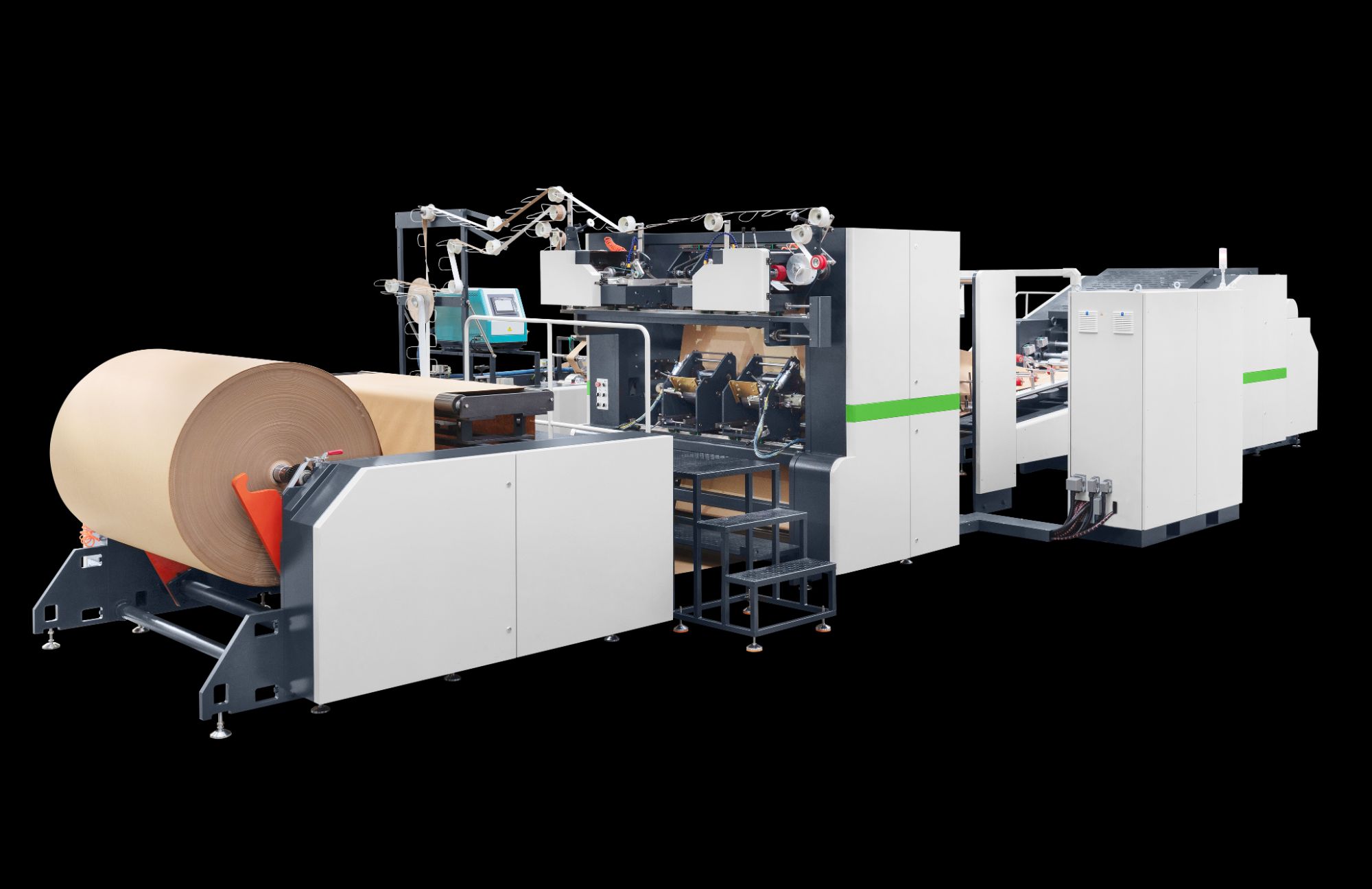
The bag-making industry has long wrestled with the same stubborn problem: even the most skilled hands cannot fold every sheet of material with perfect consistency. A fraction of a millimeter off on one fold becomes a visible misalignment on the finished product, and by the time a stack of bags reaches quality control, the damage is already done. Automation changes this equation by replacing guesswork with geometry. Modern folding stations use servo-driven backgauges and optical sensors to position each panel within tolerances that human operators simply cannot match, ensuring that every crease lands exactly where it was designed to be.
What sets automated folding apart is not just speed, but the ability to repeat the same motion over thousands of cycles without drift. Manual processes inevitably degrade as workers tire or adjust their technique, but a well-calibrated machine holds its settings from the first bag to the last. This consistency shows up in the final product: seams align cleanly, gussets open evenly, and the bag stands upright without wobbling. For customers, that means fewer returns and a more professional presentation on the shelf. For manufacturers, it means less material wasted on rejects and a production line that can be scaled without sacrificing quality.
Ultimately, automation does not replace craftsmanship—it amplifies it. By handling the repetitive precision work, machines free up operators to focus on material handling, maintenance, and quality checks that require human judgment. The result is a bag that feels tighter, stronger, and more reliable, because every fold was executed with the same exacting standard. In an industry where a bag's first job is to protect what's inside, that kind of precision is not a luxury; it is the difference between a product that fails on day one and one that lasts for years.
Scaling Output Without Adding Labor Costs
Growing output usually starts with hiring more people, but that path gets expensive and slow. A better approach is to look at how work actually flows through the business. Many teams have hidden bottlenecks—repetitive manual steps, back-and-forth approvals, or data entry that could be eliminated or automated. By mapping the real sequence of tasks, you can often find ways to double or triple throughput without adding a single new role.
One practical lever is turning tribal knowledge into documented, repeatable processes. When only one person knows how to handle a specific task, scaling depends on that person's time. Writing down the steps, creating templates, or using simple scripts to connect systems frees up that person and lets others execute the same work with less training. Another lever is giving frontline staff the authority to make certain decisions on the spot, which removes approval queues that silently cap output.
The real shift is cultural: rewarding people for removing friction instead of just staying busy. Teams that track cost per unit of output, rather than hours worked, start seeing automation and process redesign as growth tools, not threats. Over time, this allows a business to handle significantly more volume while keeping labor costs flat—and often improves job satisfaction because people spend less time on tedious chores.
Beyond Basic Kraft: Modern Material Options for Paper Bag Production
The familiar brown kraft bag still has its place, but paper bag production has quietly moved into a more varied materials landscape. Beyond the standard unbleached pulp, manufacturers now work with bleached kraft for cleaner prints, recycled linerboard for heavier-duty uses, and even blends that incorporate agricultural fibers like wheat straw or bamboo. These alternatives shift the texture, weight, and color of the final bag without changing the fundamental forming process. The choice often comes down to the intended retail environment—whether the bag needs to feel sturdy under a wine bottle, display a crisp logo on a bakery shelf, or disappear into a compost pile within a few months.
Coatings and laminations have also expanded what a paper bag can do. A thin dispersion coating can make the surface repel grease or light moisture while keeping the material fully repulpable, unlike older plastic-film laminates. For cold or frozen goods, a bio-based barrier layer lets the bag hold condensation without turning soggy. Some converters are experimenting with mineral-filled papers that offer extra stiffness at lower grammage, effectively reducing fiber use per bag. These material tweaks rarely change the look dramatically, but they change how the bag behaves in a busy takeaway line or during a rainy walk from the store.
Sourcing adds another layer of differentiation. A growing share of paper for bags comes from certified or controlled wood sources, and some mills now run entirely on recovered fiber from local collection programs. That recovered content can appear as a grayish speckled sheet or be lightly de-inked to a near-white tone depending on the market. Meanwhile, a handful of specialty producers offer uncoated, wet-strength grades made for repeated reuse—thicker in the handle area, reinforced at the base, and able to survive several trips. None of these options are one-size-fits-all, but together they give brands a way to match the bag's material to its actual job rather than defaulting to basic kraft out of habit.
Reducing Waste and Downtime in Continuous Production
In continuous production, small inefficiencies don't stay small for long. A few seconds of drift on a filling line, a slightly misaligned cutter, or a buildup of material on a sensor can quietly turn into scrap rates that eat away at margins. Teams that treat every stoppage as a signal rather than a nuisance start to see patterns: the same bearing running hot before lunch, the same roll change creating a fifteen-minute gap every shift. Addressing these details at the source often cuts waste faster than any large capital project.
Downtime rarely comes from one dramatic failure. It accumulates through short stops, slow cycles, and changeovers that never quite hit their target time. Mapping the actual sequence of a shift—not the ideal version—usually reveals that operators are waiting on materials, adjusting settings by feel, or working around equipment quirks that everyone has learned to tolerate. Building simple visual cues, standardising the first ten minutes of a changeover, and fixing the recurring micro-stops can recover hours of capacity without buying new machinery.
Waste reduction works best when it's tied to what operators already notice. Instead of chasing a zero-waste slogan, focus on making abnormal conditions visible: mark the normal range on gauges, set clear trigger points for when to call a technician, and review the last three unplanned stops at the end of each shift. This habit turns vague frustration into specific countermeasures, and it tends to lower both scrap and downtime because the same root causes often drive both.
What to Evaluate When Sourcing Wholesale Paper Bag Machinery
Start by looking beyond the headline speed rating. A machine that claims 400 bags per minute might only hit that with thin, narrow paper and a perfectly tuned feeding system. Ask for a demo using the exact grammage, width, and handle style you plan to run. Pay attention to changeover time as well—some models take half a shift to swap between bag sizes, while others use servo-driven adjustments that finish in under ten minutes.
Build quality shows up in the details. Check whether the frame is welded steel or bolted aluminum, how the gears and shafts are lubricated, and whether the supplier stocks common wear parts locally. A slightly higher upfront price often disappears after two years when you compare downtime, scrap rates, and the cost of emergency air-freighting spare parts from overseas.
FAQ
It removes manual steps like tube forming, cutting, and gluing, so one operator can oversee multiple lines. That consistency is hard to match with semi-automatic equipment, especially when order volumes climb.
Buying at wholesale usually lowers the per-unit cost enough that many converters recover the investment within 18 to 24 months. It depends on bag size and local material costs, but the margin on high-volume runs improves quickly.
Most modern models support flat and satchel bags, and switching between sizes often takes only a few minutes with servo-driven adjustments. That flexibility helps suppliers serve bakeries, boutiques, and grocery chains without separate lines.
Depending on bag dimensions and paper weight, rates of 200 to 400 bags per minute are common. Even at the lower end, a single shift can produce enough inventory to cover several regional orders.
Precision folding and gluing reduce crooked seams, weak bottoms, and glue overflow. The result is a stronger bag with cleaner branding surfaces, which matters when clients use custom prints.
Not really. Touchscreen controls and stored recipes let operators load a job and adjust parameters without manual tuning. Basic training is usually enough for daily operation, though maintenance should be handled by a technician.
Look at frame construction, servo brands, and whether the supplier offers remote diagnostics. Also ask about spare parts availability and response time, because downtime costs more than the initial price difference.
No. Mid-sized converters often use a single fully automatic line to replace several older semi-automatic units, freeing floor space and reducing labor while still meeting growing demand.
Conclusion
Modern packaging lines are leaving semi-automatic setups behind for a simple reason: a wholesale fully automatic paper bag machine changes the arithmetic of production. Instead of relying on multiple operators to feed, fold, and stack, these systems handle the entire sequence with servo-driven precision. That precision shows up in every crease and glued seam, producing bags with consistent square bottoms and clean edges that manual processes struggle to match. The immediate payoff is higher throughput without adding headcount—one technician can oversee a line that would otherwise need four or five workers, and output climbs steadily across shifts. For plants running high-volume orders, that combination of speed and repeatability becomes the difference between meeting a deadline and paying overtime to catch up.
The shift goes beyond kraft paper, too. Modern machines accommodate a wider range of substrates—recycled stocks, coated sheets, and lightweight specialty papers—so converters can respond to customers who want more than the standard brown bag. Continuous production also benefits from automatic splicing and defect rejection, which cut material waste and unplanned stops. When sourcing equipment, the key is to look past brochure claims and examine how the machine handles real-world variability: paper thickness changes, roll changes, and adhesive consistency. Asking for live demonstrations with your own materials, checking the control interface for ease of use, and confirming local service support will reveal more than any spec sheet. A well-chosen wholesale line doesn't just increase output; it makes the entire converting process quieter, faster, and less dependent on operator skill.
Contact Us
Contact Person: CARA
Email: [email protected]
Tel/WhatsApp: +8619519778302
Website: https://www.rokinmachinery.com