

Wholesale Micronized Dipentaerythritol: Essential Benefits and Smart Sourcing Tips
2026-11-02
Buying wholesale micronized dipentaerythritol isn’t just about locking in the lowest price per ton. Real advantages come down to consistent particle size, purity that holds up under demanding formulations, and a supplier who actually understands downstream chemistry. Yet too many buyers only spot these gaps after production slows or coatings fail. The following guide unpacks the essential benefits to demand—and the smart sourcing moves that separate reliable partners from costly surprises, including where X.X.F.R fits in.
Micronized Dipentaerythritol: Why Particle Size Is the Real Game-Changer
When formulators talk about dipentaerythritol, purity and hydroxyl value usually steal the spotlight. But particle size quietly dictates how the material behaves in real-world mixing, coating, and curing. Micronized grades, typically under 15 microns, change the entire processing rhythm. They disperse faster, pack more uniformly, and eliminate the stubborn grit that can ruin a smooth finish. For anyone who has fought with clumping or uneven gloss, this is where the actual performance difference shows up.
The shift to finer particles isn't just about aesthetics. In UV-curable systems and high-solids coatings, smaller dipentaerythritol crystals expose more reactive surface area. That means faster dissolution in solvents and monomers, more consistent crosslink density, and fewer fisheyes or orange-peel defects. It also helps when you're pushing for lower VOC formulations—micronized material lets you hit the same viscosity and reactivity targets with less solvent or reactive diluent. In short, the particle size becomes a lever for formulation efficiency, not just a spec sheet number.
Of course, finer powders bring their own handling quirks—dusting, static, and sometimes increased moisture pickup. But the best micronized dipentaerythritol products are engineered with controlled particle size distribution and surface treatment to minimize these issues. The result is a raw material that behaves predictably in automated feeding systems and still delivers the chemical performance you expect. Once you've worked with a properly micronized grade, going back to coarser material feels like stepping backward in both process control and final product quality.
How Micronization Unlocks Better Performance in Coatings and Resins
Coatings and resins depend on how evenly particles distribute through the binder. When pigments, fillers, or wax additives are micronized, their reduced size means they slip into the matrix without clumping. That translates to fewer surface defects and a more uniform film, so the final finish looks cleaner even under harsh lighting.
Another shift happens with rheology. Finer particles present more surface area, which changes how the liquid coating flows and levels. Formulators can adjust viscosity with less additive, saving cost while still getting a smooth, sag-resistant application. For powder coatings, micronization also improves charging behavior during electrostatic spray, leading to better transfer efficiency.
Durability gets a boost as well. Smaller particles pack tighter on the cured surface, reducing porosity and blocking moisture or chemicals from reaching the substrate. That tighter packing enhances scratch and abrasion resistance, which is why micronized waxes and silica are common in high-wear industrial finishes.
Bulk Purchase Signals: What Smart Buyers Check Before Ordering
Before committing to a large order, experienced buyers look past glossy catalogs and focus on small operational details that reveal how a supplier actually works. They ask for batch consistency records, not just a verbal promise that quality will be fine. A minimum order quantity that seems unusually low can signal slow-moving or mixed stock, while an excessively high MOQ may hide cash-flow pressure on the buyer. These quiet signals often predict the real experience better than any marketing sheet.
Sample-to-production consistency is another point that separates careful buyers from impulsive ones. Instead of requesting a generic sample, they order one close to the final packaging and weight, then check stitching, print registration, thickness tolerance, and seal integrity. If a supplier shows color drift or material variance at the sample stage, that deviation usually becomes more visible across a full production run. Lead time is judged the same way: smart buyers do not ask for a single delivery date, but for a clear sequence of raw material prep, production scheduling, and quality inspection windows.
Post-quote communication often reveals more than the quote itself. A supplier who replies quickly but avoids questions about defect rates, historical returns, or corrective actions is sending a warning. Buyers with experience tend to favor suppliers who openly discuss common failure modes, offer third-party test reports without being pushed, and explain how they handle after-sales replacements. Bulk purchasing is not a one-time transaction; it means moving part of your operational risk onto someone else, and the willingness to talk about that risk is a strong signal worth checking before you sign.
The Real Cost of Inconsistent Particle Size in Wholesale Orders
When your supplier delivers a batch with inconsistent particle size, the invoice price is just the beginning. You end up paying again during processing—clogged sieves, uneven mixing, and extra passes through the grinder all eat into your margins before a single finished unit leaves the line. Those seemingly minor variations in micron range force operators to stop, adjust, and rework, turning what should be a steady run into a stop-and-go headache that nobody budgets for.
Beyond the production floor, inconsistent particle size quietly damages product performance. A powder that doesn't flow the same way from bag to bag leads to dosage drift, poor suspension, or uneven texture in the final application. Your customers may not know why their results vary, but they will notice—and they'll blame your brand. That erosion of trust is far more expensive than any single rejected shipment, because it follows you into future negotiations and repeat orders.
Then there's the waste you can't always see on a balance sheet: leftover material that can't be blended back in, extra quality-control testing, and the slow accumulation of off-spec inventory that never quite gets used. Smart buyers treat particle size distribution not as a checkbox but as a real cost driver. Locking down tight specifications upfront—and verifying them with every delivery—is the difference between a reliable supply chain and a constant drain on your bottom line.
Matching Micronized Grades to Specific Industrial Uses
Micronized grades are not one-size-fits-all, and choosing the right particle size distribution starts with the performance demands of the application. In architectural coatings, a narrow cut around 8 to 12 microns often improves tint strength and gloss without driving up viscosity, while coarser grades in the 20 to 30 micron range create a controlled matting effect. Plastics present a similar trade-off: finer particles preserve clarity in thin films but can agglomerate during compounding if the surface treatment is not matched to the polymer matrix.
Pharmaceuticals and personal care products require even tighter control. Micronized active ingredients usually fall between 2 and 20 microns to balance dissolution rate against flowability and blend uniformity. In sunscreen dispersions, staying near 10 to 15 microns minimizes the whitening effect on skin while still blocking UV effectively. The carrier system matters just as much; a grade that disperses cleanly in a solvent-based coating may clump in a water-based formula unless the particle surface is modified accordingly.
Industrial minerals follow the same logic. A 3-micron calcium carbonate can boost gloss in a premium interior paint, but the same grade would be too fine for a putty or caulk where coarser particles contribute body and reduce shrinkage. Talc grades for polypropylene often sit in the 2 to 5 micron range for stiffness without sacrificing impact strength, whereas rubber compounding may benefit from larger platelets that improve tear resistance. The real task is not finding a universal best size but aligning particle size, surface chemistry, and bulk handling behavior with the specific manufacturing process and end-use performance target.
Avoiding Supply Chain Disruptions When Sourcing Dipentaerythritol
Dipentaerythritol sits inside a surprisingly fragile corner of the chemical supply chain. Most buyers treat it as a commodity, but that mindset is exactly what causes delays when a single production line in a key region goes down for maintenance or weather. Instead of relying on a spot market that dries up quickly, build a network of two or three qualified suppliers in different geographic zones. Long-term frame contracts with flexible volume bands keep you protected without forcing you to hold excessive inventory.
A practical way to reduce disruption is to decouple your order timing from the traditional quarterly purchasing cycle. Dipentaerythritol production often follows scheduled turnarounds in the petrochemical complex, so aligning your high-volume buys with known periods of oversupply can smooth costs and availability. At the same time, work closely with your logistics partners on alternative ports and inland routes. Many interruptions never show up in the supplier's warehouse but at the transfer point, where a single blocked canal or rail strike can stall material for weeks.
Finally, avoid the trap of over-optimizing for price in stable times. The lowest-cost source is rarely the most reliable when a disruption hits. Paying a small premium for a supplier with dual production lines, backup feedstock contracts, or a history of communicating problems early is often cheaper than a six-week shutdown of your own operation. Make resilience part of your sourcing scorecard, and review it every quarter with actual shipment data rather than marketing claims.
FAQ
The particle size drops to the low micron range, which stops clumping and lets it disperse evenly in resins. That leads to faster dissolution, smoother films, and more consistent crosslinking.
UV-curable coatings, high-solid alkyds, synthetic lubricants, and halogen-free flame retardants all benefit because the fine powder blends into tight formulations without grit or settling.
Clear coats show every defect, so the finer particles reduce haze and improve gloss while keeping viscosity stable during mixing.
Ask for a recent certificate of analysis, check the particle size distribution curve, confirm moisture content, and request a small trial batch to see how it behaves in your specific process.
High-purity grades—typically 98% or above—are worth the extra cost for optical resins or premium lubricants. For general industrial coatings, a 95–97% grade may work fine if impurities are controlled.
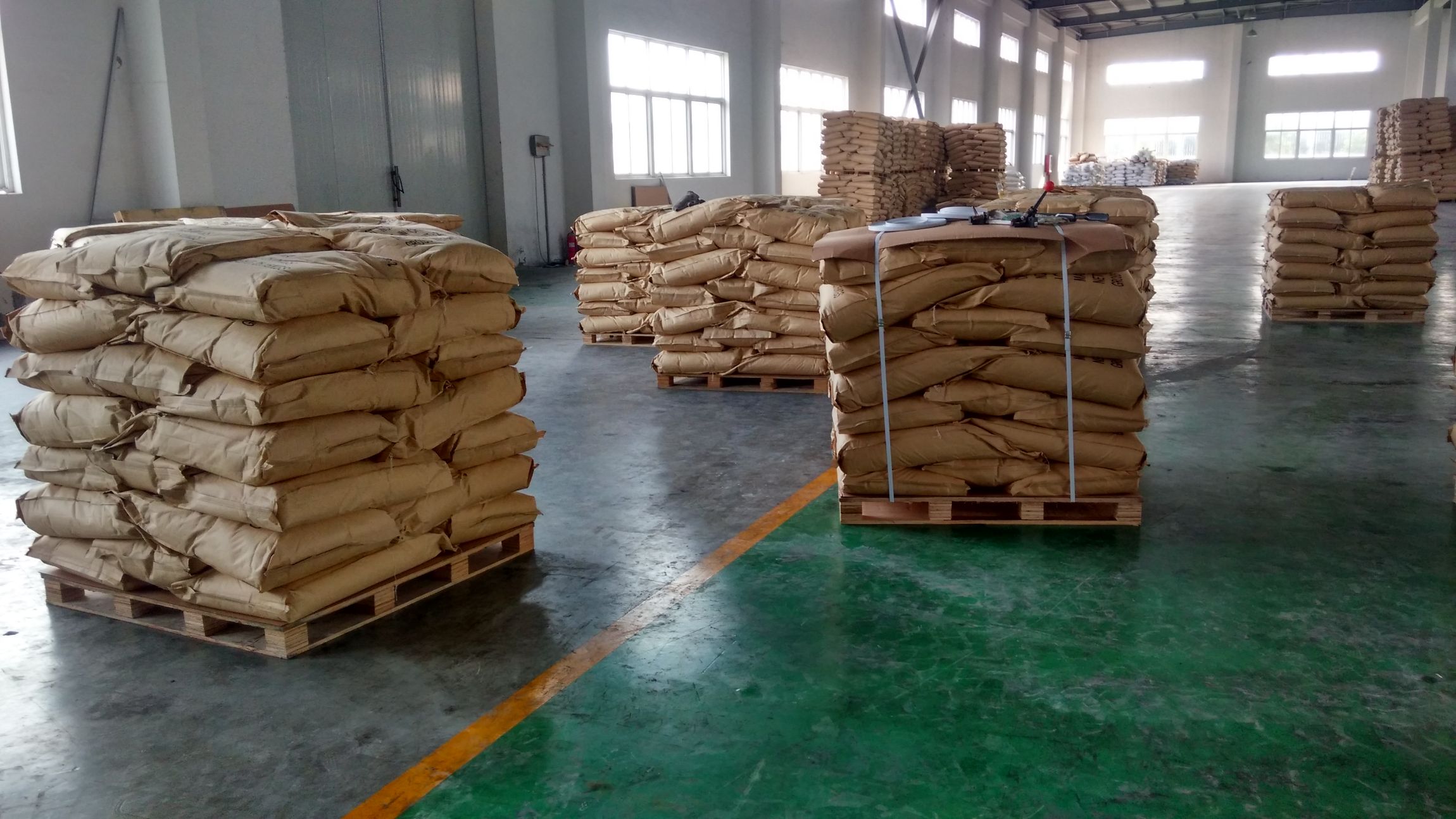
Freight and storage can add up. Micronized powder is hygroscopic, so you need dry, sealed warehousing and maybe climate-controlled transport in humid regions.
Yes, it acts as a multifunctional polyol that raises crosslink density, which can reduce the need for solvent-borne modifiers and help meet stricter emission limits.
Look at batch-to-batch consistency, whether they offer custom particle sizing, how they package for moisture protection, and whether their technical team responds quickly with formulation support.
Conclusion
Sourcing micronized dipentaerythritol at wholesale volumes isn't just about locking in a lower unit price. The real leverage comes from particle size control. When the powder is consistently micronized to a tight distribution, reactivity and dispersion improve sharply in alkyd resins, UV-curable coatings, and high-solids formulations. A lot of buyers overlook this until they see viscosity spikes or haze in clearcoats traced back to coarse fractions. Micronization also shortens mixing cycles and reduces the risk of pigment flocculation, which translates into fewer rejected batches and less downtime. Simply put, if your supplier can't document particle size data batch after batch, you're paying for a specification that may not survive contact with your process.
On the procurement side, treat micronized dipentaerythritol as a performance ingredient, not a commodity. Request retained-on-sieve values, laser diffraction curves, and moisture content before committing to container loads. Ask how the material behaves in your specific resin system—some grades work better for powder coatings, others for polyurethane intermediates or intumescent systems. Build redundancy into your supply base, because a single-source strategy leaves you exposed to logistics bottlenecks or production shutdowns at the mill. Also compare landed cost after accounting for rework and waste from inconsistent particle size; the cheapest quote rarely remains cheap once you factor in line stoppages. Finally, lock in technical support and a clear quality agreement so that every shipment meets the same micronization standard.
Contact Us
Contact Person: Guohua Wang
Email: [email protected]
Tel/WhatsApp: 8613003442895
Website: https://www.xxflameretard.com