

Wholesale Trimethyl Phosphate Sourcing Guide for Industrial Buyers
2026-11-19
Sourcing trimethyl phosphate at scale rarely comes down to a single spec sheet. It comes down to supply reliability, impurity control, and whether your supplier actually understands how the ester behaves inside your process. For industrial buyers, the gap between a workable quote and a dependable long-term supply can be costly. That is why this guide focuses on practical procurement factors rather than generic product descriptions. Along the way, we also look at how Fortune positions its trimethyl phosphate offering for buyers who need more than a spot shipment.
Where Reliable Trimethyl Phosphate Volume Actually Comes From
Most buyers assume that reliable trimethyl phosphate volume starts with a well-known supplier name. In practice, the real source is less about brand recognition and more about how the manufacturer handles upstream phosphorus chemistry. Producers who maintain direct control over phosphorus trichloride feedstock and run continuous rather than batch esterification tend to have far more consistent output. Those who outsource key intermediates often face weekly allocation limits, which creates exactly the kind of supply surprises that small and mid-sized formulators fear.
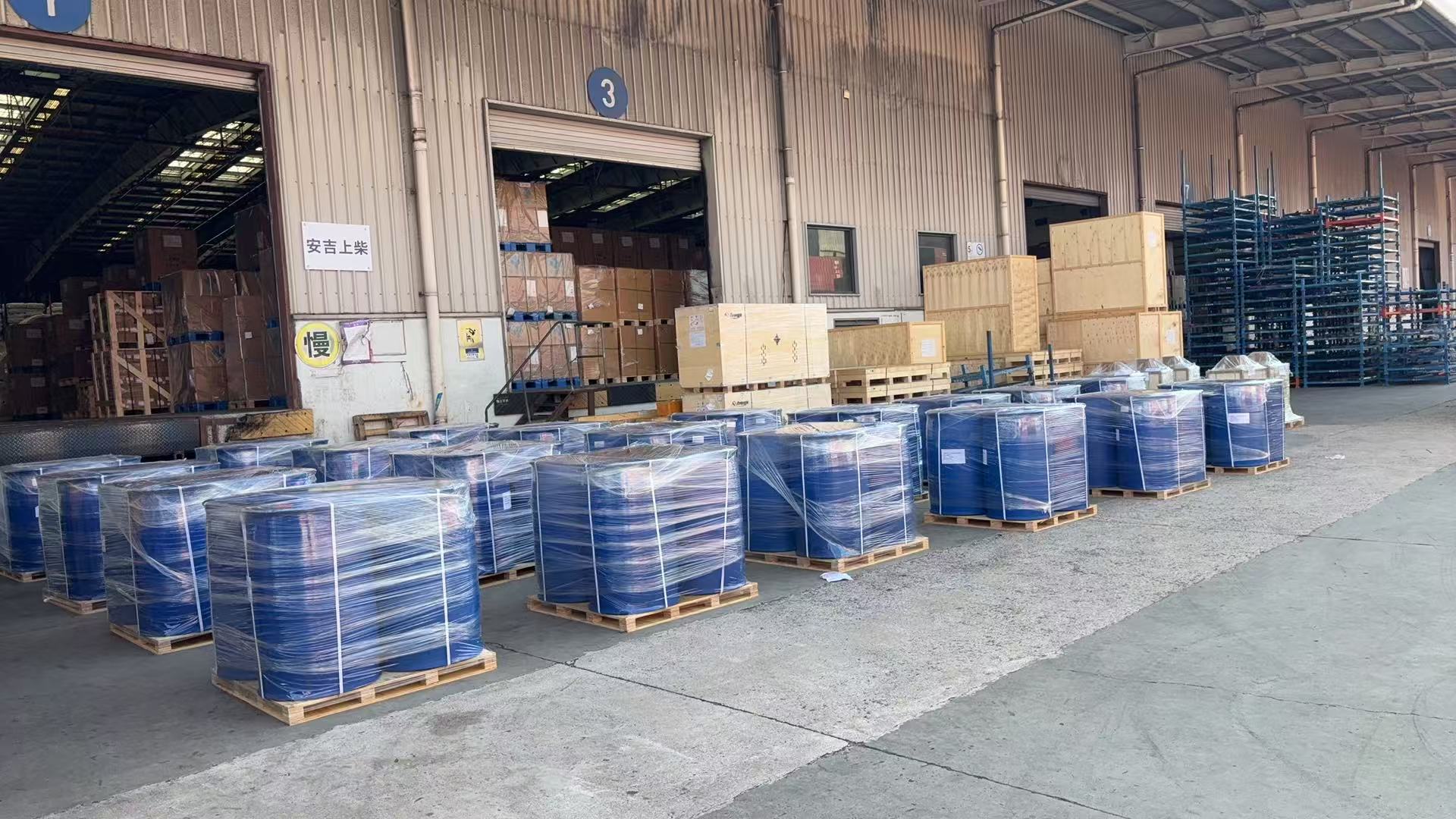
Another underappreciated factor is storage and logistics discipline. Trimethyl phosphate is hygroscopic and reacts slowly with moisture, so even a plant that makes a large nominal volume can lose usable product if transfer lines and storage tanks are not kept dry. Reliable volume, in the sense that matters to a procurement team, is the amount that arrives in spec after transit, not the amount that leaves the reactor. Facilities with dedicated sealed loading arms and short dwell times between production and shipment typically deliver fewer rejected batches.
Finally, dependable volume comes from a supplier's willingness to allocate capacity to smaller contracts during tight markets. Many large producers quietly prioritize a handful of major accounts, leaving everyone else to absorb the volatility. The suppliers who actually deliver steady month-over-month tonnage tend to be those with flexible scheduling, regional buffer stock, and product managers who will tell you honestly when a shipment will be late rather than promising a date and blaming the logistics carrier later.
Purity and Impurity Profiles That Decide Usability
A certificate can list 99.9% purity while the material still fails on first contact with a production line. What usually decides the outcome is not the headline assay but the small population of impurities that prefer to sit at surfaces, grain boundaries, or reactive sites. These traces modify wetting, adhesion, corrosion onset, or catalytic activity far more than their concentration would suggest.
The distribution of those impurities matters as much as their total loading. Two batches with the same bulk purity can behave very differently if one carries metal residues in a mobile form or leaves organic by-products that migrate during curing or annealing. Rather than asking whether a sample is pure, it is often more useful to ask which impurities remain, where they reside, and whether the analytical method can even see them.
Usability, then, is tied to an impurity profile that is method-dependent and batch-sensitive. A number on a specification sheet becomes meaningful only when the detection limits, preparation history, and the silent fraction below the reporting threshold are also known. Treating purity as a fixed grade instead of a profile tends to hide exactly the variables that later show up as process drift or field failures.
Hidden Costs in Logistics, Packaging and Inventory
Most companies treat logistics, packaging, and inventory as separate line items, but the real drain often happens where they overlap. A pallet that fits poorly wastes trailer space, which raises freight costs, which then forces larger safety stock to cover longer replenishment cycles. The same box that protects a product can also slow down warehouse picking if it is hard to stack or label. These hidden costs rarely show up on a single invoice, yet they quietly erode margin across every shipment.
Packaging decisions made without logistics input tend to create expensive ripple effects. Oversized cartons add dimensional weight, extra void fill, and more corrugated waste, while undersized packaging leads to damage claims and returns. Inventory carries its own burden too: holding too much stock ties up cash and increases handling, while holding too little triggers expedited shipping and missed sales. The trick is to treat these three areas as one system rather than isolated budgets.
A practical fix is to map total landed cost from supplier dock to customer door, including every touch, repack, and storage day. Small changes often yield surprising savings, such as adjusting case dimensions to cube out a container, switching to lighter materials that survive distribution, or resequencing inventory so fast movers sit closer to packing stations. When packaging, freight, and stock levels are tuned together, the hidden costs stop hiding.
Vetting Suppliers Beyond the Trade License
A trade license proves that a business has met basic registration requirements, but it says little about whether the company can actually fulfil an order. Production capacity, equipment condition, and workforce stability often matter far more than the piece of paper on the wall. Checking recent utility usage, raw material receipts, and outbound shipping records gives a clearer picture of whether the supplier is moving goods at the scale they claim.
The legal entity behind the license deserves just as much attention. It is common for the registered name to differ from the name used on invoices, bank accounts, or export filings, which can create problems when disputes arise. Asking for bank confirmation letters, export history under the licensed name, and documents that tie the entity to its physical production address can expose gaps that a license check would miss.
References and certificates still have limits, so direct observation usually carries more weight. A short video call from the production floor, an unannounced sample pull, or an independent inspection of current lines tends to reveal whether the named entity is genuinely doing the work. Treat the license as one early filter among many rather than a final sign-off.
Comparing Quotes When Payment Terms and Incoterms Vary
A side-by-side price comparison rarely tells you much once payment terms and Incoterms start moving in opposite directions. One supplier might quote a lower unit cost but expect 100% payment before dispatch, while another offers 60-day terms at a slightly higher price. The real difference shows up in working capital, not in the invoice line.
Incoterms complicate this further. An EXW price from one supplier can look cheaper than a DDP price from another, even though the DDP option includes freight, insurance and import clearance. If you don't recalculate every quote on the same basis—say, delivered to your warehouse with duties paid—you end up comparing figures that were never meant to sit side by side.
A more reliable approach is to build a simple landed-cost model that adds financing costs for early payment and subtracts what you would otherwise spend on logistics and customs. Once those adjustments are made, the quote that initially seemed higher often turns out to be the cheaper way to buy.
Locking in Supply Without Overcommitting Volume
Forecast errors get expensive fast. Commit too much and inventory piles up; commit too little and production lines sit idle. A more durable approach treats the forecast as a band rather than a single number—firm near shipment, flexible in the middle, indicative further out—so the buyer secures access without swallowing the entire volume up front.
A rolling forecast with tiered flexibility often does the heavy lifting here. The next two or three weeks can be locked, the following month can swing within an agreed percentage, and anything beyond that stays a planning signal rather than a purchase order. Suppliers can reserve capacity around the midpoint while buyers adjust the mix instead of paying steep penalty clauses.
Volume is not the only lever worth putting on the table. A modest capacity reservation fee, priority scheduling rights, or shared raw material buffers can hold the supply line open while keeping the actual unit commitment lean. That arrangement tends to hold when both sides review the numbers on a fixed cadence and treat the forecast as a living document, not a fixed contract.
FAQ
Regional production often varies in purity and residual acid levels, and not all producers run the same distillation or neutralization steps. Buyers should compare certificates of analysis from multiple lots, not just a single sample, and confirm whether the material meets pharmaceutical or electronics-grade thresholds if the application demands tighter limits.
Confirm moisture exposure risks, recommended drum or ISO tank linings, venting requirements, and whether the supplier can provide unloading support. Trimethyl phosphate is hygroscopic and can hydrolyze under certain conditions, so logistics planning needs to account for sealed transfers and dry storage at the receiving site.
Ask for batch-level data over six to twelve months, details on in-process testing, and third-party audit summaries. A supplier that can share trend charts for acidity, water content, and assay without hesitation usually has tighter process discipline than one offering only a typical specification sheet.
It depends on order size, required lead time, and the level of technical support needed. Direct manufacturers may offer better pricing at full truckload volumes and faster resolution of quality issues, while distributors can be useful for mixed-load purchasing, regional warehousing, or smaller trial quantities.
Watch for missing test methods, unusually wide specification ranges, or results that stay identical across every lot. Reputable suppliers should provide method references such as GC or titration, and actual values should show minor lot-to-lot variation rather than a suspiciously fixed number.
Electronics, pharmaceutical intermediates, and certain polymer or catalyst systems tend to demand lower metal ion content, tighter water limits, and reduced color. Buyers in these segments often need custom specifications beyond standard technical grade and should clarify whether the producer can hold those limits consistently.
Pricing usually moves from spot quotations to formula-based or quarterly agreements once volumes pass certain thresholds. Buyers can negotiate more favorable freight, longer payment terms, and dedicated lot reservations, but suppliers may also expect rolling forecasts or minimum annual commitments in return.
Request the safety data sheet in the destination language, proper shipping name and hazard class confirmation, customs tariff code, and any applicable chemical inventory status for the importing country. Having the supplier provide a draft document package before shipment reduces clearance delays.
Conclusion
Industrial buyers often assume that trimethyl phosphate supply chains are interchangeable, but dependable bulk volume usually traces back to producers with direct control over phosphorus oxychloride and methanol feedstock rather than intermediaries that relabel material from shifting origins. Checking a batch-level purity profile reveals more than a generic “99%” specification; residual acidity, moisture, and trace chloride content change how the ester performs in flame retardant, catalyst, and extraction applications. Those small differences in impurity profiles decide whether a shipment runs cleanly on arrival or forces rework and quality disputes.
Logistics, packaging, and inventory costs can quietly erase the savings from a lower unit price, particularly when drums are not lined for moisture-sensitive cargo, returnable packaging is refused, or the supplier’s port buffer is too thin to absorb delays. Vetting should move past the trade license and ask how storage is handled, whether lot traceability is maintained, and what happens when a batch fails incoming inspection. Comparing quotes also gets harder when payment terms and Incoterms differ, so buyers are better off normalizing landed cost per usable kilogram and running small trial orders instead of chasing the lowest headline price. A staggered contract with flexible call-off volumes locks in supply without forcing the warehouse to carry excessive inventory through seasonal swings.
Contact Us
Contact Person: WANG SIHAI
Email: [email protected]
Tel/WhatsApp: +86-13815295628
Website: https://www.fortunechemtech.com/index_en.html